すみません
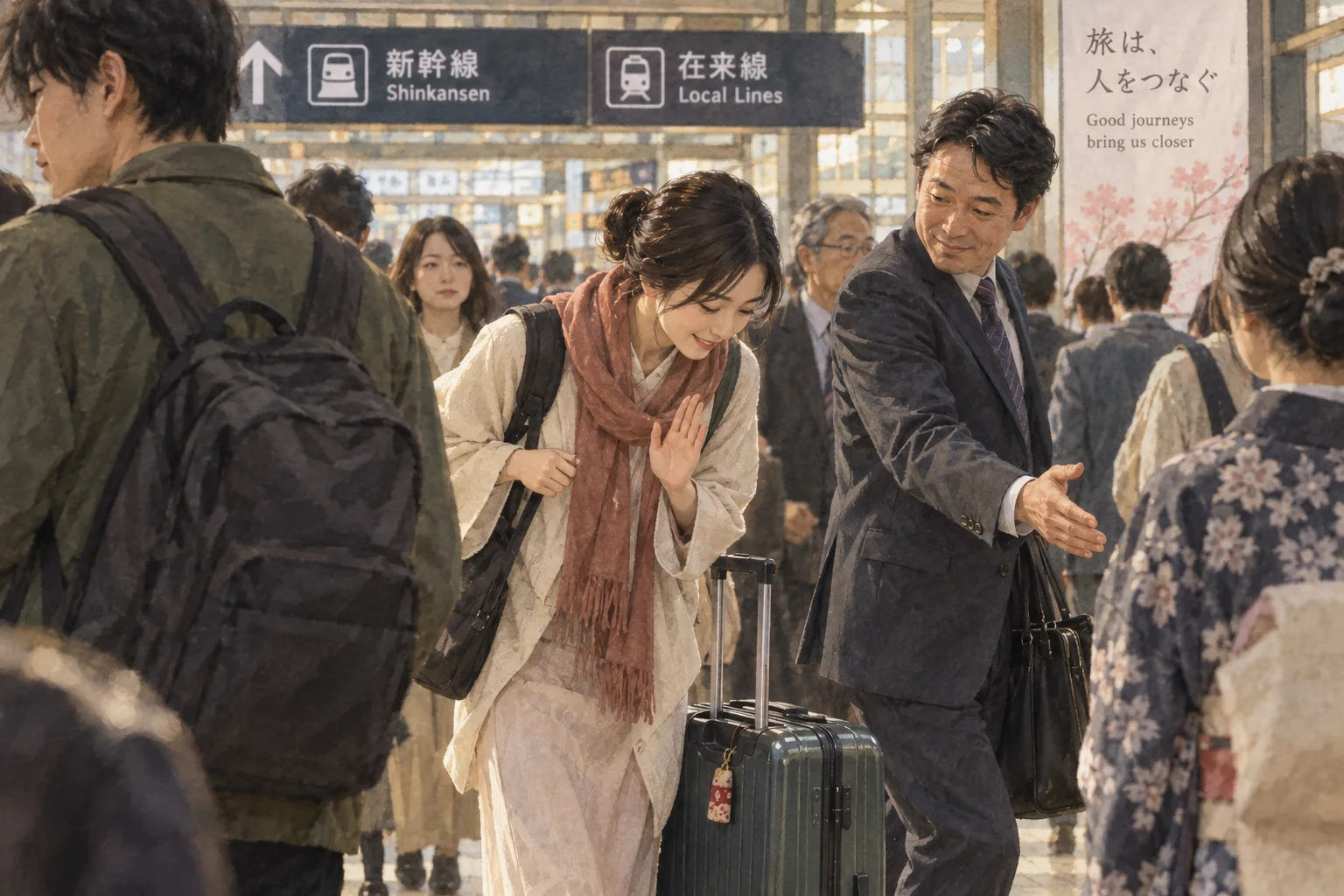
壱In one line一言で言うと
Sumimasen can mean sorry, excuse me, or thank you, depending on the situation.
弐In 30 seconds30秒で説明する
Sumimasen is probably the most used word in Japan. It apologizes, it gets a waiter's attention, and it says thank you when someone has gone out of their way for you. English needs three different words for these. The thank-you use confuses visitors most: if you hold a door and hear sumimasen, you are being thanked, with an added sense of "sorry to have troubled you."
参As a short speechスピーチ・英作文
If you learn only one Japanese word, learn sumimasen. It means "I'm sorry," but it also means "excuse me" when you want to get past someone or call a waiter. And, strangely, it often means "thank you."
If you pick up something a Japanese person dropped, they will very likely say sumimasen rather than arigato. The reason is that the word is not really about guilt. It carries the feeling that you have caused someone trouble, and that this is not yet settled between you.
So when someone helps you, saying sumimasen means both "thank you" and "sorry for the trouble" at once. Foreign visitors sometimes think Japanese people apologize too much. We are usually not apologizing. We are acknowledging that someone did something for us.
すみませんすみませんsumimasensorry / excuse me / thank you
「ありがとう」の意味で謝る国。日本語の“すみません”が英語に訳せない理由。
壱一言で言うとIn one line
「すみません」は、状況によって謝罪・呼びかけ・感謝のどれにもなります。
弐30秒で説明するIn 30 seconds
「すみません」はおそらく日本でいちばん使われる言葉です。謝るときにも、店員を呼ぶときにも、誰かが手間をかけてくれたときの感謝にも使います。英語ではこれに三つの別の語が要ります。外国の方がいちばん戸惑うのは感謝の用法です。ドアを押さえて「すみません」と言われたら、それは「お手数をかけてすみません」を含んだお礼です。
参スピーチ・英作文As a short speech
日本語をひとつだけ覚えるなら「すみません」です。「ごめんなさい」の意味もあれば、人の前を通るときや店員を呼ぶときの呼びかけにもなります。そして不思議なことに、しばしば「ありがとう」の意味にもなります。
落とし物を拾ってもらった日本人は、「ありがとう」より「すみません」と言うことが多いのです。理由は、この言葉が罪の意識の話ではないからです。相手に手間をかけてしまい、それがまだ自分の中で済んでいない、という感覚を運びます。
だから助けてもらったときの「すみません」は、「ありがとう」と「お手数をかけて」を同時に言っているのです。日本人は謝りすぎだと思われることがありますが、たいていは謝っていません。相手が自分のために何かしてくれたことを、認めているのです。
こう聞かれたらQuestions people actually ask
QWhy do Japanese people apologize when I hold the door for them?
AThey are thanking you. Sumimasen carries the sense that you took trouble on their behalf, so it works as gratitude. It is not an apology in that moment.
扉を押さえてあげると、どうして日本人は謝るのですか。お礼を言っています。「すみません」には、相手に手間をかけたという感覚があるため、感謝として働きます。そのときは謝っているのではありません。
QWhat's the difference between sumimasen and gomennasai?
AGomennasai is a plain apology and only an apology. It is also more personal and slightly more casual. Sumimasen is wider and more polite, which is why it works in shops and on trains.
すみませんとごめんなさいはどう違うのですか。「ごめんなさい」は純粋な謝罪だけで、より個人的でややくだけた言い方です。「すみません」は用途が広く丁寧なので、店や電車でも使えます。
QHow do I call a waiter without being rude?
ASay sumimasen clearly, with your hand slightly raised. It is completely normal and not rude at all. Many restaurants also have a call button on the table.
失礼にならずに店員を呼ぶには、どうすればいいですか。手を軽く挙げて「すみません」とはっきり言えば大丈夫です。まったく失礼ではありません。テーブルに呼び出しボタンがある店も多いです。
誤解されやすいA common misunderstanding
MYTHJapanese people apologize constantly because they feel guilty.日本人は罪悪感から絶えず謝っていると思われがちです。
FACTMost of these are not apologies at all. Sumimasen often functions as thanks or as a polite way to open a conversation, closer to "excuse me" than to "I was wrong."その多くは謝罪ではありません。「すみません」は感謝や、会話を始めるときの丁寧な合図として働き、「私が悪かった」より「失礼します」に近いのです。
そのまま使えるフレーズPhrases you can use
- Excuse me, could I get the menu?すみません、メニューをいただけますか。
- Sorry, I didn't catch that.すみません、聞き取れませんでした。
- Thanks — sorry to make you go to the trouble.すみません、お手数をおかけして。
- Excuse me, may I get past?すみません、通してください。
- It works as "sorry," "excuse me" and "thank you."謝罪・呼びかけ・感謝のどれにも使えます。
豆知識Background
「すみません」は「済む」の否定形「済みません」から来ており、もとの意味は「(私の気持ちが)これで済んでいない」。つまり、相手にしてもらったことに対して自分の側がまだ釣り合っていない、という感覚を表す言葉である。だから謝罪にも感謝にも使える。より丁寧な形は「申し訳ありません」で、ビジネスの謝罪ではこちらを使う。「すいません」は話し言葉でのくだけた発音で、書き言葉では「すみません」と書く。なお欧米では謝罪が法的な責任の承認と受け取られる場合があり、事故の際に安易に謝るなと言われることがある。この違いは説明すると驚かれる。
出典日本文化ナビ(原田英語.com)「すみませんを英語で説明する(sumimasen)」https://www.haradaeigo.com/japanese-culture/w/sumimasen
- 文
- 日本文化ナビ編集部(原田英語.com)— 英文・和訳・解説はすべて独自に作成
- イラスト
- 日本文化ナビ オリジナル
- 発行
- 原田英語.com https://www.haradaeigo.com/
- 印刷日
- 2026.10.17
© 2026 Harada Eigo (原田英語.com). Text and illustration: Japan Culture Navi.
ページはこちら