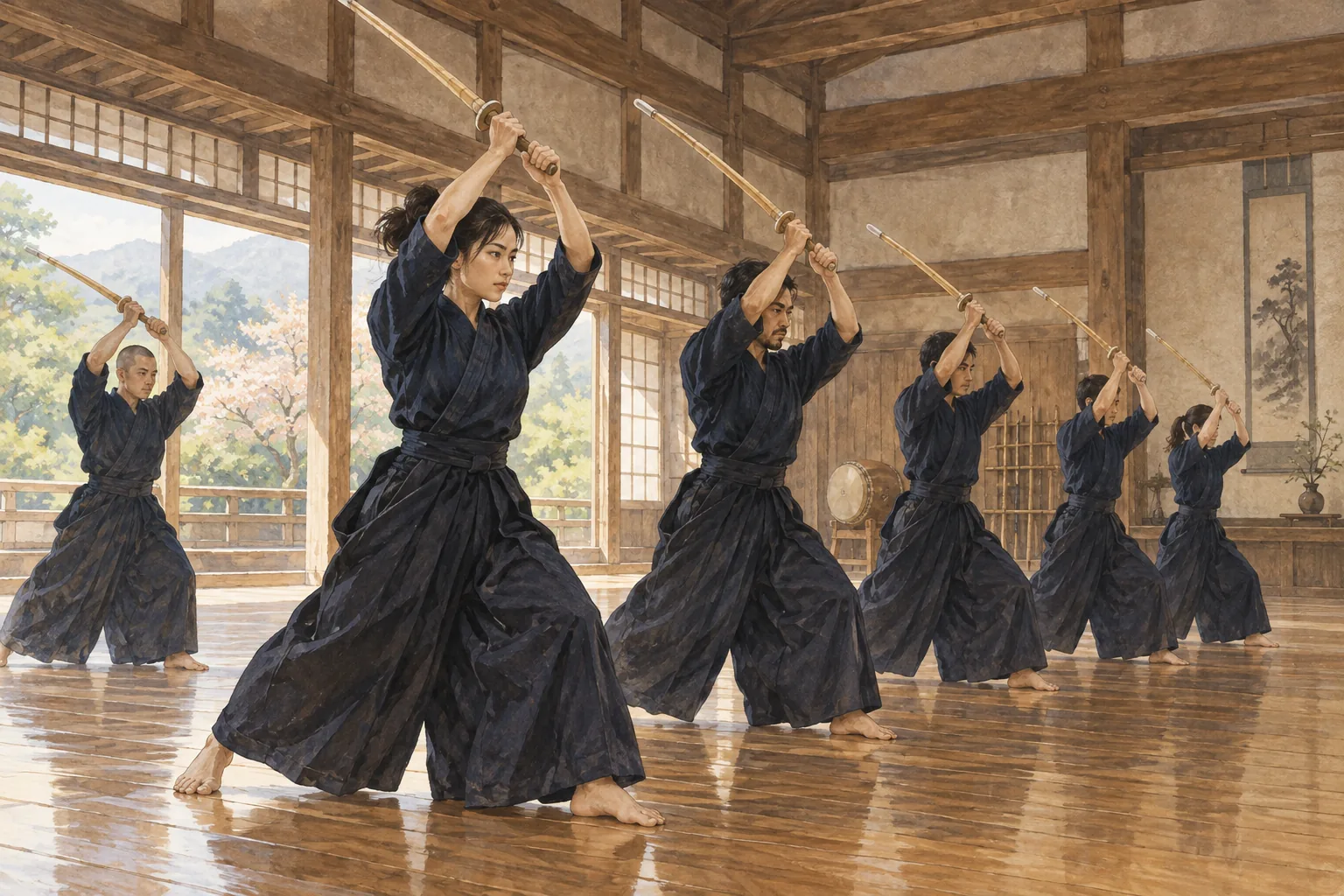
素振り
壱In one line一言で言うと
Suburi is the repeated practice of swinging a sword, bat, or bamboo weapon with no target at all.
弐In 30 seconds30秒で説明する
Suburi means swinging a weapon or bat by yourself, with no opponent, no ball, and often no target, to build correct form and stamina. In kendo it usually means swinging a bamboo sword hundreds of times in a row, and baseball players do their own version with a bat before a season begins. It looks repetitive and even pointless to an outsider, since nothing is actually being hit or scored, but the point is exactly that: with no opponent to react to, a player can focus entirely on the shape and speed of their own motion. Coaches often use daily suburi counts to measure effort.
参As a short speechスピーチ・英作文
Suburi is a training method built almost entirely around repetition: swinging a bamboo sword, a wooden sword, or a baseball bat over and over again with no opponent and, often, no target at all.
In kendo, a beginner might do a hundred or more suburi swings before ever facing another person, and experienced players keep doing it almost every day throughout their careers just to maintain form. Baseball players do the same thing with a bat during off-season training. To someone watching, it can look almost absurd, since nothing is being hit and no points are being scored.
But that absence is the whole point: without an opponent or a ball to react to, a player can pay full attention to their own posture, grip, and the exact path the weapon or bat travels. I've always thought it says something about how skill is built in Japan more broadly, through quiet, unglamorous repetition rather than flashy drills.
素振りすぶりsuburiswinging a weapon or bat with no opponent or ball
相手も球もないのに何百回も振る。地味だが武道・野球に共通する基礎練習。
壱一言で言うとIn one line
素振りとは、剣や竹刀、バットなどを的もなしに繰り返し振る基礎練習のことです。
弐30秒で説明するIn 30 seconds
素振りとは、相手も球も、時には的すらないまま、一人で武器やバットを振ることで、正しい形と体力を身につけるための練習です。剣道では竹刀を何百回も連続で振ることが多く、野球選手もシーズン前にバットで同じような練習をします。何も打たず得点にもならないので、外から見ると単調で意味がなさそうに見えますが、まさにそこが狙いです。相手がいないからこそ、自分の動きの形と速さだけに集中できるのです。コーチはよく素振りの本数を努力の目安として使います。
参スピーチ・英作文As a short speech
素振りとは、竹刀や木刀、野球のバットを、相手もなく、多くの場合的すらないまま、何度も何度も振るという、ほぼ反復だけで成り立つ練習方法です。剣道では初心者が他人と対戦する前に百回以上の素振りをすることがあり、競技を続ける選手も、形を保つために現役のあいだほぼ毎日振り続けます。
野球選手もオフシーズンにバットで同じことをします。傍から見ると、何も打たず得点にもならないので、ばかげているようにさえ見えるかもしれません。
しかしその「何もない」ことこそが要点で、反応すべき相手やボールがないからこそ、自分の姿勢や握り、武器やバットの通る道筋だけに全神経を集中できるのです。これは、派手な練習ではなく静かで地味な反復によって技を築くという、日本の技能の身につけ方そのものを表しているように、私にはいつも思えます。
こう聞かれたらQuestions people actually ask
QIf nothing is being hit, what's the actual benefit?
AIt isolates your form. Without a target to react to, you can focus completely on your posture, grip, and the exact path of the swing, which is harder to do once an opponent is involved.
何も打たないのなら、何のためになるのですか。自分の形だけを取り出せることです。反応すべき的がないからこそ、姿勢や握り、振りの通り道だけに完全に集中できます。相手が加わると、それが難しくなります。
QHow many suburi swings do people actually do?
AIt varies a lot, but serious kendo practitioners often do several hundred in a single practice, and some coaches assign a fixed daily number as a baseline.
素振りは実際に何回くらいするものですか。人によって大きく違いますが、本格的に剣道をする人は一回の稽古で数百回振ることも多く、コーチが毎日の基準本数を決めることもあります。
そのまま使えるフレーズPhrases you can use
- Let's start today's practice with 200 suburi.今日の稽古は素振り200本から始めましょう。
- Keep your form correct, even if you get tired.疲れても正しい形を崩さないで。
- He does suburi every morning before school.彼は毎朝学校の前に素振りをしています。
- Suburi builds the muscles you actually use in a real strike.素振りは実際の打突で使う筋肉を鍛えます。
豆知識Background
素振りは剣道や野球に限らず、居合、薙刀、ゴルフなど「道具を振る」動作のあるあらゆる分野で行われる基礎練習で、相手や的が無いことがむしろ利点とされる。剣道では初心者がまず数百回の素振りから始めることが多く、プロ野球選手でもオフシーズンに毎日千回近く素振りをする選手がいると言われる。地味だが、正しい形を体に覚え込ませる近道とされる。
出典日本文化ナビ(原田英語.com)「素振りを英語で説明する(suburi)」https://www.haradaeigo.com/japanese-culture/w/suburi
- 文
- 日本文化ナビ編集部(原田英語.com)— 英文・和訳・解説はすべて独自に作成
- イラスト
- 日本文化ナビ オリジナル
- 発行
- 原田英語.com https://www.haradaeigo.com/
- 印刷日
- 2026.10.17
© 2026 Harada Eigo (原田英語.com). Text and illustration: Japan Culture Navi.
ページはこちら