集団就職
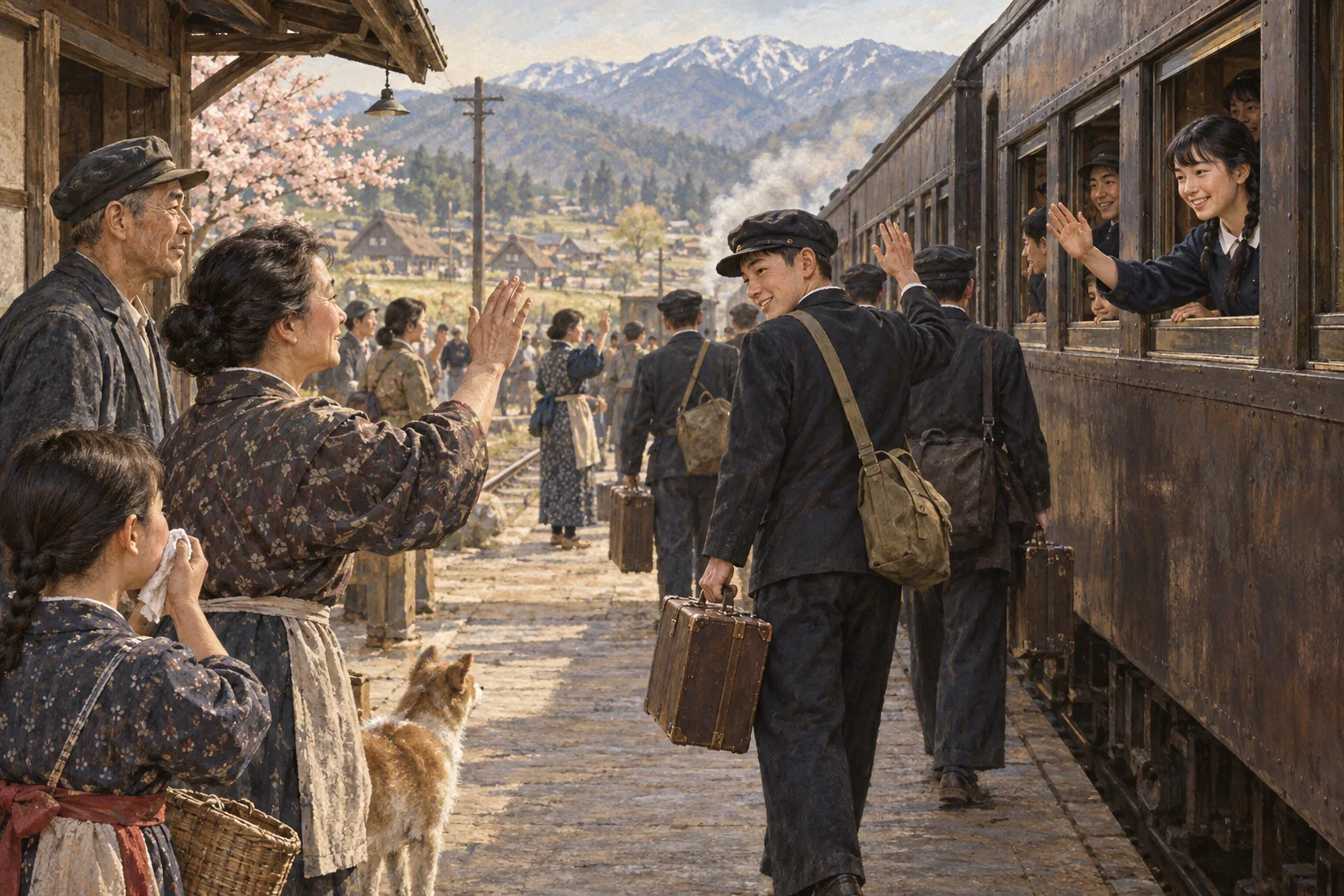
壱In one line一言で言うと
Shudan shushoku was the mass movement of young graduates from rural Japan to city jobs during the postwar boom.
弐In 30 seconds30秒で説明する
From the mid-1950s, as city factories and shops badly needed workers, groups of junior high and high school graduates from rural areas were sent to Tokyo and other cities on chartered trains, shortly after they graduated. Employers nicknamed them kin no tamago, golden eggs, for how badly they were needed. The trains ran for about two decades and became a defining image of Japan's postwar labor shortage and rapid urbanization.
参As a short speechスピーチ・英作文
Shudan shushoku, group employment, describes a specific piece of postwar Japanese labor history: young people, mostly junior high and high school graduates from rural prefectures, being sent in organized groups to work in the cities. The first chartered train left Aomori for Ueno station in Tokyo in April 1954, and the practice continued for roughly two decades as the booming urban economy ran short of workers faster than cities could supply them locally.
These teenagers were nicknamed kin no tamago, golden eggs, a term that flatters how badly employers needed them more than it describes their working conditions, which were often demanding for very little pay. Ueno station became the symbolic arrival point, later commemorated in a well-known 1964 song about young workers who came to the city through Ueno.
The flow slowed through the 1970s as the birthrate fell, more students went on to high school and university instead of taking a job at fifteen, and rural areas had fewer graduates left to send. It remains one of the clearest human faces of Japan's rapid postwar growth.
集団就職しゅうだんしゅうしょくshudan shushokuthe mass migration of young workers to the cities after the war
中学を出たばかりの子どもたちが、集団で夜行列車に乗って都会へ向かった。
壱一言で言うとIn one line
集団就職とは、戦後の高度成長期に、地方の若い卒業生が集団で都会の職場へ移った動きのことです。
弐30秒で説明するIn 30 seconds
1950年代半ばから、都会の工場や商店が人手を強く求める中、地方の中学や高校を出たばかりの卒業生が、卒業して間もなく、まとまって東京などの都市へ向かう臨時列車で送り出されました。雇う側はどれほど必要とされていたかを表して「金の卵」と呼びました。この列車はおよそ二十年続き、戦後日本の労働力不足と急速な都市化を象徴する光景になりました。
参スピーチ・英作文As a short speech
集団就職とは、戦後日本の労働史の一場面を指す言葉です。主に地方の中学や高校を出たばかりの若者が、まとまった集団として都会で働くために送り出されました。最初の臨時列車は1954年4月、青森から東京の上野駅へ向けて出発し、この仕組みは都市の好景気が地元だけでは供給しきれないほどの速さで労働力を必要としたため、およそ二十年続きました。
この十代の若者たちは「金の卵」と呼ばれましたが、これは雇う側がどれほど彼らを必要としていたかを表す言葉であって、働く条件のよさを表すものではなく、実際にはわずかな賃金で厳しい仕事を担うことも多くありました。上野駅は到着の象徴的な場所となり、のちに、上野駅から都会へ出てきた若い働き手を歌った、1964年のよく知られる歌にもなりました。
1970年代を通じてこの流れは落ち着いていきます。出生率が下がり、十五歳で働くより高校や大学へ進む生徒が増え、地方に送り出せる卒業生自体が減っていったためです。これは、日本の急速な戦後成長を最もはっきりと物語る、人の顔をした場面の一つとして残っています。
こう聞かれたらQuestions people actually ask
QWhy were they called golden eggs?
ABecause employers desperately needed young workers and the term flattered their value. It described how much cities wanted them, not how well they were actually treated, and working conditions and pay were often harsh.
どうして金の卵と呼ばれたのですか。雇う側が若い働き手を切実に必要としており、この呼び名はその価値を持ち上げるものだったからです。都会がどれほど彼らを欲しがっていたかを表す言葉であって、実際の待遇のよさを表すものではなく、労働条件や賃金は厳しいことが多くありました。
QWhy did it stop?
AThe birthrate fell, more young people stayed in education through high school and university instead of taking a job right after junior high, and rural areas simply had fewer graduates to send. The organized trains wound down through the mid-1970s.
どうして終わったのですか。出生率が下がり、中学を出てすぐ働くより高校や大学に進む若者が増え、地方に送り出せる卒業生自体が少なくなったためです。組織立った列車の運行は1970年代半ばにかけて縮小していきました。
QWhy is Ueno station connected to this?
AIt was the main arrival point in Tokyo for trains from the northeast, so it became the place where the experience was concentrated and later remembered, including in a popular song about a young worker's memory of stepping off the train.
どうして上野駅がこれと結びついているのですか。東北方面からの列車が東京に着く主な駅だったため、この経験が集まり、のちに語り継がれる場所になりました。列車を降りたときの記憶を歌った、よく知られる歌にも歌われています。
誤解されやすいA common misunderstanding
MYTHShudan shushoku was a government program that forced students to work in the cities.集団就職は、政府が学生を都会で働かせるために強制した制度だ、と思われがちです。
FACTIt was an organized job-placement arrangement between schools, public employment offices, employers and the national railway, built around real demand and real choices by families, not conscripted labor.実際には学校、職業安定所、雇用主、国鉄が組んだ職業あっせんの仕組みで、実際の需要と、家族の実際の選択の上に成り立っていたものであり、強制労働ではありませんでした。
そのまま使えるフレーズPhrases you can use
- They took the train to the city right after graduation.卒業してすぐ、列車で都会へ向かいました。
- Employers called them golden eggs.雇う側は彼らを金の卵と呼びました。
- Ueno station was where many of them first arrived.上野駅は、多くの人が最初に降り立った場所でした。
- The pay and hours were often tough.賃金も労働時間も厳しいことが多くありました。
- It faded out as more students went on to high school.高校へ進む生徒が増えるにつれ、この動きは薄れていきました。
豆知識Background
最初の集団就職列車は1954年4月5日、青森発上野行きで運行された。地方の中学・高校卒業生を都市部の企業に送る仕組みとして広がり、雇用主から「金の卵」と呼ばれた。運行はおよそ二十年続き、1970年代半ばにかけて、出生率の低下と高校・大学進学率の上昇により縮小した。到着地となった上野駅は、井沢八郎の歌謡曲「あゝ上野駅」でも歌われ、集団就職を象徴する場所として記憶されている。都市に移った若者たちは、のちの団地暮らしや終身雇用・年功序列の働き方の担い手にもなった。
出典日本文化ナビ(原田英語.com)「集団就職を英語で説明する(shudan shushoku)」https://www.haradaeigo.com/japanese-culture/w/shudan-shushoku
- 文
- 日本文化ナビ編集部(原田英語.com)— 英文・和訳・解説はすべて独自に作成
- イラスト
- 日本文化ナビ オリジナル
- 発行
- 原田英語.com https://www.haradaeigo.com/
- 印刷日
- 2026.10.17
© 2026 Harada Eigo (原田英語.com). Text and illustration: Japan Culture Navi.
ページはこちら