醤油
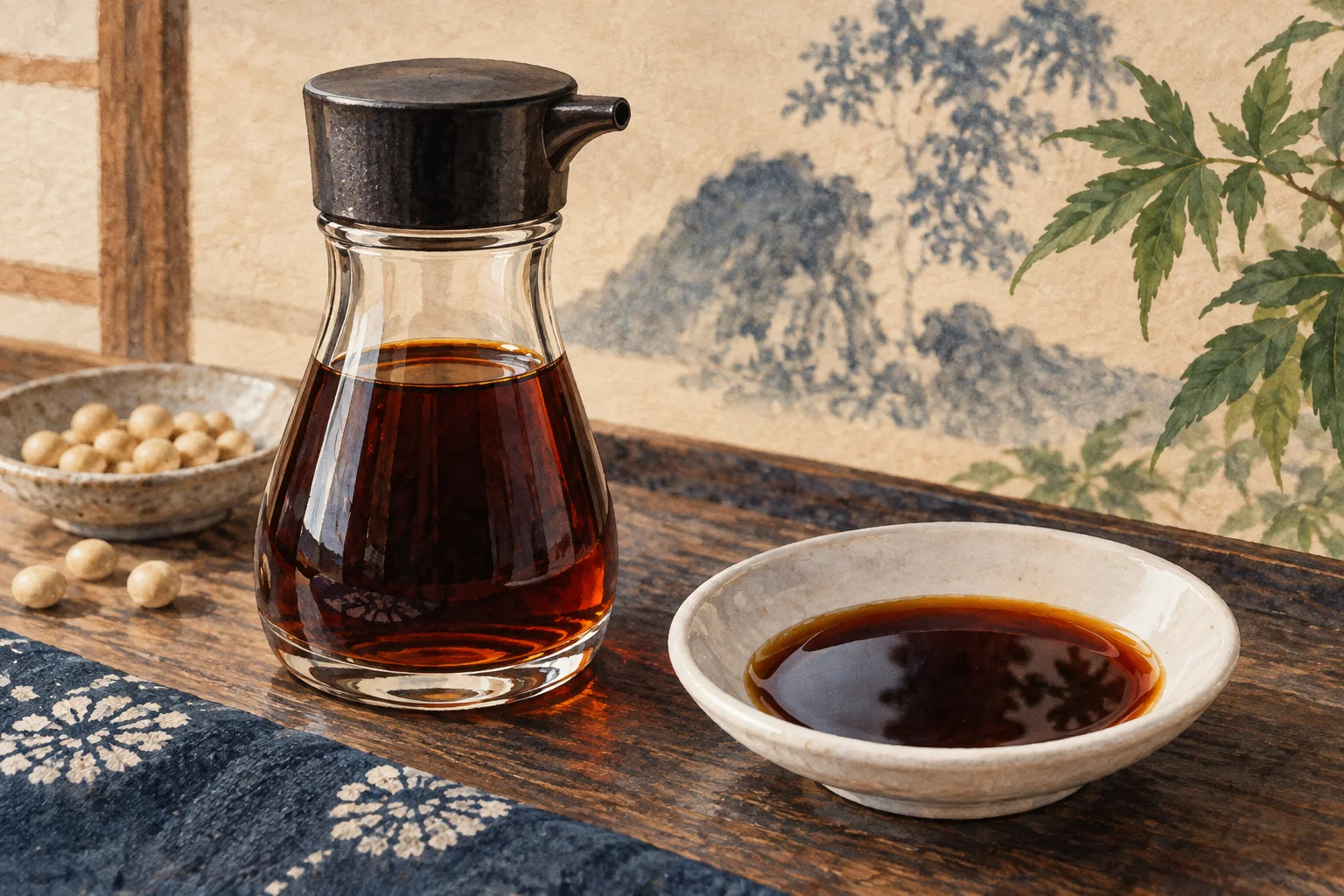
壱In one line一言で言うと
Shoyu is Japanese soy sauce, brewed from soybeans, wheat, salt and a mold called koji.
弐In 30 seconds30秒で説明する
Japanese soy sauce is brewed from roughly equal parts soybean and wheat with salt and koji, then fermented for months. The large share of wheat gives it a slightly sweet, aromatic character. Dark and light types exist, and confusingly the light-colored one contains more salt.
参As a short speechスピーチ・英作文
Soy sauce is the backbone of Japanese cooking, and there are a few things about it worth knowing. It is brewed, not mixed: soybeans and roughly an equal weight of wheat are inoculated with koji mold, mixed with brine, and left to ferment for months. That large share of wheat gives Japanese shoyu its aroma and slight sweetness.
There are several types. Koikuchi, dark, is the standard and accounts for most of what is sold. Usukuchi, light in color, is used in Kansai cooking when you do not want to darken a clear broth, and here is the trap: it contains more salt, not less, because the salt restrains fermentation and keeps the color pale.
There is also tamari, made with little or no wheat, which is thicker and is what many gluten-free products use. Keep an opened bottle in the fridge; it oxidizes and darkens.
醤油しょうゆshoyusoy sauce
薄口のほうが塩分は高い。色が薄いだけで、味が薄いわけではない。
壱一言で言うとIn one line
醤油とは、大豆、小麦、塩、そして麹というかびから醸す日本の調味料です。
弐30秒で説明するIn 30 seconds
日本の醤油は、大豆と小麦をほぼ同量、塩と麹とともに仕込み、数か月かけて発酵させます。小麦を多く使うことが、甘みと香りを生みます。濃口と薄口があり、紛らわしいことに、色の薄い薄口のほうが塩分は高くなっています。
参スピーチ・英作文As a short speech
醤油は日本料理の背骨で、知っておく値打ちのあることがいくつかあります。これは混ぜたものではなく醸したものです。大豆とほぼ同じ重さの小麦に麹をつけ、塩水と合わせて数か月発酵させます。この多めの小麦が、日本の醤油に香りとかすかな甘みを与えています。
種類がいくつかあります。濃口が標準で、売られているものの大半を占めます。薄口は色が淡く、澄んだ汁を濁らせたくない関西の料理で使われますが、ここに落とし穴があります。薄口は塩分が少ないのではなく、多いのです。
塩が発酵を抑え、色を淡く保つからです。小麦をほとんど使わないたまりもあり、こちらは濃厚で、小麦を避けた製品に使われることが多くあります。開封した瓶は冷蔵庫に入れてください。酸化して色が濃くなります。
こう聞かれたらQuestions people actually ask
QIs light soy sauce lower in salt?
ANo, the opposite. Usukuchi refers to color, not strength, and it contains more salt than the dark type. If you want less salt, look for a bottle explicitly labeled reduced salt.
薄口醤油は塩分が少ないのですか。逆です。薄口は色のことで、味や塩分の強さのことではなく、濃口より塩分が多くあります。塩分を控えたいなら、減塩と明記された瓶を選んでください。
QIs Japanese soy sauce gluten-free?
AUsually not, because wheat is a main ingredient. Tamari, brewed with little or no wheat, is the type to look for, and some brands are certified. Always check the label rather than assuming.
日本の醤油は小麦を含みませんか。ふつうは違います。小麦が主な原料だからです。小麦をほとんど使わないたまりが該当し、認証を受けた銘柄もあります。思い込まずに表示を確かめてください。
QHow much should I use with sushi?
AVery little, and on the fish rather than the rice. Dip the fish side lightly. Soaking the rice makes it fall apart and overwhelms the seasoning already in it.
寿司にはどれくらいつければいいですか。ごく少量を、ご飯ではなく魚のほうにつけます。魚の側を軽くつけてください。ご飯を浸すと崩れますし、すでについている味を消してしまいます。
誤解されやすいA common misunderstanding
MYTHLight soy sauce is a milder, lower-salt version.薄口醤油は味も塩分も控えめなものだと思われがちです。
FACTIt is lighter in color and higher in salt. The name refers to how it looks in a dish, not to its strength.色が淡く塩分は高いものです。名は料理に入れたときの見え方を指していて、強さのことではありません。
そのまま使えるフレーズPhrases you can use
- Light soy sauce has more salt, not less.薄口のほうが塩分は多いです。
- Dip the fish, not the rice.ご飯ではなく魚につけてください。
- Keep it in the fridge once opened.開けたら冷蔵庫に入れてください。
- It's brewed, not mixed.混ぜたものではなく醸したものです。
豆知識Background
日本農林規格では醤油は濃口、薄口、たまり、再仕込み、白の5種類に分けられます。流通量の大半は濃口です。薄口は色を抑えるために塩分を高くしており、その分だけ料理に使う量は少なくなります。千葉県の野田や銚子、香川県の小豆島などが産地として知られます。近年は海外での需要が伸び、輸出も増えています。開封後は酸化が進むため、密閉容器や冷蔵保存が勧められます。
出典日本文化ナビ(原田英語.com)「醤油を英語で説明する(shoyu)」https://www.haradaeigo.com/japanese-culture/w/shoyu
- 文
- 日本文化ナビ編集部(原田英語.com)— 英文・和訳・解説はすべて独自に作成
- イラスト
- 日本文化ナビ オリジナル
- 発行
- 原田英語.com https://www.haradaeigo.com/
- 印刷日
- 2026.10.17
© 2026 Harada Eigo (原田英語.com). Text and illustration: Japan Culture Navi.
ページはこちら