神職と巫女
壱In one line一言で言うと
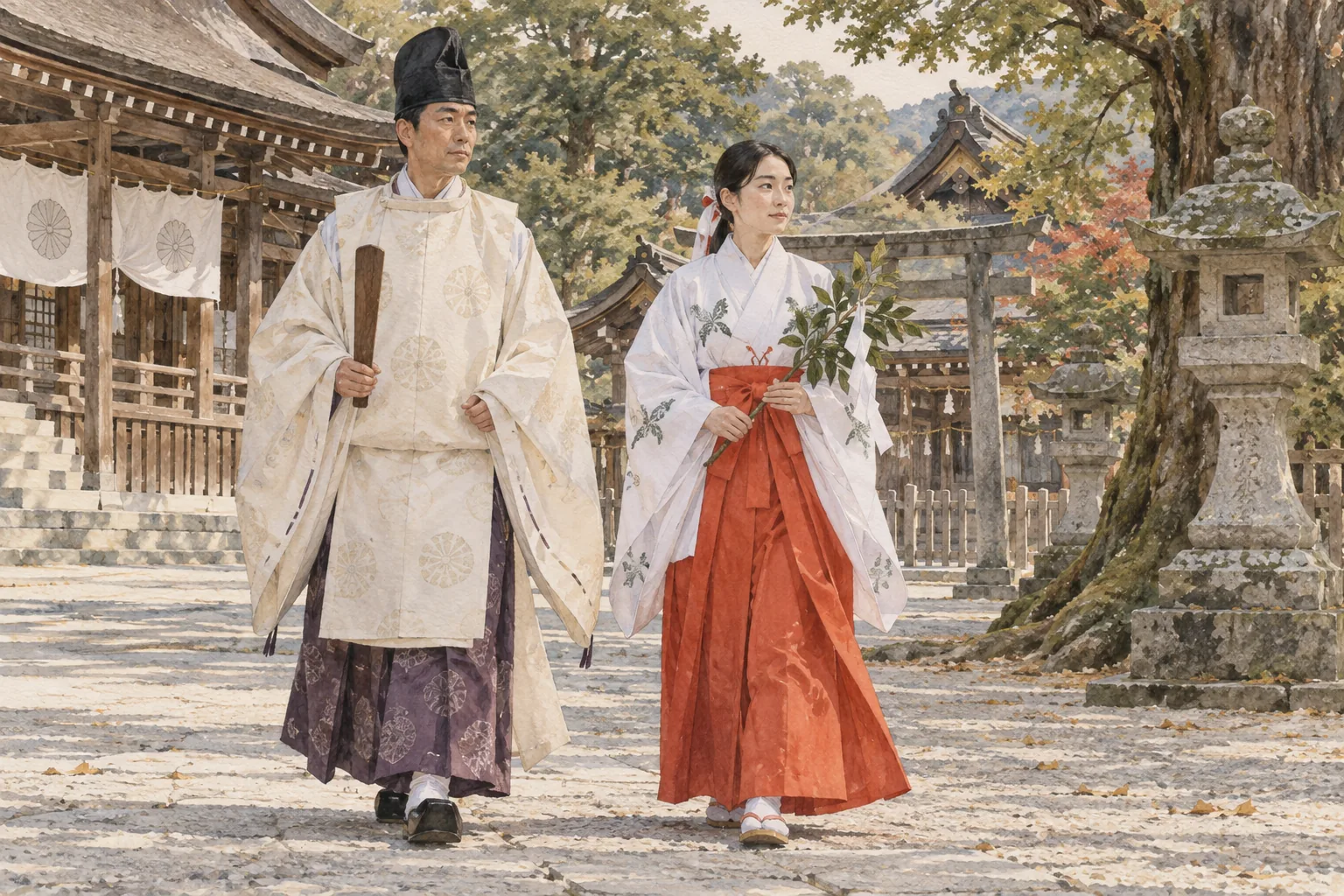
Shinshoku and miko are shrine staff: shinshoku are priests, and miko are women in white and red who assist.
弐In 30 seconds30秒で説明する
Shinshoku are the priests of a shrine, qualified through a ranked system and often trained at a specialist university. Miko are the assistants in a white top and red divided skirt who sell charms, perform ritual dance and help at ceremonies. Many miko today are students working part time, particularly over the New Year period.
参As a short speechスピーチ・英作文
The people you see working at a Japanese shrine fall into two groups. Shinshoku are the priests. They hold a rank in a formal system, and many study at one of the two universities that train them, though it is also common to inherit a shrine from a parent.
Contrary to a common assumption, shrine priests may marry and have families, and many run the shrine as a household. Miko are the assistants, recognizable by a white top and a bright red divided skirt. Historically the role had a much stronger spiritual character, connected with communicating with the gods.
Today miko sell charms and fortunes, help with weddings and purification rites, and perform ceremonial dance. A great many are university students working part time, and shrines advertise openly for extra miko in December for the New Year crowds. Do not photograph them at close range without asking.
神職と巫女しんしょくとみこshinshoku and mikoshrine priests and shrine maidens
正月の巫女さんの多くは、アルバイトの学生。
壱一言で言うとIn one line
神職と巫女とは、神社に仕える人のことで、神職は神主、巫女は白と赤の装束で社に仕える女性です。
弐30秒で説明するIn 30 seconds
神職とは神社の神主で、階位の制度によって資格を得ており、専門の大学で学ぶ人も多くいます。巫女とは白い上衣に緋の袴を着けた助手で、お守りを授け、神楽を舞い、祭祀を手伝います。今日の巫女の多くは学生の短期の勤めで、とくに正月の時期に多く見られます。
参スピーチ・英作文As a short speech
日本の神社で働いている人は、二つに分かれます。神職は神主です。正式な階位の制度に位置づけられ、養成にあたる二つの大学のいずれかで学ぶ人も多くいますが、親から神社を継ぐ形も一般的です。
よくある思い込みと違って、神職は結婚して家庭を持つことができ、一家で社を営んでいる例がたくさんあります。巫女は助手で、白い上衣と鮮やかな緋の袴ですぐに分かります。歴史的には、神と言葉を交わす役目と結びついた、はるかに強い霊的な性格を持つ務めでした。
今日の巫女は、お守りやおみくじを授け、婚礼や祓いの儀式を手伝い、神楽を舞います。その多くは大学生の短期の勤めで、神社は正月の人出に備えて12月に公然と募集します。近くから無断で写真を撮らないでください。
こう聞かれたらQuestions people actually ask
QCan shrine priests marry?
AYes. Shinto priesthood is not a celibate vocation, and many shrines are run by a family across generations, with the priest's spouse and children involved in the work. This often surprises visitors who expect a monastic model.
神職は結婚できるのですか。できます。神職は独身を求められる務めではなく、多くの神社は一家が代々営んでいて、配偶者や子どもも仕事に関わっています。修道院のような形を想像していた人はよく驚きます。
QIs being a miko a religious vocation?
AIt can be, for those who serve long term, but most of the miko visitors see are students hired for a season. Shrines take on extra staff for New Year, and the work is selling charms, guiding visitors and helping at rites.
巫女は宗教上の務めなのですか。長く務める人にとってはそうなり得ますが、参拝者が目にする巫女の多くは、期間を限って雇われた学生です。神社は正月に人手を増やし、仕事はお守りを授けること、参拝者の案内、儀式の手伝いです。
誤解されやすいA common misunderstanding
MYTHShinto priests are celibate monks like Buddhist clergy in some traditions.神職は仏教の一部の伝統のように妻帯しない修行者だと思われがちです。
FACTThey marry, have families and frequently pass the shrine to a son or daughter. Many shrines are run as family households.実際には結婚して家庭を持ち、子に社を継がせることも多く、一家で営まれる神社もたくさんあります。
そのまま使えるフレーズPhrases you can use
- The priests can marry and have families.神職は結婚して家庭を持てます。
- Many miko are students working part time.巫女の多くは学生の短期の勤めです。
- They're busiest over New Year.いちばん忙しいのは正月です。
- Please ask before photographing them.写真を撮る前にひと声かけてください。
豆知識Background
神職の資格には階位があり、國學院大學と皇學館大学が養成の中心とされています。装束の色や形は階位や祭祀の格によって決まっています。巫女の白い上衣は清浄を表すとされ、緋袴とあわせた紅白の装いが定着しています。古代の巫女は神託を告げる役目を担っており、今日の事務的な務めとは性格が異なりました。神職に女性が就くことは可能で、女性の宮司が務める神社もあります。
出典日本文化ナビ(原田英語.com)「神職と巫女を英語で説明する(shinshoku and miko)」https://www.haradaeigo.com/japanese-culture/w/shinshoku-and-miko
- 文
- 日本文化ナビ編集部(原田英語.com)— 英文・和訳・解説はすべて独自に作成
- イラスト
- 日本文化ナビ オリジナル
- 発行
- 原田英語.com https://www.haradaeigo.com/
- 印刷日
- 2026.10.17
© 2026 Harada Eigo (原田英語.com). Text and illustration: Japan Culture Navi.
ページはこちら