四国八十八ヶ所
壱In one line一言で言うと
Shikoku hachiju hakkasho, the eighty-eight temples of Shikoku, is a roughly 1,200-kilometer circuit taking six weeks or more on foot.
弐In 30 seconds30秒で説明する
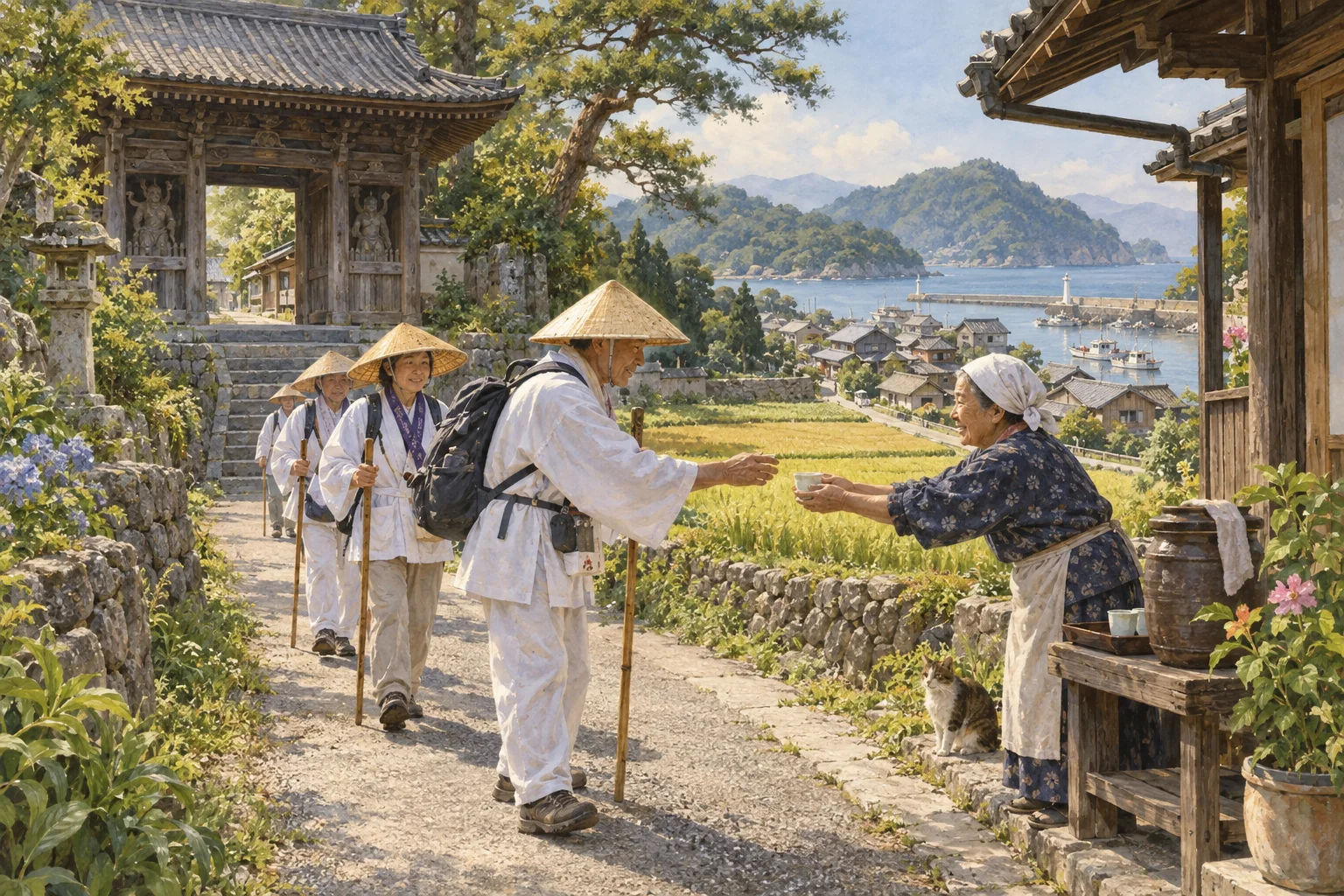
The eighty-eight temples ring the island of Shikoku over roughly 1,200 kilometers, and the route is associated with the monk Kukai, who was born there. Pilgrims are called ohenro; they wear a white over-jacket and a conical hat, and carry a staff said to represent Kukai himself. Most now go by car or bus over a week or two; walking the whole circuit takes forty to fifty days. Locals along the route give food and help, a custom called osettai.
参As a short speechスピーチ・英作文
The Shikoku pilgrimage is one Japanese religious practice a foreign visitor can join with little preparation, and it is worth explaining properly. Eighty-eight temples are strung around the coast and mountains of Shikoku, the smallest of Japan's four main islands, over about 1,200 kilometers.
The route is connected to Kukai, the ninth-century monk who founded the Shingon school and was born on the island. Pilgrims wear a white over-jacket — white, it is often said, because it was once also a burial color, meaning you set out prepared not to return — a conical sedge hat, and carry a wooden staff that is understood to be Kukai walking with you.
Most people today drive it in about ten days, or do it in sections over years; walking the whole thing takes six or seven weeks. The part that surprises people is osettai: householders and shopkeepers along the route hand pilgrims food, drinks, sometimes money or a place to sleep, and it is considered rude to refuse, because the giver is making an offering through you.
四国八十八ヶ所しこくはちじゅうはっかしょShikoku hachiju hakkashothe 1,200-kilometer circuit of eighty-eight temples
白い上着と菅笠で四国を一周する。歩けば四十日以上かかる。
壱一言で言うとIn one line
四国八十八ヶ所とは、四国の八十八の寺を巡る全長約1,200キロの道で、歩けば六週間以上かかる巡礼です。
弐30秒で説明するIn 30 seconds
八十八の寺は四国を一周する形で並び、全長はおよそ1,200キロ。四国で生まれた空海にゆかりのある道とされます。巡る人はお遍路と呼ばれ、白い上着に菅笠、そして空海その人を表すとされる杖を持ちます。いまは車やバスで一、二週間かけて回る人が多く、歩き通すと四十日から五十日かかります。沿道の人が食べ物や助けを差し出す習わしがあり、お接待と呼ばれます。
参スピーチ・英作文As a short speech
四国八十八ヶ所は、外国から来た人がさほど準備なしに加われる、数少ない日本の宗教行事です。きちんと説明する値打ちがあります。四国は本土四島のうち最も小さい島で、その海沿いと山の中に八十八の寺が並び、全長はおよそ1,200キロ。
この道は、九世紀に真言宗を開き、この島で生まれた空海に結びついています。巡る人は白い上着を着ます。白はかつて死者の色でもあり、帰らない覚悟で発つという意味を含むとよく説明されます。菅笠をかぶり、木の杖を持ちます。この杖は、空海が一緒に歩いてくれていると理解されています。
いまは十日ほどで車で回る人が多く、区切って何年もかけて回る人もいます。歩き通せば六、七週間。驚かれるのはお接待です。沿道の家や店の人が、食べ物や飲み物、ときには金や寝る場所を差し出します。断るのは失礼とされます。差し出す側は、あなたを通じて仏に供えているからです。
こう聞かれたらQuestions people actually ask
QDo I have to be Buddhist?
ANo. Temples do not ask, and many Japanese pilgrims are not practicing Buddhists either. People walk it for grief, retirement, illness or simply to walk.
仏教徒でないといけませんか。その必要はありません。寺は尋ねませんし、日本の巡礼者にも信仰を持たない人は多いです。死別、退職、病、あるいはただ歩きたくて歩く人がいます。
QCan I do just part of it?
AYes, and most people do. Doing it in sections over several years has its own name, and starting at temple one is conventional but not required.
一部だけでもよいですか。よいですし、ほとんどの人がそうします。何年かに分けて回る区切り打ちという言い方があり、一番札所から始めるのが慣例ですが、決まりではありません。
QWhat do I do at each temple?
AWash your hands, offer a candle and incense, recite or read a sutra if you wish, and have your book stamped in the temple office. The stamp is the record of your visit.
各寺では何をするのですか。手を清め、ろうそくと線香を供え、望めば経を読み、納経所で納経帳に朱印をもらいます。その朱印が、参拝した記録になります。
誤解されやすいA common misunderstanding
MYTHPilgrims all walk the whole route.お遍路はみな歩いて回る、と思われがちです。
FACTMost go by car or organized bus tour. Walkers are a visible minority, and doing the circuit in sections over years is completely normal.多くは車や団体のバスで回ります。歩く人は目立ちますが少数で、何年かに分けて回るのもごくふつうのことです。
そのまま使えるフレーズPhrases you can use
- It's eighty-eight temples around the island of Shikoku.四国を一周する八十八の寺です。
- Walking the whole route takes about six weeks.歩き通すと六週間ほどかかります。
- The white jacket means you set out prepared not to return.白い上着は、帰らない覚悟で発つという意味です。
- The staff represents the monk walking with you.杖は、空海が共に歩いていることを表します。
- If someone offers you food, it's rude to refuse.食べ物を差し出されたら、断るのは失礼です。
豆知識Background
四国八十八ヶ所霊場の総距離はおよそ1,200キロメートルで、徒歩で40〜50日、車で10日前後が目安とされる。第一番は徳島の霊山寺、第八十八番は香川の大窪寺。空海(774〜835)は讃岐、いまの香川県の生まれと伝えられる。菅笠には「同行二人」と書かれ、空海と二人で歩くという意味を表す。お接待を受けたときは納札を渡すのが習わしとされる。
出典日本文化ナビ(原田英語.com)「四国八十八ヶ所を英語で説明する(Shikoku hachiju hakkasho)」https://www.haradaeigo.com/japanese-culture/w/shikoku-pilgrimage
- 文
- 日本文化ナビ編集部(原田英語.com)— 英文・和訳・解説はすべて独自に作成
- イラスト
- 日本文化ナビ オリジナル
- 発行
- 原田英語.com https://www.haradaeigo.com/
- 印刷日
- 2026.10.17
© 2026 Harada Eigo (原田英語.com). Text and illustration: Japan Culture Navi.
ページはこちら