扇子
壱In one line一言で言うと
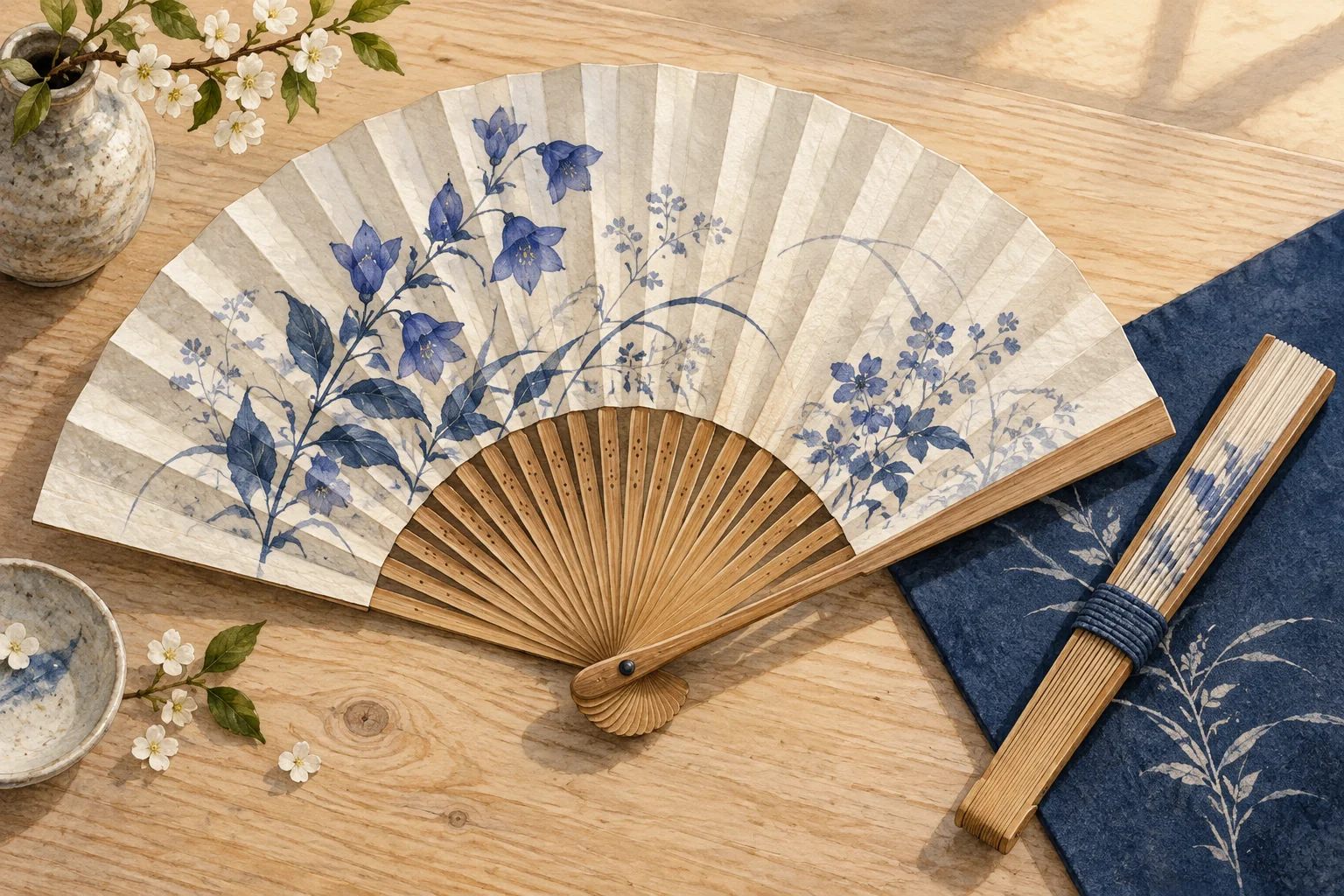
A sensu is a folding fan, and the folding design is believed to have been invented in Japan.
弐In 30 seconds30秒で説明する
A sensu is a folding fan with paper or silk over bamboo ribs. Japan also has the uchiwa, a flat fan on a single handle, but the folding kind is the one believed to have originated here, later spreading through China to Europe. Beyond cooling, fans are used as props in noh, kabuki, dance and rakugo, and as formal gifts.
参As a short speechスピーチ・英作文
Japan has two kinds of fan. The uchiwa is a flat paddle on a handle, cheap, often given away with advertising printed on it in summer. The sensu folds, and it is the one that matters historically, because the folding fan is generally believed to have been invented in Japan and then to have traveled through China to Europe, where it became a fixture of court dress.
In Japan it stayed a working object. A rakugo storyteller uses a closed fan as chopsticks, a pipe, a sword or a writing brush, and the audience reads the object from how it is held. In noh and dance the fan is opened to show a moon, a wave, a cup of sake.
There is also a formal use: a small unopened fan is carried with kimono at weddings and tea gatherings, where it is placed in front of you on the floor to mark a respectful boundary and is never actually used for air.
扇子せんすsensufolding fan
折りたたむ扇は日本で生まれ、中国を経てヨーロッパへ渡ったとされる。
壱一言で言うとIn one line
扇子は折りたたむ扇で、この折りたたむ仕組みは日本で生まれたとされています。
弐30秒で説明するIn 30 seconds
扇子は竹の骨に紙や絹を張った折りたたみの扇です。日本には一本の柄のついた平らな団扇もありますが、折りたたむほうが日本で生まれたとされ、のちに中国を経てヨーロッパへ広まりました。涼をとるほかに、能や歌舞伎、日本舞踊、落語の小道具として使われ、贈り物にもなります。
参スピーチ・英作文As a short speech
日本の扇には二種類あります。団扇は柄のついた平らなもので、安く、夏には広告を刷って配られます。扇子は折りたためるもので、歴史の上で重要なのはこちらです。
折りたたむ扇は日本で生まれ、中国を経てヨーロッパへ渡り、そこで宮廷の装いの定番になったとされるからです。日本では扇は実用の道具であり続けました。落語家は閉じた扇を箸にも煙管にも刀にも筆にもし、観客は持ち方からそれが何かを読み取ります。
能や舞踊では、開いた扇が月にも波にも盃にもなります。改まった使い方もあります。婚礼や茶席では、着物に小さな閉じた扇を持ち、自分の前の畳に置いて敬意の境をつくります。これは扇いで風を送るためのものではありません。
こう聞かれたらQuestions people actually ask
QWhy do people put a closed fan on the floor in front of them?
AIt marks a line between you and the person you are greeting, as a gesture of humility. This is standard in tea ceremony and in formal kimono etiquette, and the fan is not opened. Trying to fan yourself with it would be a mistake.
どうして閉じた扇子を自分の前の床に置くのですか。自分と挨拶する相手との間に線を引き、へりくだる気持ちを表すためです。茶道や着物の礼法では基本の作法で、扇は開きません。それで扇いでしまうと作法を外すことになります。
QWhat's the difference between sensu and uchiwa?
AA sensu folds and fits in a bag or a kimono sleeve, and is usually the more formal and more expensive of the two. An uchiwa is rigid, moves more air for less effort, and is the one you get free at summer festivals.
扇子と団扇はどう違うのですか。扇子は折りたためて鞄や着物の袂に入り、二つのうちでは格が高く値も張ります。団扇は固定されていて、少ない力でよく風を送れます。夏祭りで無料で配られるのはこちらです。
そのまま使えるフレーズPhrases you can use
- The folding fan is said to have been invented in Japan.折りたたむ扇は日本で生まれたとされています。
- A storyteller uses it as chopsticks or a sword.落語家はこれを箸にも刀にも使います。
- Don't open the one you carry with kimono.着物に持つ扇は開きません。
- Please open it gently. The ribs are thin.骨が細いので、そっと開いてください。
豆知識Background
折りたたむ扇は平安時代の日本で生まれたとされ、木の薄板を綴じた檜扇から、紙を貼った蝙蝠扇へと発展しました。京都の京扇子は国の伝統的工芸品に指定されています。「末広」という別名は、開くと末が広がる形から縁起がよいとされたことによります。相撲の行司が持つのは軍配、神職が持つのは笏で、いずれも扇とは別のものです。落語で扇子を「カゼ」と呼ぶなど、芸能ごとに独自の呼び名があります。
出典日本文化ナビ(原田英語.com)「扇子を英語で説明する(sensu)」https://www.haradaeigo.com/japanese-culture/w/sensu
- 文
- 日本文化ナビ編集部(原田英語.com)— 英文・和訳・解説はすべて独自に作成
- イラスト
- 日本文化ナビ オリジナル
- 発行
- 原田英語.com https://www.haradaeigo.com/
- 印刷日
- 2026.10.17
© 2026 Harada Eigo (原田英語.com). Text and illustration: Japan Culture Navi.
ページはこちら