参道
壱In one line一言で言うと
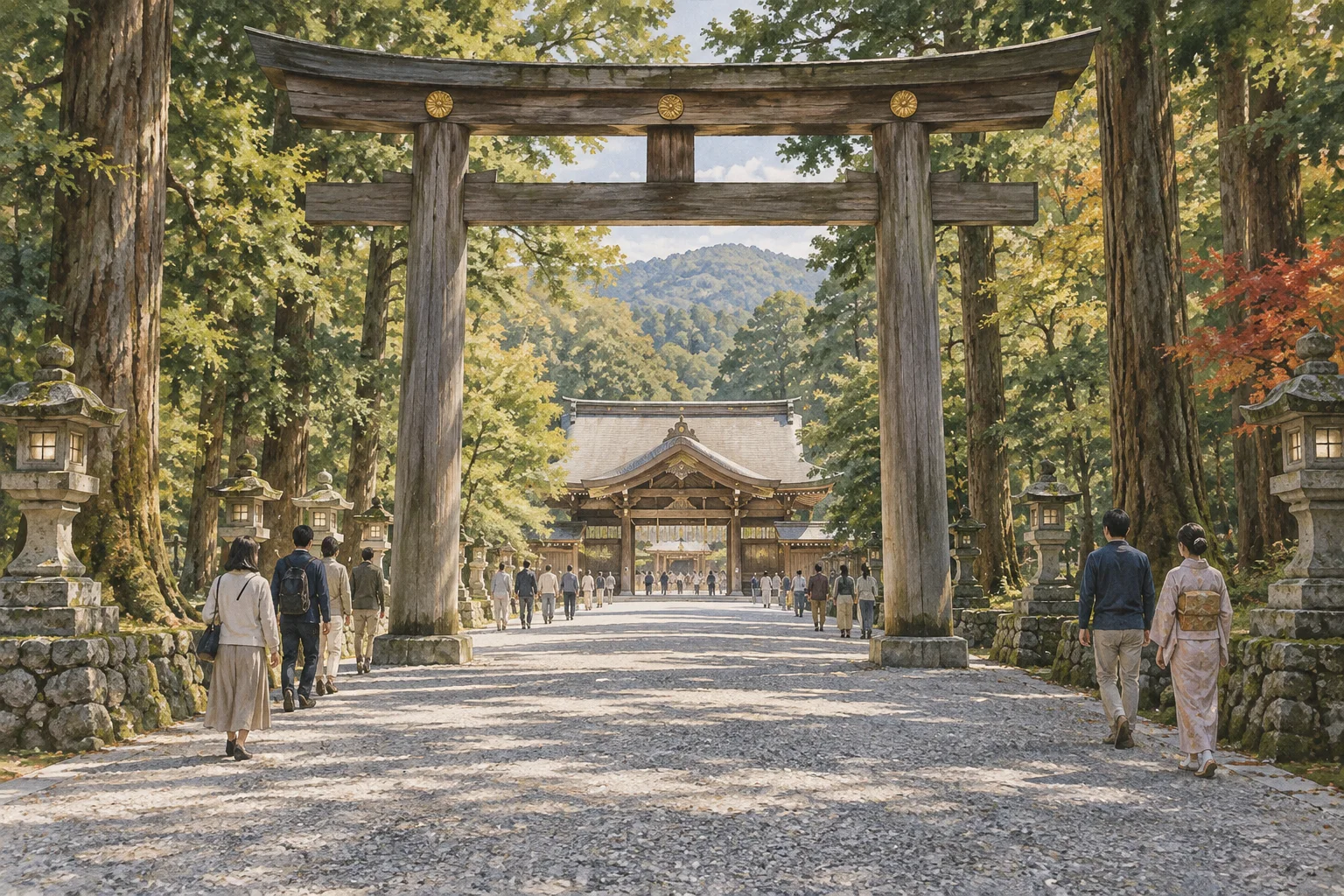
The sando is the path from the gate to the hall of a shrine, and visitors walk to the side of it.
弐In 30 seconds30秒で説明する
The sando is the approach path of a shrine, running from the outer gate to the main hall. Visitors are commonly taught to walk at the side rather than down the exact center, which is said to be the path of the deity. You bow once at the gate before entering, and rinse your hands and mouth at the water basin partway along.
参As a short speechスピーチ・英作文
The sando is the path that runs from a shrine's outer gate to the hall where you pray, and the walk along it is part of the visit rather than just getting there. There are a few conventions. Pause and bow once at the gate before you step through, and again on the way out when you turn back to face the shrine.
Walk along one side rather than straight down the middle, because the center is often described as the route of the deity. Partway along there is a water basin with ladles, where you rinse your left hand, your right hand, then pour a little into your cupped left hand to rinse your mouth, and finally let water run down the handle.
None of this is enforced, and you will see plenty of Japanese people walking straight up the middle without thinking about it, but doing it properly is easy and it is noticed.
参道さんどうsandothe approach to a shrine
真ん中は神様の通り道とされる。だから端を歩くように教わる。
壱一言で言うとIn one line
参道とは鳥居から拝殿へ続く道で、参拝者はその端を歩きます。
弐30秒で説明するIn 30 seconds
参道とは、外の鳥居から社殿へ続く神社の道です。参拝者は、中央そのものではなく端を歩くように教えられるのがふつうで、真ん中は神の通り道とされます。鳥居で一礼してから入り、途中の手水舎で手と口をすすぎます。
参スピーチ・英作文As a short speech
参道は、神社の外の鳥居から拝む建物まで続く道で、そこを歩くこと自体が参拝の一部であり、ただの移動ではありません。いくつか慣習があります。鳥居をくぐる前に立ち止まって一礼し、帰りにも社のほうへ向き直ってもう一度礼をします。
真ん中をまっすぐ歩かず、どちらかの端を歩きます。中央は神の通り道と説明されることが多いからです。途中には柄杓のある手水舎があり、左手、右手の順にすすぎ、左手に水をためて口をすすぎ、最後に柄を伝わせて流します。
これらは強制されるものではなく、何も考えずに真ん中を歩いている日本人もたくさんいますが、きちんとするのは簡単ですし、見ている人は見ています。
こう聞かれたらQuestions people actually ask
QWill anyone mind if I walk down the middle?
AIn practice, no. It is an etiquette that is taught rather than policed, and many Japanese visitors do not follow it. If you know about it, walking to one side is a simple way to show you are treating the place as a place of worship.
まん中を歩いたら、嫌がられますか。実際には誰も咎めません。教えられる作法であって取り締まられるものではなく、守っていない日本の参拝者も多くいます。知っているなら、端を歩くことは、そこを信仰の場として扱っていると示す簡単な方法です。
QHow do I use the water basin if there's no ladle?
AMany shrines removed the ladles and now run water from a spout or a bamboo pipe. Rinse your hands under the running water and, if you wish, take a little in your hand for your mouth. Do not drink from the spout or spit into the basin.
柄杓がない場合、手水はどう使うのですか。柄杓を取り払い、竹の樋や注ぎ口から水を流している神社が増えました。流れる水で手をすすぎ、必要なら手に少し受けて口をすすいでください。注ぎ口から直に飲んだり、水盤に吐いたりしないでください。
そのまま使えるフレーズPhrases you can use
- Bow once before you go through the gate.鳥居をくぐる前に一礼します。
- Walk at the side, not down the middle.真ん中ではなく端を歩きます。
- Rinse your hands at the basin first.先に手水舎で手をすすぎます。
- Bow again on your way out.帰りにももう一度礼をします。
豆知識Background
参道の中央を「正中」と呼び、神が通る道とする説明が広く行われています。ただしこれは近代に整理された作法という面があり、社によって説明が異なることもあります。寺社の参道沿いに商店が並び、町として発達したところは「門前町」と呼ばれ、浅草の仲見世や長野の善光寺の参道のように、それ自体が観光地になっている例があります。手水舎の柄杓は、感染症への対応をきっかけに撤去した社が多く、流水式に切り替えたところが増えました。
出典日本文化ナビ(原田英語.com)「参道を英語で説明する(sando)」https://www.haradaeigo.com/japanese-culture/w/sando
- 文
- 日本文化ナビ編集部(原田英語.com)— 英文・和訳・解説はすべて独自に作成
- イラスト
- 日本文化ナビ オリジナル
- 発行
- 原田英語.com https://www.haradaeigo.com/
- 印刷日
- 2026.10.17
© 2026 Harada Eigo (原田英語.com). Text and illustration: Japan Culture Navi.
ページはこちら