緑茶
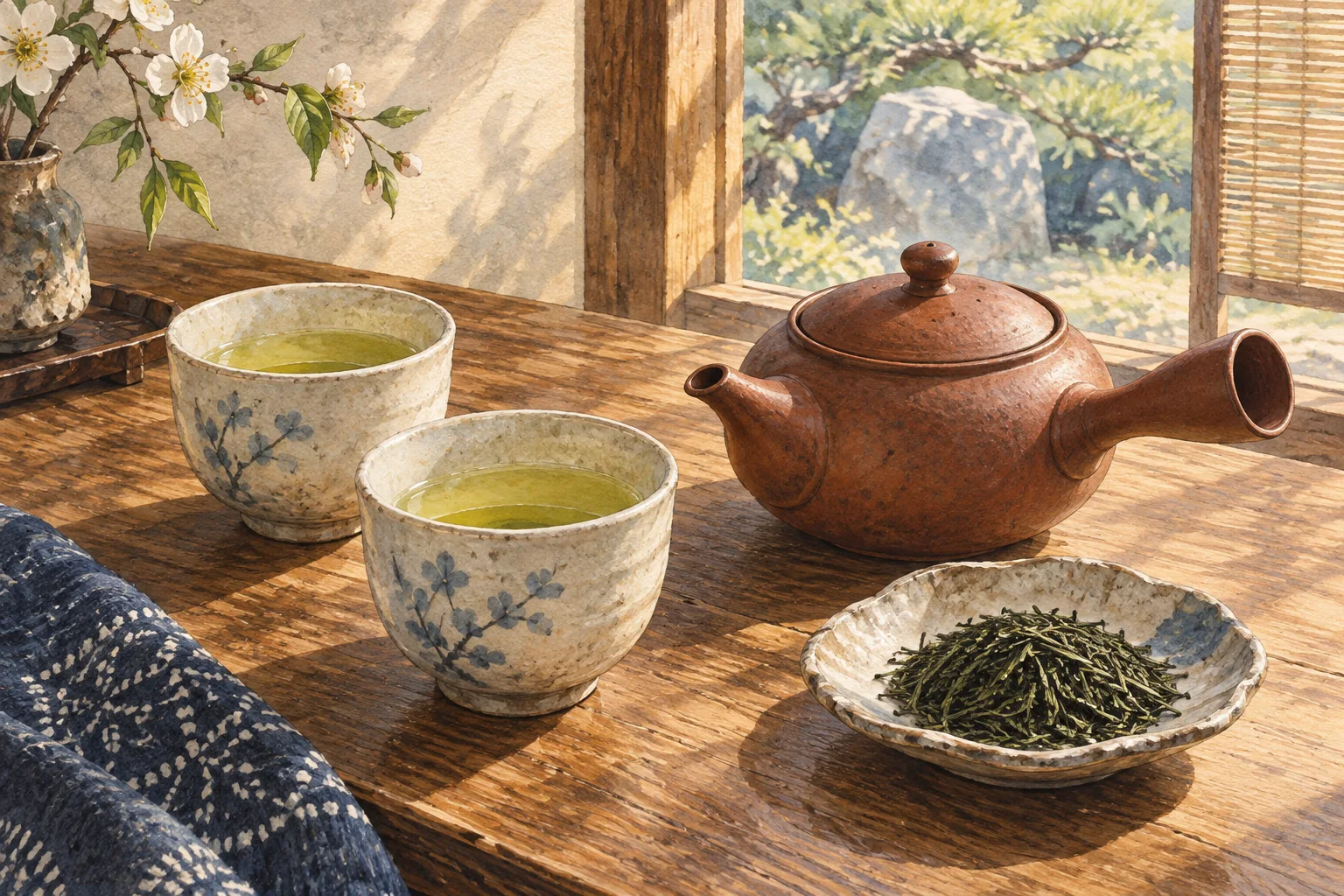
壱In one line一言で言うと
Green tea and black tea come from the same plant, and the difference is whether the leaves are oxidized.
弐In 30 seconds30秒で説明する
Green tea and black tea come from the same species of plant. Most Japanese green tea is steamed soon after picking, which stops oxidation and keeps the leaves green. Everyday tea is sencha; bancha and hojicha are coarser and lighter; gyokuro is shaded before picking and is sweeter. Boiling water ruins most of them.
参As a short speechスピーチ・英作文
Green tea, black tea and oolong all come from the same plant. The difference is what happens after picking. For black tea the leaves are left to oxidize fully; for Japanese green tea they are steamed almost immediately, which halts oxidation and locks in the green color and the fresh, grassy character.
Within Japanese green tea there is a range. Sencha is the everyday leaf. Gyokuro is shaded from the sun for a few weeks before picking, which raises the sweetness and deepens the color. Bancha is made from coarser later leaves, and hojicha is roasted, which makes it brown, nutty and mild, so it is often served to children and in the evening.
The single most useful thing to know is the temperature. Boiling water makes good sencha bitter. Around seventy to eighty degrees Celsius is right, and for gyokuro as low as sixty, which is why restaurants pour the water into the cups first to cool it.
緑茶りょくちゃryokuchaJapanese green tea
紅茶も緑茶も、同じ木の葉。違うのは酸化(発酵)させるかどうか。
壱一言で言うとIn one line
緑茶も紅茶も同じ木の葉で、違いは葉を酸化させるかどうかです。
弐30秒で説明するIn 30 seconds
緑茶と紅茶は同じ種の木の葉から作られます。日本の緑茶の多くは摘んだあとすぐに蒸すため酸化が止まり、葉が緑のまま保たれます。日常に飲むのは煎茶で、番茶やほうじ茶はより粗く軽い味わい、玉露は摘む前に覆いをかけるため甘みが強くなります。熱湯を使うと、多くの緑茶は台無しになります。
参スピーチ・英作文As a short speech
緑茶も紅茶も烏龍茶も、同じ木から作られます。違うのは摘んだあとに何をするかです。紅茶では葉を完全に酸化させます。日本の緑茶ではほぼすぐに蒸すため酸化が止まり、緑の色と、みずみずしく草のような持ち味が閉じ込められます。日本の緑茶の中にも幅があります。
煎茶が日常の茶です。玉露は摘む前の数週間、日を遮って育てるので甘みが増し、色も濃くなります。番茶は後から摘む粗い葉で作り、ほうじ茶はそれを焙じたもので、茶色く香ばしく、口当たりが穏やかなため、子どもにも夜にもよく出されます。
最も役に立つのは温度の話です。熱湯を注ぐと、良い煎茶は苦くなります。七十度から八十度あたりが適温で、玉露では六十度ほどまで下げます。飲食店が先に湯を茶碗に注いで冷ますのはそのためです。
こう聞かれたらQuestions people actually ask
QWhy does my green tea taste bitter?
AAlmost always the water is too hot or the leaves steeped too long. Let boiling water stand or pour it through the cups first to bring it down to around seventy-five degrees Celsius, and steep for about a minute.
緑茶が苦くなってしまうのはなぜですか。ほとんどの場合、湯が熱すぎるか、浸す時間が長すぎるかです。沸かした湯を少し置くか、先に茶碗に注いで七十五度ほどまで下げ、一分ほど蒸らしてください。
QIs matcha the same as green tea?
AIt is a form of it, but treated differently. Matcha is shaded leaf ground to a powder, and you drink the leaf itself whisked into water rather than steeping and discarding it. That is why the caffeine and the flavor are far more concentrated.
抹茶は緑茶と同じですか。緑茶の一種ですが、扱いが違います。抹茶は覆いをかけて育てた葉を粉に挽いたもので、浸して葉を捨てるのではなく、湯に点てて葉ごと飲みます。だからカフェインも味もずっと濃くなります。
QWhy is the tea at restaurants free?
AIt is treated as part of the table setting rather than as a drink you order, like water. It is usually hojicha or bancha, refilled without asking, and there is no expectation to tip or to order anything else.
どうして店のお茶は無料なのですか。注文する飲み物ではなく、水と同じく席に付くものとして扱われているからです。たいていはほうじ茶か番茶で、頼まなくても注ぎ足され、そのために何かを注文する必要もありません。
誤解されやすいA common misunderstanding
MYTHGreen tea and black tea come from different plants.緑茶と紅茶は別の植物だと思われがちです。
FACTThey come from the same species. The difference is processing: green tea is heated soon after picking to stop oxidation, black tea is allowed to oxidize fully.同じ種の木です。違いは加工で、緑茶は摘んですぐ熱を加えて酸化を止め、紅茶は完全に酸化させます。
そのまま使えるフレーズPhrases you can use
- Don't use boiling water.熱湯は使わないでください。
- Green and black tea are the same plant.緑茶と紅茶は同じ木です。
- Hojicha is roasted, so it tastes nutty and mild.ほうじ茶は焙じてあるので、香ばしく穏やかな味です。
- The tea at the table is free.席のお茶は無料です。
豆知識Background
日本の緑茶は摘んだ葉を蒸して酸化を止めるのが特徴で、中国の緑茶は釜で炒ることが多く、その差が香りに出ます。静岡、鹿児島、京都の宇治などが主な産地です。玉露は摘む前に数週間覆いをかけて育てることで、うまみの成分が増えます。ほうじ茶は苦みや渋みが少なく、夜や子どもにもよく出されますが、カフェインがとくに少ないわけではなく、一杯あたりの量は煎茶と大きく変わらないとされます。急須で淹れる家庭は減り、ペットボトルの茶が普及しましたが、これは無糖の飲料が売れる日本市場の特徴でもあります。
出典日本文化ナビ(原田英語.com)「緑茶を英語で説明する(ryokucha)」https://www.haradaeigo.com/japanese-culture/w/ryokucha
- 文
- 日本文化ナビ編集部(原田英語.com)— 英文・和訳・解説はすべて独自に作成
- イラスト
- 日本文化ナビ オリジナル
- 発行
- 原田英語.com https://www.haradaeigo.com/
- 印刷日
- 2026.10.17
© 2026 Harada Eigo (原田英語.com). Text and illustration: Japan Culture Navi.
ページはこちら