大阪
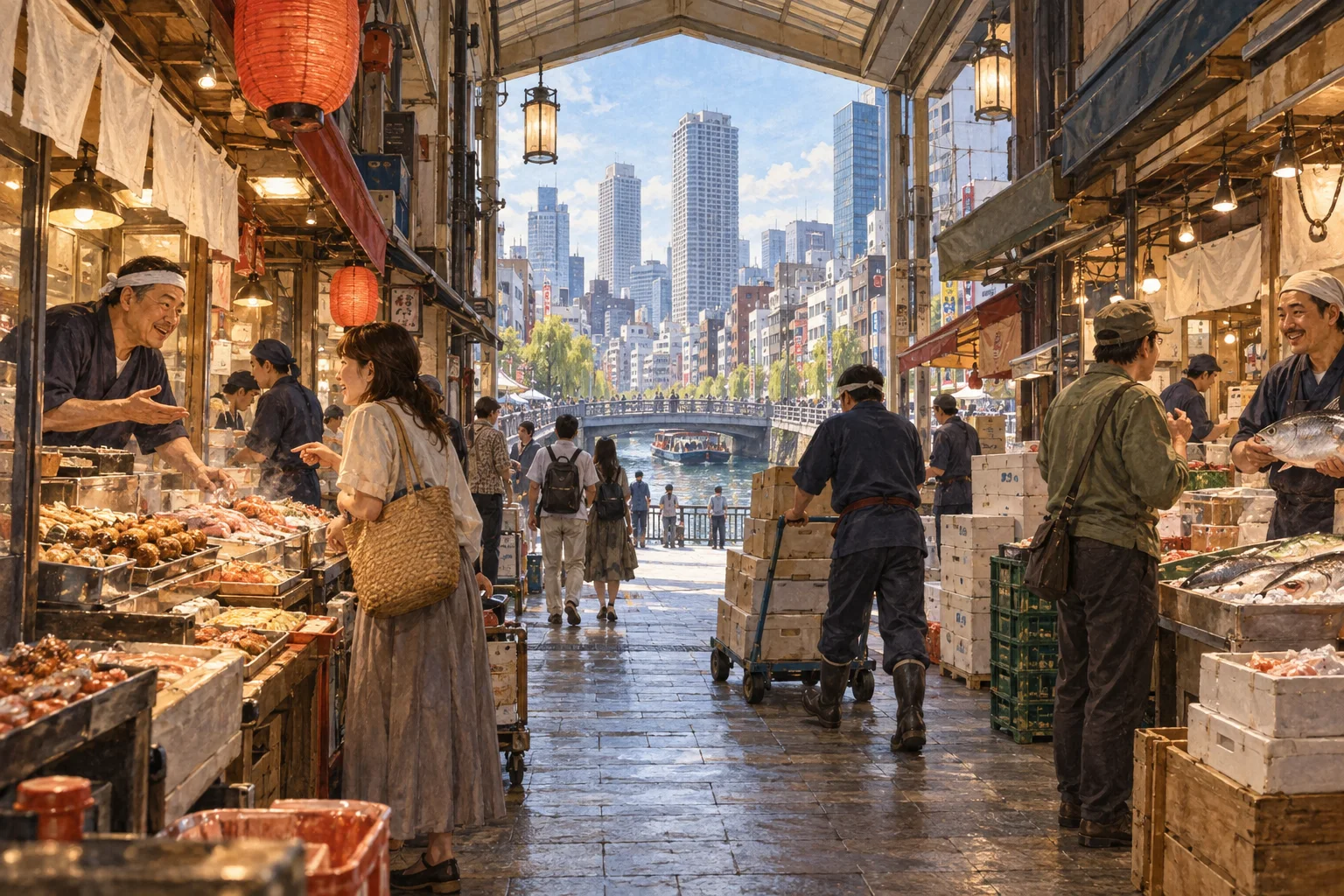
壱In one line一言で言うと
Osaka, often called Japan's second city, is a city of merchants rather than samurai, with its own dialect.
弐In 30 seconds30秒で説明する
Osaka was the commercial center of Edo-period Japan, the place rice from the whole country was traded, and although shogunate officials ruled it, very few samurai lived there and merchants set the tone. That history is often said to be still audible. People speak a distinct dialect, and the city is known for its love of comedy and bargaining. The food culture is famous, and the city's own word for it is kuidaore — eating yourself into ruin.
参As a short speechスピーチ・英作文
If you want to explain that Japan is not one uniform culture, Osaka is the easiest example. Tokyo was the shogun's city, built around a castle and a warrior class. Osaka was the merchants' city — the place where rice from all over the country was warehoused and traded, which is why it was called the nation's kitchen.
Money, not rank, decided things. That is often said to have left a distinct local character: the dialect is different, the rhythm is faster, and people are commonly described as quick to chat with strangers. Comedy is a serious local industry, and many well-known comedians come from the region.
Food is the thing visitors come for — takoyaki, okonomiyaki, kushikatsu — and the local word for the attitude is kuidaore, eating until you go broke. It's also worth being honest that Osaka people themselves enjoy the Tokyo rivalry and will play up the stereotype for you.
大阪おおさかosakathe merchant city, and how it differs from Tokyo
江戸時代は武士ではなく商人が中心の町。「天下の台所」と呼ばれた。
壱一言で言うとIn one line
大阪とは、日本第二の都市と呼ばれることが多い、武士ではなく商人の町で、独自の方言を持つところです。
弐30秒で説明するIn 30 seconds
大阪は江戸時代の商いの中心で、全国の米が集まって取引された町です。幕府の役人が治めていましたが、住む武士はごくわずかで、町を動かしていたのは商人たちでした。その歴史はいまも言葉に残っているとよく言われます。はっきりした方言があり、笑いや値切りを好む町として知られます。食の町としても知られ、この町自身の言葉で「食い倒れ」と言います。
参スピーチ・英作文As a short speech
日本は一つの文化ではない、と説明したいなら、大阪がいちばん分かりやすい例です。東京は将軍の町で、城と武士を中心に作られました。大阪は商人の町です。全国の米が蔵に集まり、取引された場所で、だから「天下の台所」と呼ばれました。身分ではなく金が物事を決めた。
その結果、独特の土地柄が残ったとよく言われます。方言が違い、話の調子が速く、見知らぬ相手とも気軽に話す人が多いと語られます。笑いはこの土地の本気の産業で、この地方出身の有名な芸人も数多くいます。旅行者の目当てはやはり食べ物でしょう。
たこ焼き、お好み焼き、串カツ。その構えを指す土地の言葉が「食い倒れ」、食べて身代を潰す、という意味です。ひとつ正直に言えば、大阪の人自身が東京との対抗を楽しんでいて、相手のために「大阪らしさ」を演じてみせるところもあります。
こう聞かれたらQuestions people actually ask
QIs the dialect really that different?
ADifferent enough that Japanese from elsewhere notice every sentence. The pitch pattern, the negative form and many everyday words differ, though it is fully mutually intelligible.
方言はそんなに違うのですか。他の地方の日本人なら、一文ごとに気づくくらいには違います。抑揚も打ち消しの形も、日常の語も違います。ただ、通じないということはありません。
QWhat should I eat there?
ATakoyaki, okonomiyaki and kushikatsu are the three. For kushikatsu there is one rule everyone will tell you: never dip a skewer in the shared sauce twice.
何を食べればよいですか。たこ焼き、お好み焼き、串カツの三つです。串カツには必ず言われる決まりが一つあります。ソースの二度づけは禁止です。
QWhich side of the escalator do I stand on?
AThe right, which is the opposite of Tokyo. Nobody is certain why, and railways in both cities now ask people to stand on both sides and not walk at all.
エスカレーターはどちら側に立つのですか。右側です。東京と逆になります。理由ははっきりしませんし、いまはどちらの街も、歩かずに両側に立つよう呼びかけています。
誤解されやすいA common misunderstanding
MYTHOsaka is simply Japan's second Tokyo.大阪は東京の二番手のような町だ、と思われがちです。
FACTIt grew from a merchant economy rather than a warrior administration, and the dialect, humor and manners that came out of that are genuinely distinct.武家の統治ではなく商いから育った町で、そこから生まれた方言も笑いも作法も、はっきり別のものです。
そのまま使えるフレーズPhrases you can use
- Tokyo was the shogun's city; Osaka was the merchants'.東京は将軍の町、大阪は商人の町でした。
- It was called the nation's kitchen.天下の台所と呼ばれていました。
- Osaka has its own dialect.大阪には独自の方言があります。
- Kuidaore means eating until you go broke.食い倒れとは、食べて身代を潰すという意味です。
- Never double-dip the kushikatsu sauce.串カツのソースは二度づけ禁止です。
豆知識Background
江戸時代、諸藩が年貢米を売るための蔵屋敷が大阪に集まり、堂島の米市場では米の先物にあたる取引が行われていた。世界でも早い時期の先物取引の一つとして紹介されることがある。大阪市の人口はおよそ280万人で、東京23区、横浜市に次ぐ規模。1970年と2025年の二度、万国博覧会が開かれている。
出典日本文化ナビ(原田英語.com)「大阪を英語で説明する(osaka)」https://www.haradaeigo.com/japanese-culture/w/osaka
- 文
- 日本文化ナビ編集部(原田英語.com)— 英文・和訳・解説はすべて独自に作成
- イラスト
- 日本文化ナビ オリジナル
- 発行
- 原田英語.com https://www.haradaeigo.com/
- 印刷日
- 2026.10.17
© 2026 Harada Eigo (原田英語.com). Text and illustration: Japan Culture Navi.
ページはこちら