鬼
壱In one line一言で言うと
An oni is a horned ogre from Japanese folklore, usually red or blue and enormously strong.
弐In 30 seconds30秒で説明する
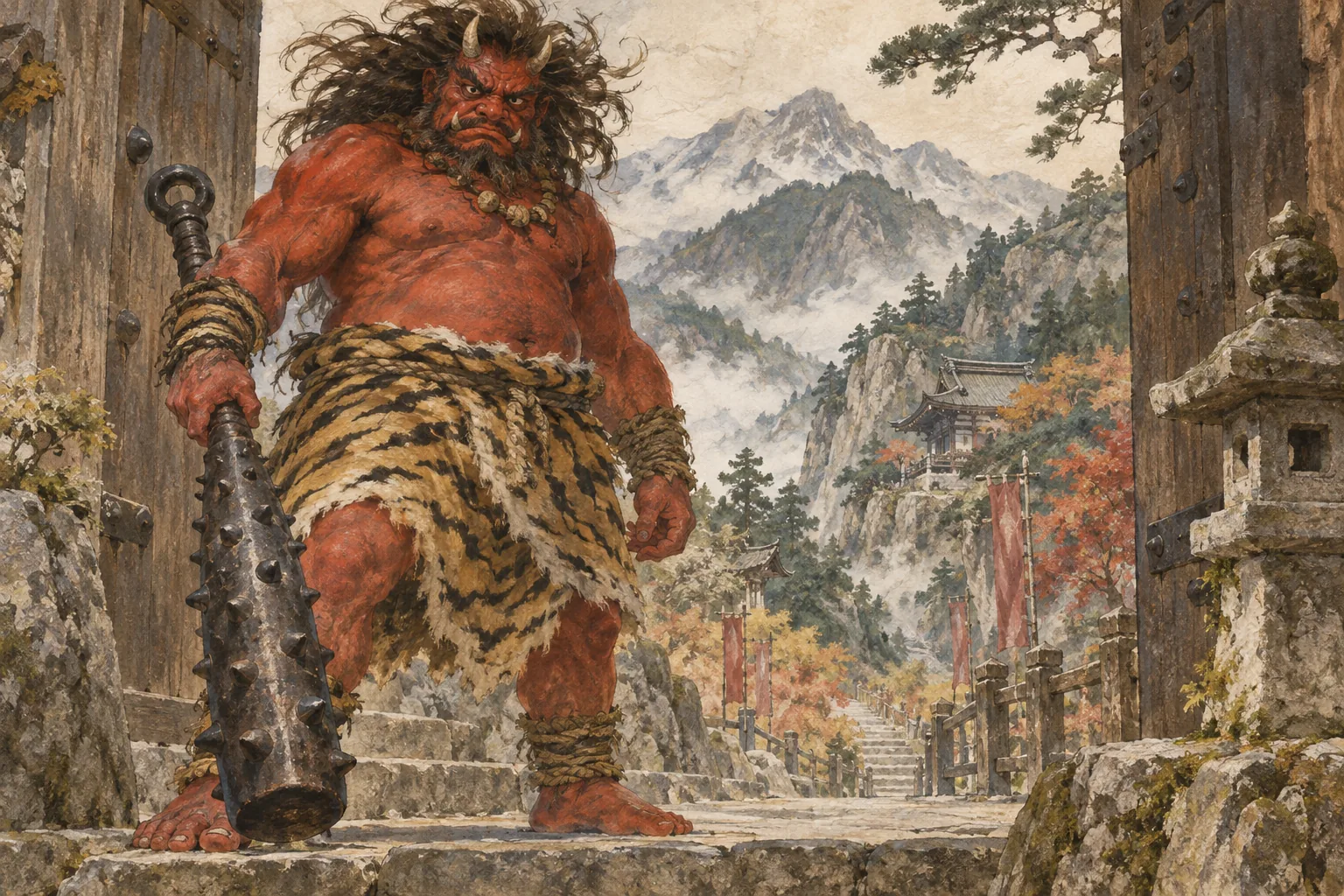
Oni are large horned creatures with wild hair, fangs and a spiked iron club, usually shown with red or blue skin and a tiger-skin loincloth. They appear in folk tales as forces of destruction and disease. Every February people also throw beans at them, they appear in children's games, and are used as a compliment: calling someone an oni at something means they are frighteningly good at it.
参As a short speechスピーチ・英作文
The oni is the ogre of Japanese folklore: huge, horned, with wild hair and an iron club, usually painted red or blue. Two details are worth explaining. First, the tiger-skin loincloth and the ox-like horns.
The usual explanation is that in the old Chinese-derived compass, the unlucky direction, the demon gate, sat between the signs of the ox and the tiger, so the oni was drawn with the horns of one and the skin of the other. Second, what they represent. Oni are not tempters like the devil; they are disaster, plague and violence given a body.
They also live on in everyday language. A demanding coach is an oni coach. Someone brilliant at something is an oni at it. And every February, families throw roasted beans out of the door shouting that the oni should get out, and in many homes the oni is the father in a plastic mask standing in the hallway.
鬼おにonithe horned ogre of Japanese folklore
節分で豆を投げられる相手。角があって虎柄のパンツをはいている理由がある。
壱一言で言うとIn one line
鬼とは、角の生えた日本の伝承上の怪物で、たいてい赤か青で、非常に力が強い存在です。
弐30秒で説明するIn 30 seconds
鬼は角と乱れた髪、牙を持ち、金棒を手にした大きな存在で、たいてい赤か青の肌に虎の皮の腰巻きで描かれます。民話では破壊と疫病の力として現れます。同時に毎年2月には豆を投げつけられ、子どもの遊びにも登場し、ほめ言葉にも使われます。「◯◯の鬼」と言えば、恐ろしいほどうまい人のことです。
参スピーチ・英作文As a short speech
鬼は日本の伝承の怪物です。巨大で、角があり、髪は乱れ、金棒を持ち、たいてい赤か青で描かれます。説明する価値のある細部が二つあります。一つは虎の皮の腰巻きと牛のような角です。
よく知られた説明では、中国由来の方位で不吉な「鬼門」が丑と寅のあいだにあたるため、鬼は丑の角と寅の皮で描かれるようになったとされます。もう一つは、鬼が何を表すかです。鬼は悪魔のように人を誘惑しません。災害、疫病、暴力に体を与えたものです。
日常語にも生きています。厳しい指導者は「鬼コーチ」。何かがずば抜けてうまい人は「◯◯の鬼」。そして毎年2月、家族は戸口から炒り豆をまいて鬼は外と叫びます。多くの家庭では、その鬼は廊下に立つ、プラスチックの面をかぶった父親です。
こう聞かれたらQuestions people actually ask
QIs an oni the same as a demon?
ANot really. A Western demon tempts and corrupts; an oni smashes things. It is closer to an ogre or a force of disaster than to a moral adversary.
鬼は demon と同じですか。少し違います。西洋の悪魔は誘惑し堕落させますが、鬼は壊します。道徳的な敵対者というより、鬼のような怪物、あるいは災厄そのものに近い存在です。
QWhy does the father wear the mask at Setsubun?
ASomebody has to be the oni so the children have a target. It is a small piece of household theater, and the masks often come free with bags of beans in supermarkets.
どうして節分では父親が面をかぶるのですか。子どもが豆をぶつける相手が要るからです。家庭内の小さな芝居で、スーパーの豆の袋には鬼の面がついてくることが多いです。
QIs calling someone an oni an insult?
AIt depends. Oni no you na means merciless. But "an oni of practice" means someone with terrifying dedication, and young people use oni as slang meaning extremely.
人を「鬼」と呼ぶのは悪口ですか。場合によります。「鬼のような」は容赦がないという意味です。ただ「練習の鬼」は打ち込み方が恐ろしいほどの人を指しますし、若い世代は「鬼〜」を「めちゃくちゃ」の意味の俗語として使います。
そのまま使えるフレーズPhrases you can use
- Oni are ogres, not devils.鬼は悪魔ではなく、怪物のほうです。
- The horns and tiger skin come from the unlucky compass direction.角と虎の皮は、鬼門の方角に由来します。
- Someone has to be the oni at Setsubun.節分では、誰かが鬼役をやります。
- "An oni of practice" means someone incredibly dedicated.「練習の鬼」は、打ち込み方がすごい人のことです。
- Young people use it to mean "extremely."若い人は「鬼〜」を「すごく」の意味で使います。
豆知識Background
鬼が牛の角と虎の皮で描かれるのは、陰陽道で不吉とされる方位「鬼門」が北東、すなわち十二支の丑(うし)と寅(とら)の間にあたることに由来するという説が広く知られている。京都御所の北東の角は、鬼門除けとして塀が凹ませてあり「猿ヶ辻」と呼ばれる。「鬼」の字はもともと死者の霊を意味し、中国から伝わった時点では今の角のある姿とは異なっていた。子どもの遊び「鬼ごっこ」の鬼、かくれんぼの鬼も同じ語で、「追う役」を指す。地域によっては鬼を祀る神社があり、節分の掛け声を「鬼は内」とするところもある。
出典日本文化ナビ(原田英語.com)「鬼を英語で説明する(oni)」https://www.haradaeigo.com/japanese-culture/w/oni
- 文
- 日本文化ナビ編集部(原田英語.com)— 英文・和訳・解説はすべて独自に作成
- イラスト
- 日本文化ナビ オリジナル
- 発行
- 原田英語.com https://www.haradaeigo.com/
- 印刷日
- 2026.10.17
© 2026 Harada Eigo (原田英語.com). Text and illustration: Japan Culture Navi.
ページはこちら