お好み焼き
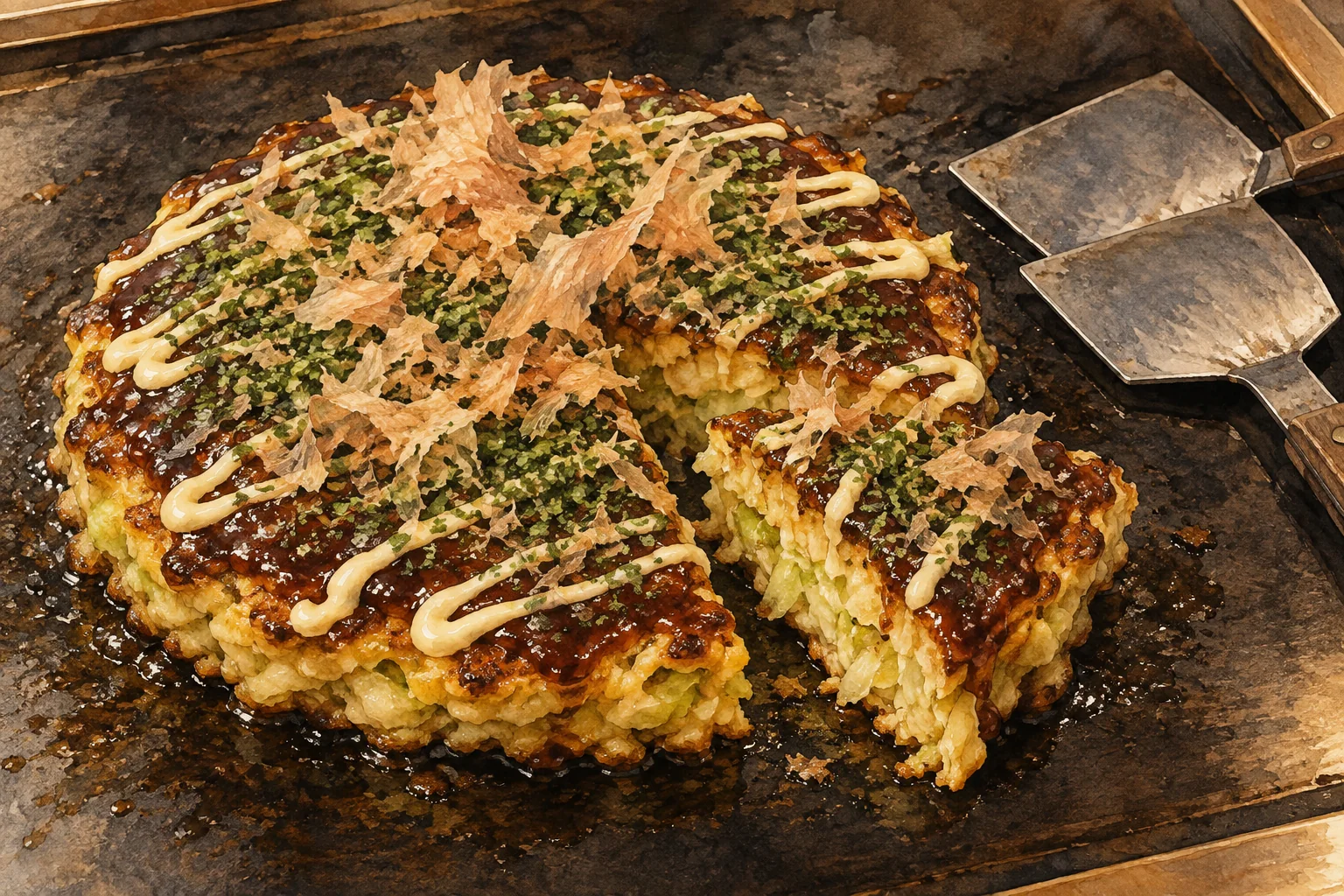
壱In one line一言で言うと
Okonomiyaki is a savory pancake of batter, cabbage and your choice of fillings, cooked on a hot plate.
弐In 30 seconds30秒で説明する
Okonomiyaki means grilled as you like it. A batter of flour, egg and dashi is mixed with a large amount of shredded cabbage and whatever you choose, usually pork, shrimp or squid, then cooked on a griddle and topped with a thick sweet sauce, mayonnaise, dried seaweed and dancing fish flakes. Osaka mixes everything together; Hiroshima layers it.
参As a short speechスピーチ・英作文
Okonomiyaki literally means grilled the way you like it. The base is a batter of flour, egg and dashi stock, mixed with a very large amount of shredded cabbage, and then whatever you want in it: pork belly, shrimp, squid, cheese, mochi.
It is cooked on a flat iron griddle, often the one built into your own table, and finished with a thick sweet-savory brown sauce, a zigzag of mayonnaise, green seaweed powder and dried bonito flakes that curl and move in the heat. The two main styles are genuinely different dishes.
In Osaka everything is mixed into the batter before cooking. In Hiroshima the ingredients are layered on a thin crepe, with a large pile of cabbage and a nest of fried noodles pressed under it. Ask a person from either city which is better and you will not get a balanced answer.
お好み焼きおこのみやきokonomiyakia savory pancake you often cook yourself
「日本風ピザ」は誤解を招く。大阪と広島で、作り方がまったく違う。
壱一言で言うとIn one line
お好み焼きは、生地とキャベツに好みの具を合わせ、鉄板で焼く、甘くない粉もの料理です。
弐30秒で説明するIn 30 seconds
お好み焼きは「好きなように焼く」という意味です。小麦粉・卵・出汁の生地に、たっぷりの千切りキャベツと、豚・えび・いかなど好みの具を混ぜ、鉄板で焼き、甘辛いソース、マヨネーズ、青のり、踊る鰹節をのせます。大阪は混ぜて焼き、広島は重ねて焼きます。
参スピーチ・英作文As a short speech
お好み焼きは、字のとおり「好きなように焼く」という意味です。土台は小麦粉・卵・出汁の生地で、それに大量の千切りキャベツを混ぜ、あとは好きなものを入れます。豚バラ、えび、いか、チーズ、餅。
平らな鉄板で焼き、多くは自分のテーブルに組み込まれた鉄板を使います。仕上げに甘辛い茶色のソース、マヨネーズのジグザグ、青のり、そして熱で反り返って動く鰹節をのせます。二大流派は、本当に別の料理です。
大阪は焼く前にすべてを生地に混ぜます。広島は薄く広げた生地の上に材料を重ね、山盛りのキャベツと、焼きそばの束をその下に敷き込みます。どちらの出身者にどちらが上かと尋ねても、公平な答えは返ってきません。
こう聞かれたらQuestions people actually ask
QDo I cook it myself?
AIt depends on the shop. Some bring the batter and let you cook it on the table griddle, others cook it for you and slide it across. If you are unsure, say so; staff will usually offer to do it.
自分で焼くのですか。店によります。生地を持ってきて自分で焼かせる店も、焼いて滑らせてくれる店もあります。不安なら言ってください。たいてい焼いてくれます。
QWhat's the difference between Osaka and Hiroshima style?
AOsaka mixes the ingredients into the batter. Hiroshima layers them on a thin crepe and adds a portion of fried noodles. They look and eat completely differently.
大阪風と広島風はどう違うのですか。大阪は具を生地に混ぜます。広島は薄い生地に重ねていき、焼きそばを一玉加えます。見た目も食べ心地もまったく違います。
QWhy are the fish flakes moving?
AThey are paper-thin and very light, so rising steam and heat make them curl and lift. It is not a trick, and it surprises almost everyone the first time.
あの魚の削り節はどうして動いているのですか。鰹節は紙のように薄く軽いので、湯気と熱で反り返って動きます。演出ではなく、初めて見た人はたいてい驚きます。
そのまま使えるフレーズPhrases you can use
- Shall I cook it, or would you like to?こちらで焼きましょうか、それともご自分で焼かれますか。
- Press it down once and then leave it alone.一度押さえたら、あとは触らないでください。
- Osaka mixes it; Hiroshima layers it.大阪は混ぜて、広島は重ねます。
- The flakes move because of the steam.鰹節は湯気で動いているんです。
- Use the small spatula to eat it.小さなヘラで食べます。
豆知識Background
お好み焼きの原型は、安土桃山時代の「麩の焼き」、明治期の「もんじゃ焼き」「どんどん焼き」の系譜にさかのぼるとされる。現在の形が広まったのは戦後で、小麦粉が手に入りやすかったことが背景にある。広島の重ね焼きも、戦後の屋台で、少ない小麦粉で腹を満たすためにキャベツを増やしたことが出発点とされる。ソースはウスターソースをもとに日本で発達した濃厚ソースで、オタフクやカープなど地域ごとの銘柄がある。マヨネーズをかける食べ方がいつどこで始まったかには諸説ある。関西では、お好み焼きをおかずにご飯を食べることも珍しくない。
出典日本文化ナビ(原田英語.com)「お好み焼きを英語で説明する(okonomiyaki)」https://www.haradaeigo.com/japanese-culture/w/okonomiyaki
- 文
- 日本文化ナビ編集部(原田英語.com)— 英文・和訳・解説はすべて独自に作成
- イラスト
- 日本文化ナビ オリジナル
- 発行
- 原田英語.com https://www.haradaeigo.com/
- 印刷日
- 2026.10.17
© 2026 Harada Eigo (原田英語.com). Text and illustration: Japan Culture Navi.
ページはこちら