お辞儀
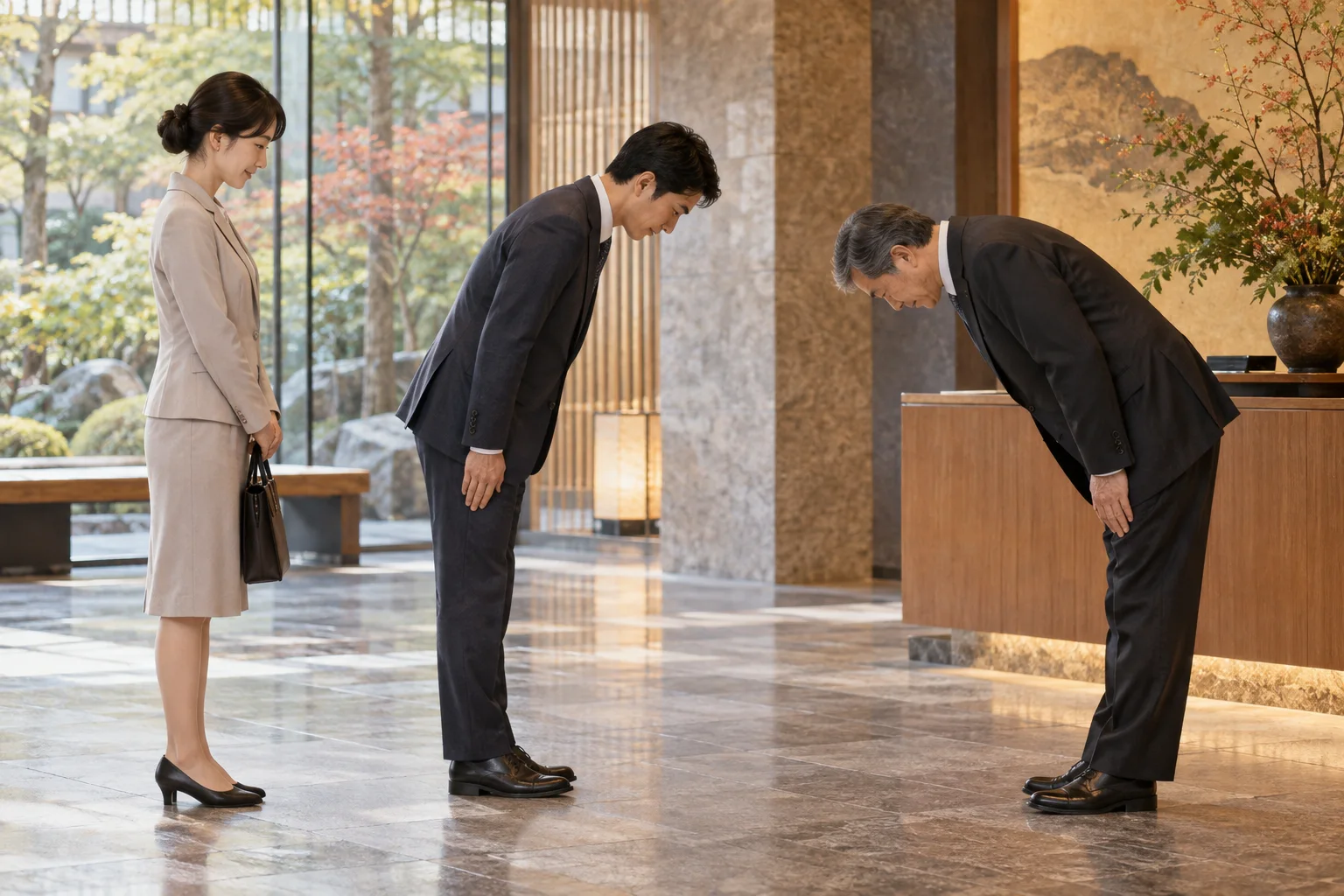
壱In one line一言で言うと
In Japan, bowing replaces the handshake for greeting, thanking and apologizing.
弐In 30 seconds30秒で説明する
Bowing is the basic Japanese gesture for hello, thank you, sorry and goodbye. The deeper and slower the bow, the more respect or apology it carries. A quick nod works between friends, about fifteen degrees is a normal greeting, thirty degrees is for customers and superiors, and a deep forty-five degree bow is for a serious apology or thanks. You bow from the waist with your back straight, not from the neck.
参As a short speechスピーチ・英作文
If you visit Japan, the first thing you will notice is how much people bow. We bow to say hello, to say thank you, to apologize, and to say goodbye. The angle matters.
A small nod is casual, a fifteen-degree bow is an everyday greeting, and a deep bow of forty-five degrees is reserved for serious apologies or serious gratitude. We bow standing, sitting, and even while talking on the phone, which looks strange but is completely automatic.
What I want to explain is that bowing is not about being submissive. It is a way of showing that you are aware of the other person and of the situation. It is one gesture that can carry many different meanings, and Japanese people read the difference without thinking about it.
お辞儀おじぎojigibowing
角度に意味がある、と説明できると一段深い。15度・30度・45度は別の言葉。
壱一言で言うとIn one line
日本では、挨拶・感謝・謝罪のすべてで、握手のかわりにお辞儀をします。
弐30秒で説明するIn 30 seconds
お辞儀は、こんにちは・ありがとう・ごめんなさい・さようなら、そのすべてに使う基本の動作です。深くゆっくりなほど、敬意や謝罪の度合いが強くなります。友人同士なら軽い会釈、15度ほどが普通の挨拶、30度は客や目上の人に、45度の深いお辞儀は重い謝罪や感謝に使います。首だけでなく、背筋を伸ばして腰から折ります。
参スピーチ・英作文As a short speech
日本に来ると、まず人がよくお辞儀をすることに気づくと思います。挨拶にも、感謝にも、謝罪にも、別れにもお辞儀をします。角度に意味があります。
軽い会釈はくだけた場面、15度は日常の挨拶、45度の深いお辞儀は重い謝罪や感謝のためのものです。立っても座ってもお辞儀をしますし、電話中でもします。奇妙に見えますが、完全に無意識です。
伝えたいのは、お辞儀は卑屈さの表れではないということです。相手と場をきちんと意識している、という表明なのです。一つの動作が何通りもの意味を運び、日本人は考えずにその違いを読み取っています。
こう聞かれたらQuestions people actually ask
QDo I have to bow? I'm not Japanese.
ANo one expects a perfect bow from a visitor. A small nod of the head is always enough and is always appreciated. Trying too hard, like bowing very deeply, can actually feel awkward.
お辞儀は必要ですか。私は日本人ではありませんが。外国の方に完璧なお辞儀は期待されません。軽く頭を下げるだけで十分ですし、それで好意的に受け取られます。深く曲げすぎると、かえって不自然になります。
QWhy do people bow while on the phone?
ABecause the bow is tied to the words, not to being seen. When you say "thank you very much" your body does the bow automatically. Almost every Japanese person has caught themselves doing it.
どうして電話中にお辞儀をしているのですか。お辞儀が「見られること」ではなく「言葉」と結びついているからです。「ありがとうございます」と言うと体が勝手に動きます。ほとんどの日本人に身に覚えがあります。
QShould I bow and shake hands at the same time?
AIt is better not to. You end up doing both badly. In business with foreigners, many Japanese people will offer a handshake, so just follow their lead.
お辞儀と握手を同時にしてもいいですか。同時はやめたほうが無難です。どちらも中途半端になります。外国人との商談では日本人側が握手を求めることも多いので、相手に合わせれば大丈夫です。
誤解されやすいA common misunderstanding
MYTHBowing shows that one person is inferior to the other.お辞儀は上下関係を示すものと思われがちです。
FACTTwo equals bow to each other all the time. A bow marks respect and attention to the situation, and in most everyday cases both people bow at the same depth.対等な二人も日常的にお辞儀をし合います。お辞儀は敬意と場への注意を示すもので、日常の多くの場面では双方が同じ深さで礼をします。
そのまま使えるフレーズPhrases you can use
- A small nod is perfectly fine.軽く会釈するだけで大丈夫です。
- The deeper the bow, the more formal it is.深いほど、より改まった形になります。
- Keep your back straight and bend from the waist.背筋を伸ばして、腰から折ります。
- We bow instead of shaking hands.握手のかわりにお辞儀をします。
- Don't worry, you don't have to get the angle right.角度まで気にしなくて大丈夫ですよ。
豆知識Background
ビジネスマナーの世界では、お辞儀は角度で呼び分けられる。約15度が「会釈」、30度が「敬礼(普通礼)」、45度が「最敬礼」。デパートやホテルの研修では実際にこの角度を練習する。座って行う正式なお辞儀は「座礼」といい、茶道や和室では両手を畳につく形になる。なお日本人がお辞儀をするとき目を合わせ続けないのは、じっと見つめるのが失礼とされるためで、無関心ではない。欧米では視線を外すと誠実でないと受け取られることがあるため、この違いは説明する価値がある。
出典日本文化ナビ(原田英語.com)「お辞儀を英語で説明する(ojigi)」https://www.haradaeigo.com/japanese-culture/w/ojigi
- 文
- 日本文化ナビ編集部(原田英語.com)— 英文・和訳・解説はすべて独自に作成
- イラスト
- 日本文化ナビ オリジナル
- 発行
- 原田英語.com https://www.haradaeigo.com/
- 印刷日
- 2026.10.17
© 2026 Harada Eigo (原田英語.com). Text and illustration: Japan Culture Navi.
ページはこちら