お祝いの席
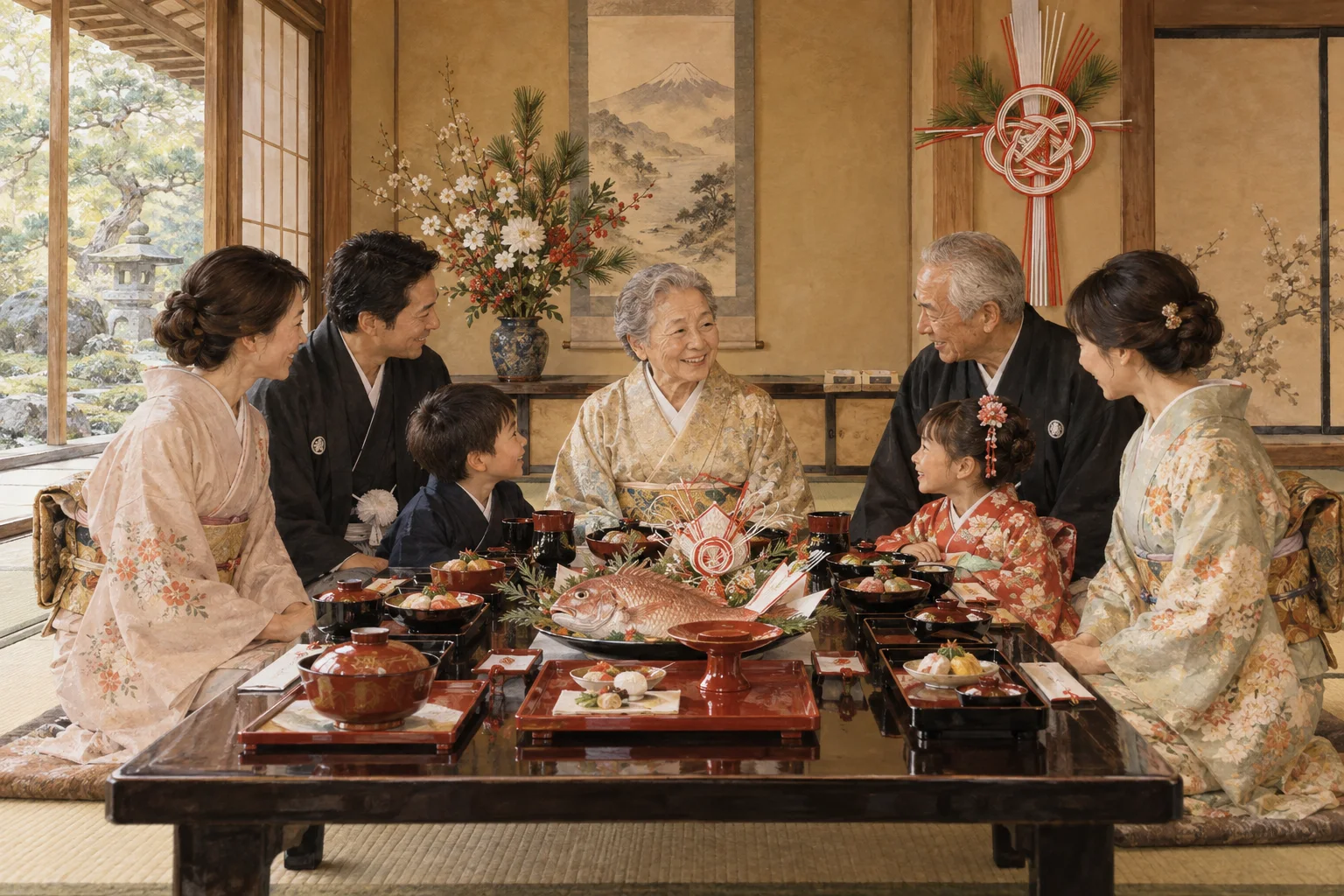
壱In one line一言で言うと
An oiwai no seki is a formal celebration meal in Japan, built around set lucky foods, seating order and toasts.
弐In 30 seconds30秒で説明する
A Japanese celebration meal follows a loose but recognizable pattern, whatever the occasion — a birth, a promotion, a graduation. Red rice and a whole sea bream often appear because their color or their name sounds lucky. Seating puts the guest of honor farthest from the door, someone gives a short speech before the toast, and everyone raises their glass at the same moment on kanpai.
参As a short speechスピーチ・英作文
If you are invited to an oiwai no seki, a formal celebration meal, a few things will feel different from an ordinary dinner. The food often carries meaning rather than just flavor: red rice for its color, a whole grilled sea bream because its name, tai, echoes the word medetai, meaning auspicious.
Where you sit is not random — the guest of honor and the oldest or most senior guests take the seats farthest from the entrance, called kamiza, while younger people sit near the door. Before anyone drinks, someone gives a short speech, and the toast itself is kanpai, with everyone lifting their glass at the same moment.
Guests usually bring a gift, for many occasions money in a decorated envelope, and the host usually sends back something smaller afterward as a thank-you. None of this is written down anywhere; you learn it by watching what the person next to you does.
お祝いの席おいわいのせきoiwai no sekia formal Japanese celebration meal
赤飯とめでたい鯛が出てきたら、それはただの食事ではない。
壱一言で言うとIn one line
お祝いの席とは、縁起のよい料理や席次、乾杯といった型のある、日本の改まった祝いの食事です。
弐30秒で説明するIn 30 seconds
祝いの理由が出産でも昇進でも卒業でも、日本の祝いの席にはゆるやかな型があります。赤飯や尾頭付きの鯛がよく出るのは、色や名前が縁起よいとされるからです。席次では主役が入口から最も遠い上座に座り、乾杯の前に短い挨拶があり、乾杯の声で全員が一斉にグラスを上げます。
参スピーチ・英作文As a short speech
お祝いの席に招かれると、ふだんの食事とは違う点にいくつか気づくはずです。料理は味だけでなく意味を運ぶことが多く、赤飯はその色のため、尾頭付きの鯛は名前が「めでたい」に通じるために出されます。
座る場所も適当ではありません。主役や目上の人は入口から最も遠い上座に座り、若い人は入口の近くに座ります。誰かが飲み始める前に短い挨拶があり、乾杯では、全員が同時にグラスを上げます。
招かれた側はお祝いを持っていくのが普通で、多くの場合は水引のついた祝儀袋に包んだお金です。主催者はあとで少し軽いお返しを送ることが多いです。どれも文書に書かれた決まりではなく、隣の人の様子を見て覚えていくものです。
こう聞かれたらQuestions people actually ask
QDo I have to give a speech or say something?
ANot usually, unless you are asked in advance. It is normal for only the host or a senior guest to speak before the toast, and other guests just listen and raise their glass.
挨拶をしなければいけませんか。前もって頼まれていなければ、たいてい不要です。乾杯の前に話すのは主催者か目上の人だけで、ほかの客は聞いて杯を上げるだけでよいのが普通です。
QIs there a wrong seat to sit in?
AIf nobody tells you where to sit, wait and let the host or an older guest guide you. Taking the seat farthest from the door without being asked can look like you are claiming the guest-of-honor spot.
座ってはいけない席はありますか。指示がなければ、まず待って、主催者か年配の客に案内してもらってください。頼まれもせず入口から最も遠い席に座ると、自分が主役だと言っているように見えかねません。
QWhy does the fish get served whole, head and all?
AA whole fish stands for wholeness and a complete life, so cutting off the head before serving is seen as spoiling the meaning. It is usually sea bream, chosen for the pun on medetai.
どうして魚は頭も尾もついたまま出るのですか。頭から尾まで欠けていないことが、無事で完全な一生を表すとされ、切り分けて出すと意味を損なうと考えられています。使われるのはたいてい鯛で、「めでたい」との語呂合わせによります。
そのまま使えるフレーズPhrases you can use
- Please, take the seat of honor.どうぞ、上座へお座りください。
- Let's raise our glasses together.皆さんでグラスを上げましょう。
- The red rice is for the occasion.この赤飯はお祝いのためのものです。
- Thank you for the gift — please accept this in return.お祝いをありがとうございます。こちらをお返しにどうぞ。
- Congratulations on this happy day.本日は誠におめでとうございます。
豆知識Background
尾頭付きの鯛は、姿がそのまま保たれていることと「めでたい」との語呂合わせから祝いの席の定番になったとされる。赤飯は小豆の赤色を魔よけや慶事の色とする考えに由来するとされ、地域や家庭によって使う豆の種類や炊き方は違う。席次の上座・下座は、床の間や入口からの遠近で決まることが多いが、部屋の造りや主催者の考えで変わるため、絶対の決まりではない。祝いの席で刃物やはさみを連想させる言葉を避ける習わしは、主に結婚式で強く意識されるもので、ほかの祝い事ではそこまで厳格でないことが多い。
出典日本文化ナビ(原田英語.com)「お祝いの席を英語で説明する(oiwai no seki)」https://www.haradaeigo.com/japanese-culture/w/oiwai-no-seki
- 文
- 日本文化ナビ編集部(原田英語.com)— 英文・和訳・解説はすべて独自に作成
- イラスト
- 日本文化ナビ オリジナル
- 発行
- 原田英語.com https://www.haradaeigo.com/
- 印刷日
- 2026.10.17
© 2026 Harada Eigo (原田英語.com). Text and illustration: Japan Culture Navi.
ページはこちら