日本神話
壱In one line一言で言うと
Nihon shinwa, or Japanese mythology, is a set of myths recorded in the 700s that still shapes shrines and festivals.
弐In 30 seconds30秒で説明する
Japan's creation myths survive in two books compiled in the early eighth century, the Kojiki and the Nihon Shoki. They tell of the islands being formed by a pair of deities, of the sun goddess Amaterasu hiding in a cave and plunging the world into darkness, and of her descendants coming down to rule. Many shrines trace themselves to figures in these stories.
参As a short speechスピーチ・英作文
Much of what a visitor sees at a shrine connects back to a set of myths written down about thirteen hundred years ago, in the Kojiki of 712 and the Nihon Shoki of 720. In them, a pair of deities stir the sea and create the islands.
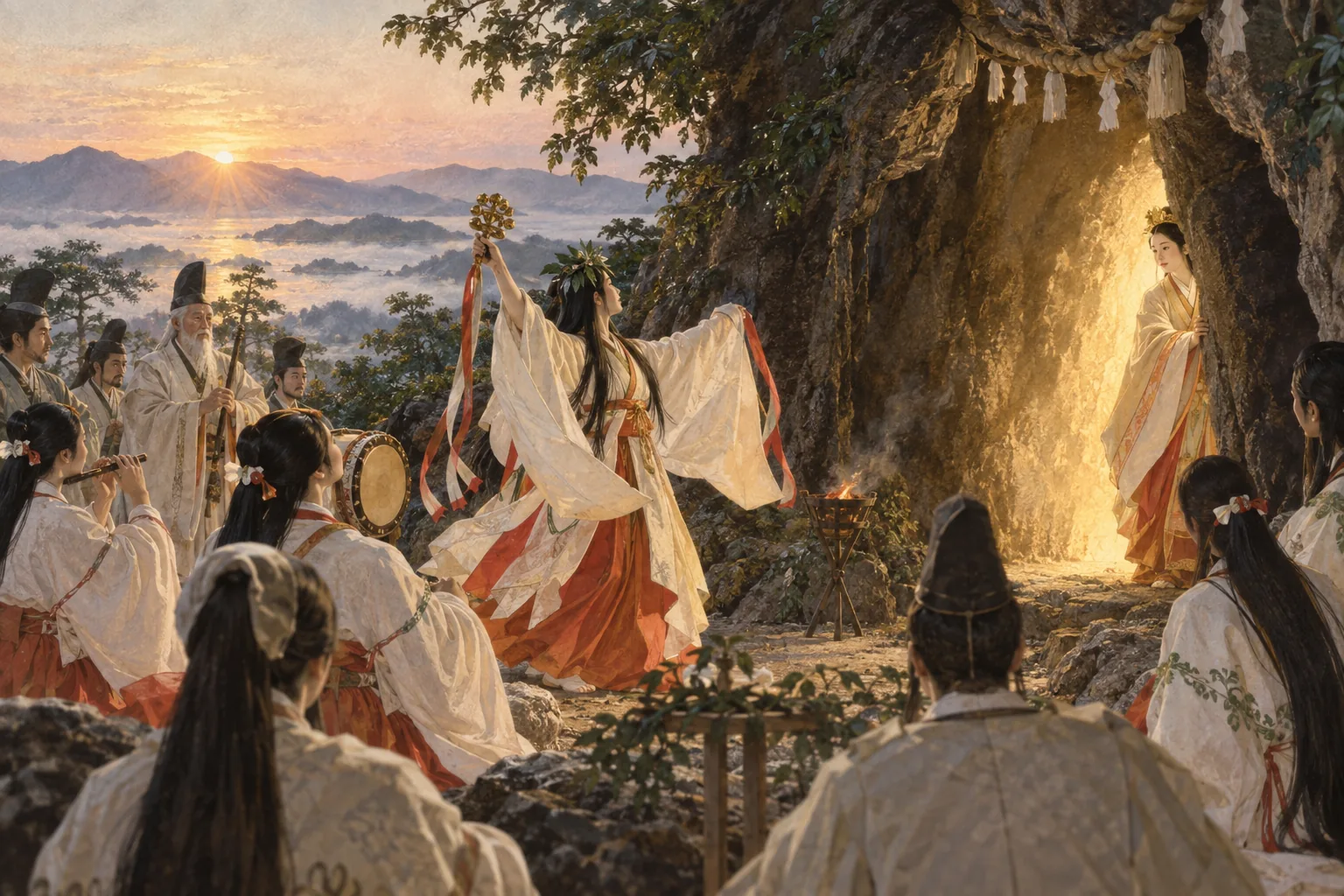
The sun goddess Amaterasu, offended by her brother Susanoo, shuts herself in a rock cave, and the other deities lure her out with a mirror, a dance and the noise of laughter, so that light returns. Susanoo is exiled, kills an eight-headed serpent and finds a sword in its tail.
The mirror, the sword and a jewel became the imperial regalia. These stories were taught as national history before 1945; today they are read as myth, and as the background to festivals, shrine dances and shrine names.
日本神話にほんしんわNihon shinwathe myths in Japan's oldest books
太陽の神が岩に隠れ、世界が暗くなる。そこから始まる話。
壱一言で言うとIn one line
日本神話とは、八世紀に書き留められ、今も神社や祭りの背景になっている神話です。
弐30秒で説明するIn 30 seconds
日本の国生みの神話は、八世紀の初めにまとめられた古事記と日本書紀に残っています。二柱の神が島々を生み、太陽の神である天照大神が岩屋に隠れて世界が闇に沈み、その子孫が地上に降りて治める、という筋です。多くの神社が、この物語の神々を自分の由来としています。
参スピーチ・英作文As a short speech
神社で目にするものの多くは、千三百年ほど前に書き留められた神話につながっています。712年の古事記と720年の日本書紀です。そこでは、二柱の神が海をかき混ぜて島々を生みます。
太陽の神である天照大神は、弟の須佐之男命の乱暴に怒って岩屋に隠れ、世界は闇になります。ほかの神々は鏡と舞と笑い声で誘い出し、光が戻ります。須佐之男命は追放され、八つの頭を持つ大蛇を退治し、その尾から剣を見つけます。
鏡と剣と勾玉は三種の神器となりました。これらの話は1945年までは国の歴史として教えられました。今は神話として読まれ、祭りや神楽、神社の名の背景として語られています。
こう聞かれたらQuestions people actually ask
QDo Japanese people believe these stories happened?
AAs history, very few do. They are read as myth, and schools teach them as literature rather than fact. That does not stop the shrines connected with them from drawing large numbers of visitors.
日本人はこの話を本当にあったことだと思っているのですか。歴史として信じている人はほとんどいません。神話として読まれ、学校でも事実ではなく文学として扱われます。それでも、ゆかりの神社には多くの人が訪れます。
QWhere can I see these myths?
AThe Izumo and Ise areas are the most direct. Kagura dances at shrines and local festivals still act out the cave scene and the serpent, and museums in Shimane and Nara handle the material well.
この神話はどこで見られますか。出雲と伊勢のあたりがもっとも直接的です。神社や地域の祭りの神楽では、今も岩屋の場面や大蛇退治が演じられます。島根や奈良の博物館の展示も充実しています。
QIs Amaterasu worshipped as a god today?
AShe is enshrined at Ise and at many shrines around the country, and people do pray there, but most visitors are not picturing a personal deity. Shrine visiting is more about place, season and custom than about belief in a named god.
天照大神は今も神として信仰されているのですか。伊勢をはじめ各地の神社に祀られており、人々はそこで手を合わせます。ただ、はっきりした人格を持つ神を思い浮かべている人は多くありません。参拝は、名を持つ神への信仰というより、場所と季節と習慣に結びついた行いです。
そのまま使えるフレーズPhrases you can use
- These stories were written down in 712.この話は712年に書き留められました。
- The sun goddess hid inside a cave.太陽の神は岩屋に隠れました。
- It is a myth, not history.これは神話で、歴史ではありません。
- This shrine appears in that story.この神社はその話に出てきます。
- The dance retells the myth.神楽はその神話を演じています。
豆知識Background
古事記は712年、日本書紀は720年に成立したとされます。古事記は一つの物語としてまとまり、日本書紀は異なる伝えを並べて記す形をとっています。天岩戸の場面で神を誘い出すために舞われたとされるものが神楽の起こりと語られ、今も各地の神楽で演じられます。八岐大蛇の尾から出た剣は草薙剣とされ、鏡と勾玉とあわせて三種の神器と呼ばれます。戦前はこれらが国史として教えられましたが、今は神話として扱われています。
出典日本文化ナビ(原田英語.com)「日本神話を英語で説明する(Nihon shinwa)」https://www.haradaeigo.com/japanese-culture/w/nihon-shinwa
- 文
- 日本文化ナビ編集部(原田英語.com)— 英文・和訳・解説はすべて独自に作成
- イラスト
- 日本文化ナビ オリジナル
- 発行
- 原田英語.com https://www.haradaeigo.com/
- 印刷日
- 2026.10.17
© 2026 Harada Eigo (原田英語.com). Text and illustration: Japan Culture Navi.
ページはこちら