日本三景
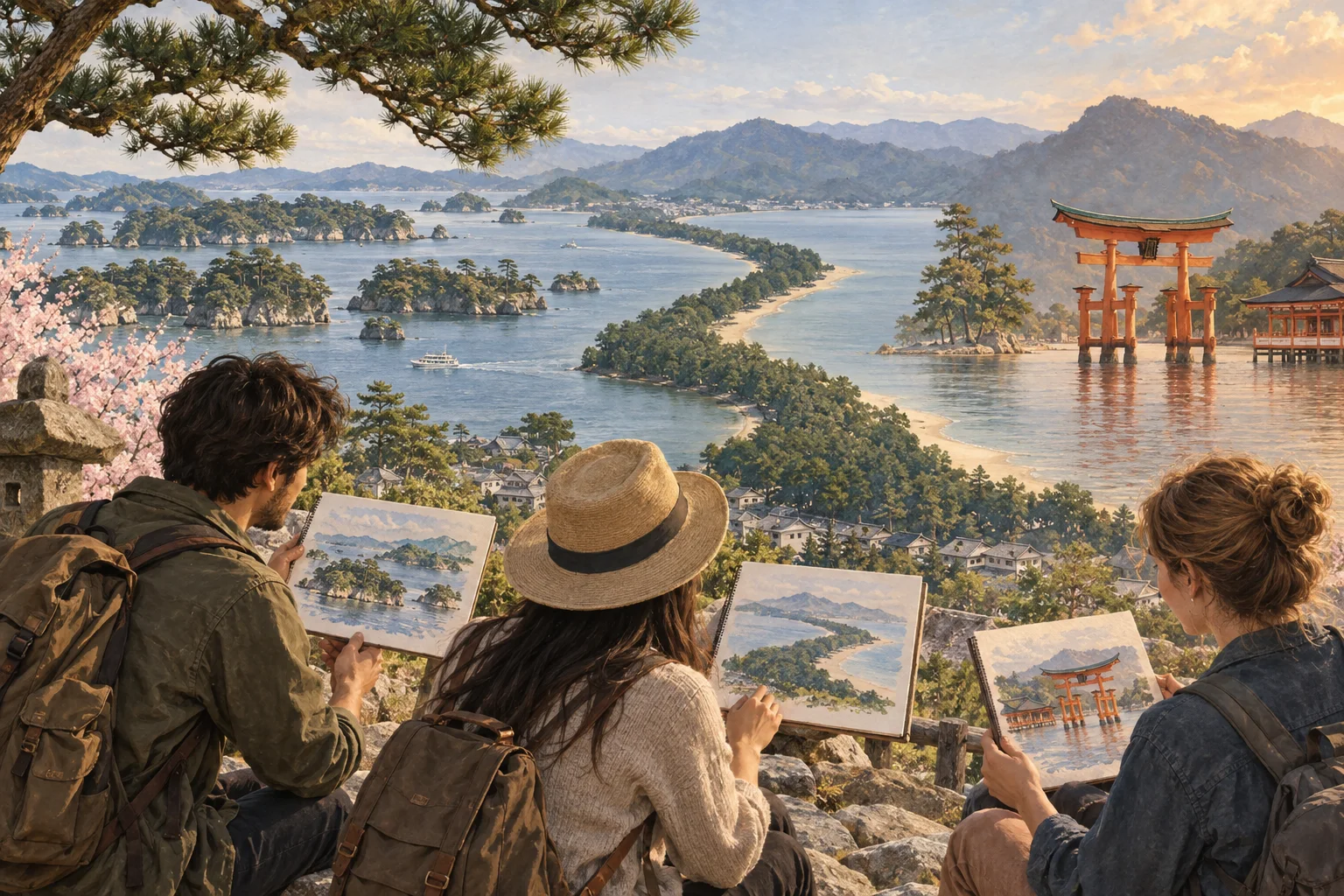
壱In one line一言で言うと
Nihon Sankei, or the three famous views of Japan, are Matsushima, Amanohashidate and Miyajima, named in 1643.
弐In 30 seconds30秒で説明する
The three famous views are Matsushima, a bay of over two hundred pine-covered islands in the northeast; Amanohashidate, a three-kilometer sandbar covered in pine trees on the Japan Sea coast; and Miyajima, the island with the red gate standing in the sea. A scholar named Hayashi Gaho listed them in a book in 1643, and the grouping stuck.
参As a short speechスピーチ・英作文
Japan likes lists of three, and one of the oldest is the three views. They are Matsushima in the northeast, a bay scattered with more than two hundred small islands, each with pines growing out of white rock; Amanohashidate on the Japan Sea coast, a natural sandbar over three kilometers long covered in several thousand pine trees; and Miyajima in the Inland Sea, where a vermilion gate stands in the water in front of a shrine built on stilts.
What is interesting is how the list began. In 1643 a Confucian scholar named Hayashi Gaho wrote in a book that these were three remarkable sights, and that single line became the standard answer for the next four centuries. At Amanohashidate people traditionally bend over and look at it upside down between their legs, because from that angle the sandbar is said to look like a bridge to heaven.
日本三景にほんさんけいNihon Sankeithe three famous views of Japan, chosen in the seventeenth century
「日本三景」は江戸時代の学者が一行書いたことから始まった。
壱一言で言うとIn one line
日本三景とは、1643年に挙げられた松島・天橋立・宮島の三つの景色のことです。
弐30秒で説明するIn 30 seconds
日本三景とは、松の生えた島が200以上浮かぶ東北の松島、日本海側にある松並木の3キロの砂州・天橋立、そして海に立つ赤い鳥居の島・宮島です。1643年に林春斎という学者が著書で挙げ、その組み合わせが定着しました。
参スピーチ・英作文As a short speech
日本には三つ一組で数える言い方が多く、最も古くからあるもののひとつが日本三景です。東北の松島は、白い岩から松が生えた小さな島が200以上散らばる湾。
日本海側の天橋立は、数千本の松に覆われた3キロを超える天然の砂州。そして瀬戸内海の宮島は、海に立つ朱塗りの鳥居と、水の上に建つ社。面白いのは、この一覧の始まり方です。
1643年、林春斎という儒学者が著書に「三つの優れた眺めだ」と書き、その一行が以後四百年の標準の答えになりました。天橋立では、股のあいだから逆さまに覗く見方が知られています。そうすると砂州が天に架かる橋に見える、とされるからです。
こう聞かれたらQuestions people actually ask
QWho decided these three?
AA Confucian scholar, Hayashi Gaho, named them in a book published in 1643. It was one man's opinion that became a convention, not an official designation.
この三つは誰が決めたのですか。儒学者の林春斎が、1643年に出た著書で挙げました。公の指定ではなく、一人の見立てが慣例になったものです。
QWhy look at Amanohashidate upside down?
ABending over and viewing it between your legs reverses sky and sea, so the sandbar appears to float as a bridge in the air. It is a custom at the two hilltop viewpoints, and yes, everyone does it.
どうして天橋立を逆さまに見るのですか。前かがみになって股から覗くと空と海が逆になり、砂州が空に架かる橋のように見えます。両側の展望所での慣わしで、はい、みんなやります。
QAre there other lists like this?
AMany. There are three great gardens, three famous castles, three great festivals and so on. Some are old, some were invented by tourist offices in the twentieth century, and it is worth asking which.
ほかにも、こうした三つ組はあるのですか。たくさんあります。三名園、三名城、三大祭など。古いものもあれば、20世紀に観光の側が作ったものもあり、どちらなのかを問う価値はあります。
そのまま使えるフレーズPhrases you can use
- The three views were named by a scholar in 1643.日本三景は1643年に学者が挙げたものです。
- Matsushima has over two hundred small islands.松島には200を超える小さな島があります。
- Amanohashidate is a natural sandbar covered in pines.天橋立は松に覆われた天然の砂州です。
- At Miyajima the gate stands in the sea.宮島では鳥居が海の中に立っています。
- People view it upside down, between their legs.股のあいだから、逆さまに眺めます。
豆知識Background
寛永20年(1643年)に刊行された林春斎の『日本国事跡考』が、松島・天橋立・厳島を「三處奇觀」として挙げたのが日本三景の始まりとされる。林春斎は林羅山の三男で、林鵞峰とも呼ばれる。彼の生誕日にちなんで7月21日が「日本三景の日」とされている。松島の島の数はおよそ260、天橋立の砂州は全長約3.6キロで、数千本の松が生えている。三景はいずれも海に面しており、内陸の景色は入っていない。
出典日本文化ナビ(原田英語.com)「日本三景を英語で説明する(Nihon Sankei)」https://www.haradaeigo.com/japanese-culture/w/nihon-sankei
- 文
- 日本文化ナビ編集部(原田英語.com)— 英文・和訳・解説はすべて独自に作成
- イラスト
- 日本文化ナビ オリジナル
- 発行
- 原田英語.com https://www.haradaeigo.com/
- 印刷日
- 2026.10.17
© 2026 Harada Eigo (原田英語.com). Text and illustration: Japan Culture Navi.
ページはこちら