国立公園
壱In one line一言で言うと
Kokuritsu koen, or national parks, are state-designated protected landscapes, most of which include private land, farms and towns.
弐In 30 seconds30秒で説明する
Japan has thirty-five national parks. Unlike the American model, designation does not mean the government buys the land: the parks are zoned areas in which development is regulated, and they contain private forests, farmland, hot spring towns, ski resorts and shrines. This makes them accessible and lived-in, and also means protection depends on negotiation between the ministry, landowners and local industries.
参As a short speechスピーチ・英作文
If a visitor from the United States or Canada hears they are entering a Japanese national park, they will picture something Japan does not have. The American model is land owned by the federal government and kept free of settlement.
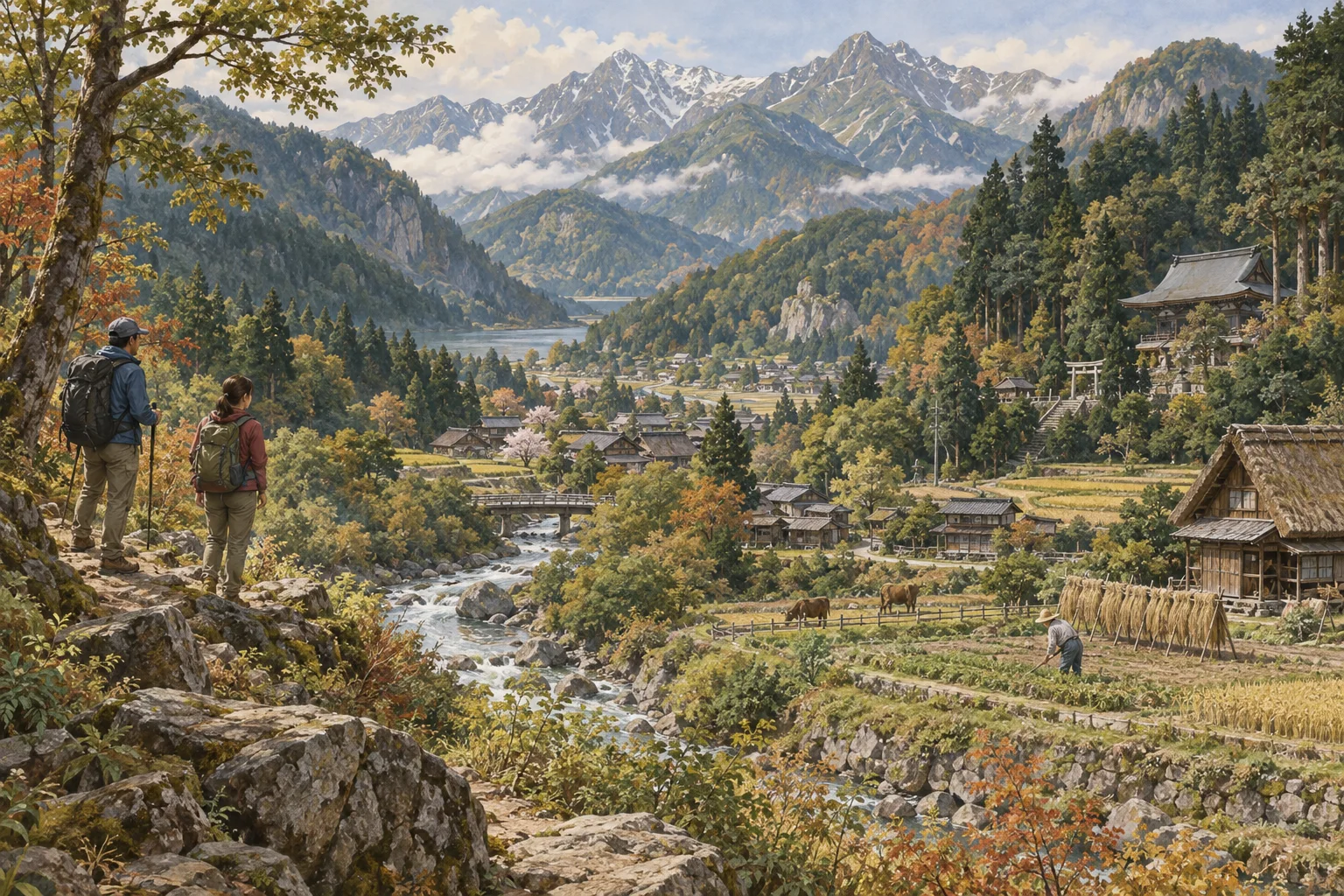
Japan's system, which began with a law in 1931 and the first designations in 1934, works differently: the environment ministry draws a boundary around an area of outstanding scenery and then regulates what can be done inside it, in zones of decreasing strictness, regardless of who owns the land. So a Japanese national park routinely contains villages, rice fields, private forestry, hot spring resorts, ski lifts, toll roads and shrines, and people live and run businesses inside.
There are thirty-five of them, covering roughly six percent of the country. The advantages are real: they are easy to reach, with buses and inns, and the cultural landscape is part of what is protected. The weakness is equally real: the ministry cannot simply forbid things on land it does not own, so protection depends on agreement with owners and local industries, and overuse in the popular parks is a live problem.
国立公園こくりつこうえんkokuritsu koenJapan's national parks, where people live and work inside
国が土地を買い上げていない。中に町があり、田畑があり、私有地がある。
壱一言で言うとIn one line
国立公園とは、国が指定した保護された風景地で、多くは私有地や田畑、町を区域の中に含むものです。
弐30秒で説明するIn 30 seconds
日本には国立公園が三十五あります。アメリカの型と違い、指定しても国が土地を買い上げるわけではありません。開発を規制する区域として線が引かれるもので、中には私有の森、田畑、温泉町、スキー場、神社が入っています。だから近づきやすく、人の暮らす公園になります。同時に、保護は省庁と地権者と地元の産業との話し合いに左右されます。
参スピーチ・英作文As a short speech
アメリカやカナダから来た人が、これから日本の国立公園に入ると聞けば、日本にはないものを思い浮かべます。アメリカの型は、連邦政府が所有し、人の住まない土地です。日本の仕組みは、1931年の法律と1934年の最初の指定に始まったもので、やり方が違います。
環境省が優れた風景地に線を引き、その中で何ができるかを、厳しさの段階を分けて規制する。土地の持ち主が誰であろうと関係ありません。ですから日本の国立公園には、村があり、田があり、私有の林業があり、温泉地があり、スキーのリフトがあり、有料道路があり、神社があります。人が住み、商売をしています。
数は三十五で、国土のおよそ六パーセントにあたります。利点は本物です。行きやすく、バスと宿があり、人の作った風景も守る対象に入っています。弱点も同じく本物です。持っていない土地の上で省が禁じることはできないので、保護は地権者や地元の産業との合意に左右されますし、人気のある公園では使われすぎが実際の問題になっています。
こう聞かれたらQuestions people actually ask
QSo can anyone build inside a national park?
ANot freely. The area is divided into zones, and in the strictest special protection zones almost nothing may be altered. In outer zones, building requires permission rather than being banned.
国立公園の中でも建物は建てられるのですか。自由にはできません。区域は段階に分かれており、最も厳しい特別保護地区ではほとんど手を加えられません。外側の区域では、禁止ではなく許可が要る形になります。
QIs there an entrance fee?
AGenerally no, because there is no gate. Some sites inside charge for parking, a toll road or a facility, and a few areas have introduced a voluntary conservation fee.
入園料はかかりますか。ふつうはかかりません。入口というものがないからです。中の駐車場や有料道路、施設で料金を取ることはありますし、任意の協力金を集める地域もあります。
QWhich ones are best known?
AFuji-Hakone-Izu, Nikko, Daisetsuzan in Hokkaido, the Seto Inland Sea, and the Kerama islands in Okinawa. They differ enormously in character.
よく知られているのはどこですか。富士箱根伊豆、日光、北海道の大雪山、瀬戸内海、沖縄の慶良間諸島などです。性格は大きく異なります。
誤解されやすいA common misunderstanding
MYTHA national park in Japan is uninhabited wilderness owned by the state.国立公園は国が持つ無人の原野だ、と思われがちです。
FACTMost include private land, farms and towns. Designation regulates what may be done there; it does not transfer ownership.多くは私有地や田畑や町を含みます。指定はそこで何ができるかを規制するもので、所有権を移すものではありません。
そのまま使えるフレーズPhrases you can use
- Japan has thirty-five national parks.日本には国立公園が三十五あります。
- The state doesn't own the land.土地は国のものではありません。
- There are towns and farms inside them.中に町や田畑があります。
- Usually there's no gate and no entrance fee.ふつう入口も入園料もありません。
- Protection works by zoning and permits.区域分けと許可で守っています。
豆知識Background
日本の国立公園は1931年(昭和6年)の国立公園法に始まり、1934年に瀬戸内海・雲仙・霧島が最初に指定された。2024年に日高山脈襟裳十勝国立公園が指定され、数は35になった。国土に占める面積はおよそ6パーセントで、国定公園や都道府県立自然公園を合わせると1割を超える。管理は環境省が行い、地域制自然公園と呼ばれる仕組みをとっている。
出典日本文化ナビ(原田英語.com)「国立公園を英語で説明する(kokuritsu koen)」https://www.haradaeigo.com/japanese-culture/w/national-parks
- 文
- 日本文化ナビ編集部(原田英語.com)— 英文・和訳・解説はすべて独自に作成
- イラスト
- 日本文化ナビ オリジナル
- 発行
- 原田英語.com https://www.haradaeigo.com/
- 印刷日
- 2026.10.17
© 2026 Harada Eigo (原田英語.com). Text and illustration: Japan Culture Navi.
ページはこちら