猛暑日
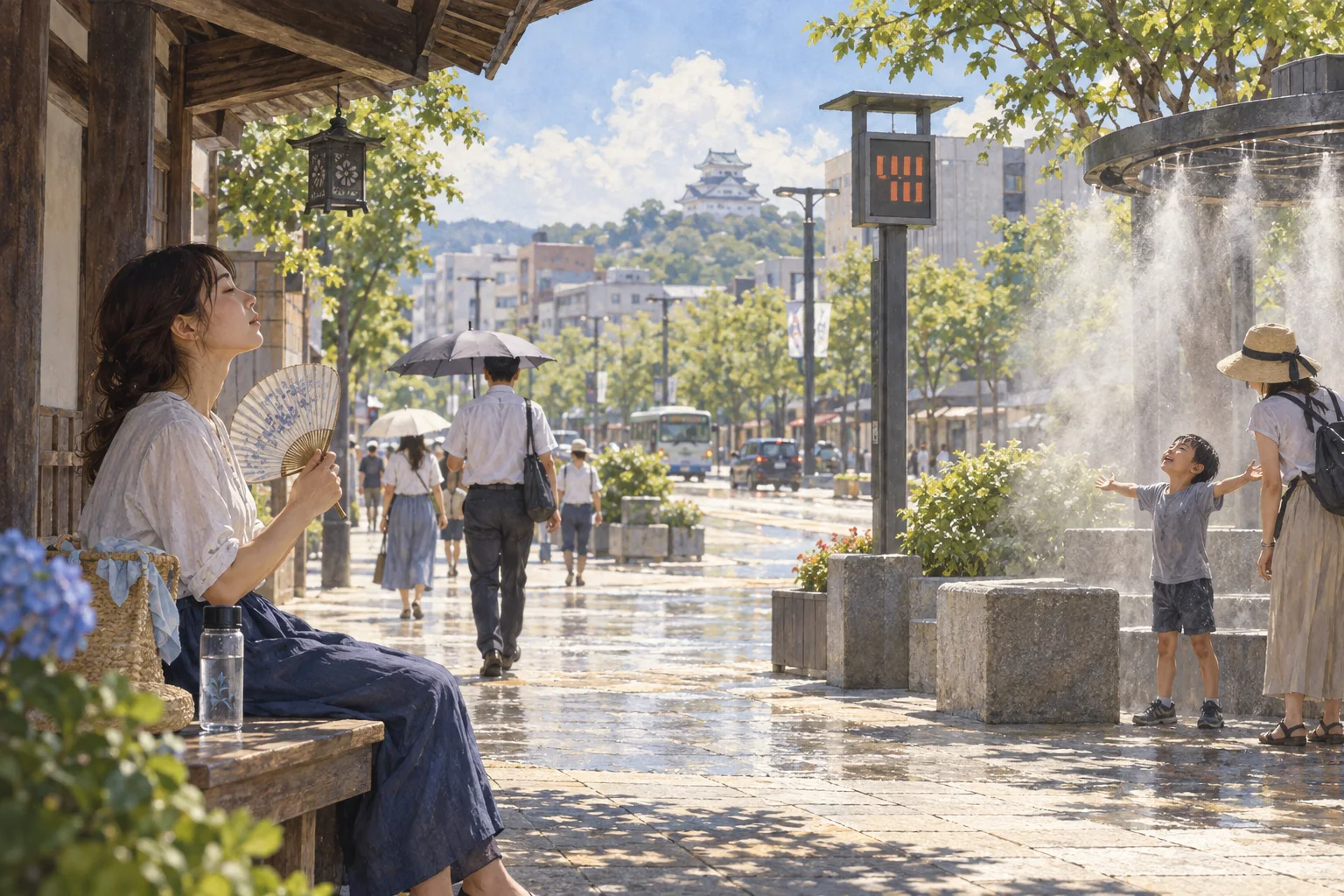
壱In one line一言で言うと
A day reaching thirty-five degrees is officially a mosho day, and Japanese summers are humid as well as hot.
弐In 30 seconds30秒で説明する
The weather agency labels days by temperature: twenty-five degrees is a summer day, thirty a midsummer day, thirty-five a mosho day, and a night that stays above twenty-five is a tropical night. High humidity makes the heat harder to bear, and heatstroke alerts are issued frequently in summer.
参As a short speechスピーチ・英作文
Japanese summers are hotter and stickier than most visitors expect, and the vocabulary reflects it. The weather agency classifies days: twenty-five degrees or more is a natsubi, thirty or more a manatsubi, and thirty-five or more a mosho day, a term added in 2007 as such days became common.
A night whose lowest temperature stays above twenty-five is a nettaiya, a tropical night, and those are the ones that wear people down, because the body never cools. Humidity is the real difficulty; thirty-three degrees in Tokyo in August is heavier than the number suggests.
The response is organized: a heatstroke alert is issued for each region, schools cancel outdoor activities, convenience stores sell salt tablets and cooling sheets, and public buildings open as cooling shelters. Practical advice for a visit in July or August is to plan indoor activities from noon to three, drink more than you think you need, and take the shaded underground passages that connect large stations.
猛暑日もうしょびmoshobiextreme summer heat in Japan
三十五度以上は猛暑日。夜も下がらないのが日本の夏。
壱一言で言うとIn one line
最高気温が三十五度以上の日を猛暑日と呼びます。日本の夏は暑いだけでなく湿気も高いのが特徴です。
弐30秒で説明するIn 30 seconds
気象庁は気温によって日を呼び分けます。二十五度以上が夏日、三十度以上が真夏日、三十五度以上が猛暑日、夜の最低気温が二十五度を下回らない夜は熱帯夜です。湿度が高いために暑さはこたえ、夏には熱中症の警戒情報が頻繁に出されます。
参スピーチ・英作文As a short speech
日本の夏は、多くの訪日客が思うより暑く、まとわりつきます。言葉もそれを映しています。気象庁は日を分類します。二十五度以上が夏日、三十度以上が真夏日、三十五度以上が猛暑日です。猛暑日という呼び方は、そういう日が増えたことを受けて2007年に加えられました。
夜の最低気温が二十五度を下回らない夜は熱帯夜で、これが人を消耗させます。体が冷える時間がないからです。本当に厄介なのは湿度です。八月の東京の三十三度は、その数字から受ける印象より重くのしかかります。対応は組織立っています。
地域ごとに熱中症の警戒情報が出され、学校は屋外の活動を取りやめ、コンビニは塩のタブレットや冷却シートを売り、公共の建物が涼みどころとして開放されます。七月や八月に訪れるなら、正午から三時は屋内の予定にし、必要と思う以上に水を飲み、大きな駅をつなぐ地下道を使うことです。
こう聞かれたらQuestions people actually ask
QWhat is a heatstroke alert?
AA warning issued by region when a heat index threshold is forecast, advising people to avoid exercise outdoors and use air conditioning. It appears on weather apps, station displays and public broadcasts.
熱中症の警戒情報とは何ですか。暑さ指数が基準を超えると予想される地域に出される情報で、屋外の運動を避け、冷房を使うよう呼びかけます。天気のアプリ、駅の表示、放送で知らされます。
QIs air conditioning everywhere?
AIn trains, shops and modern buildings, yes. Older homes and some school classrooms were slower to install it, though classroom air conditioning has spread rapidly in the last decade.
どこにでも冷房はありますか。電車、店、新しい建物にはあります。古い住宅や一部の教室では導入が遅れましたが、教室の冷房はこの十年で急速に広がりました。
QWhat do people drink for it?
ABarley tea, which is caffeine free and served cold, and sports drinks or oral rehydration solutions sold in every convenience store. Plain water alone is not recommended for heavy sweating.
暑さ対策に何を飲むのですか。麦茶です。カフェインがなく冷やして飲みます。それにコンビニで売られているスポーツ飲料や経口補水液です。汗を大量にかいたときに水だけを飲むことは勧められていません。
そのまま使えるフレーズPhrases you can use
- It's going to be thirty-six today.今日は三十六度まで上がります。
- Please stay hydrated.こまめに水分をとってください。
- The heat alert is out again.また熱中症警戒アラートが出ています。
- It didn't cool down at all last night.昨夜はまったく涼しくなりませんでした。
- Let's find somewhere with air conditioning.冷房のある場所に入りましょう。
豆知識Background
気象庁は、最高気温が二十五度以上の日を夏日、三十度以上を真夏日、三十五度以上を猛暑日と呼びます。猛暑日という用語は2007年に定められました。夜間の最低気温が二十五度以上の夜は熱帯夜と呼ばれます。環境省と気象庁は、暑さ指数にもとづく熱中症警戒アラートを発表しており、運動の中止や冷房の使用を呼びかけます。学校の普通教室への冷房の設置は、2018年の猛暑を受けて全国で急速に進みました。
出典日本文化ナビ(原田英語.com)「猛暑日を英語で説明する(moshobi)」https://www.haradaeigo.com/japanese-culture/w/mosho
- 文
- 日本文化ナビ編集部(原田英語.com)— 英文・和訳・解説はすべて独自に作成
- イラスト
- 日本文化ナビ オリジナル
- 発行
- 原田英語.com https://www.haradaeigo.com/
- 印刷日
- 2026.10.17
© 2026 Harada Eigo (原田英語.com). Text and illustration: Japan Culture Navi.
ページはこちら