股引・手甲・脚絆
壱In one line一言で言うと
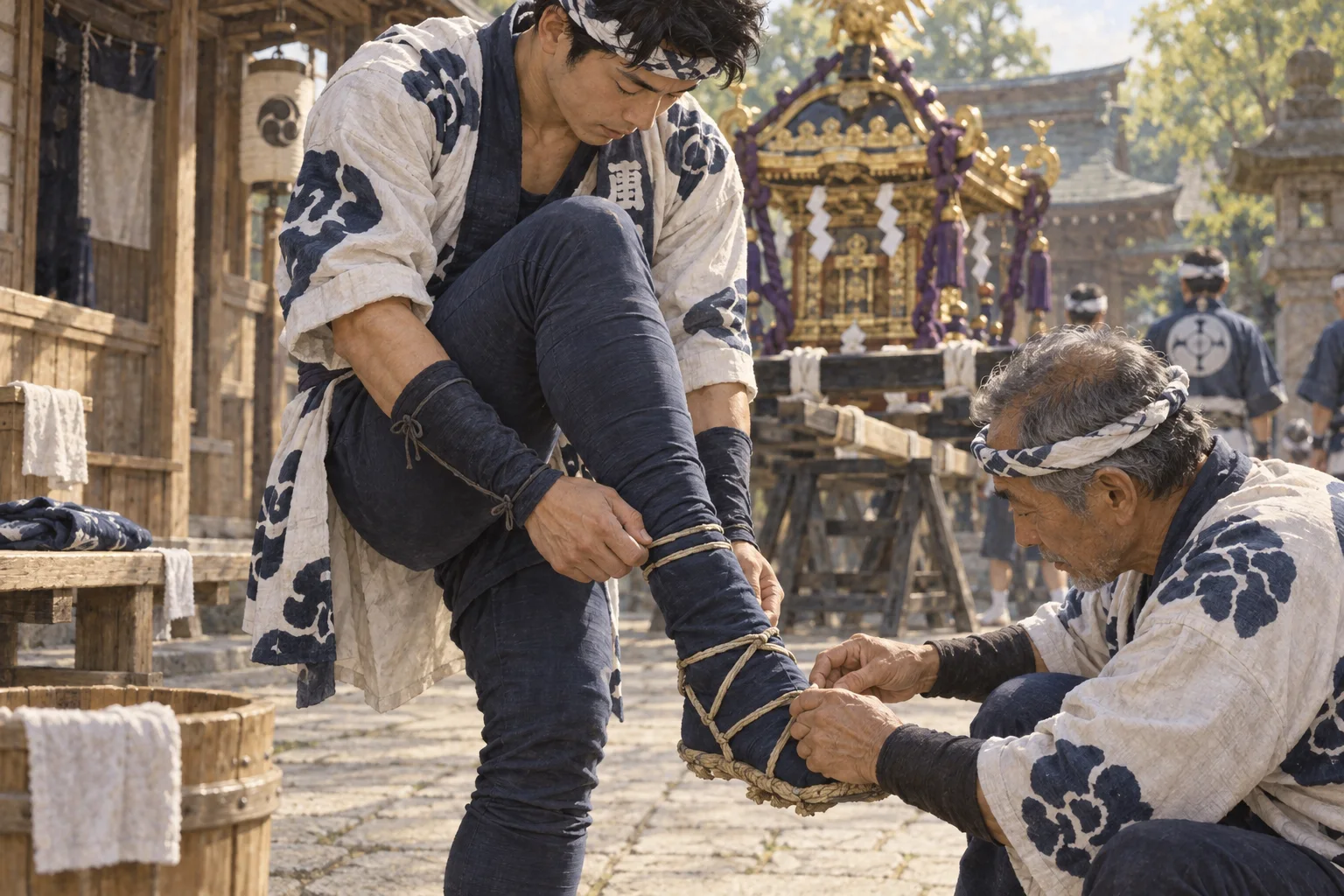
Momohiki, tekko, and kyahan are the tight leggings, arm covers, and shin wraps worn for physical festival work.
弐In 30 seconds30秒で説明する
Momohiki are close-fitting trousers that stop at the ankle, worn under a happi coat at festivals and by traditional craftsmen. Tekko are fabric covers for the forearms and the back of the hand; kyahan wrap around the shin below the knee. All three do the same job: keep loose cloth from catching on ropes, ladders, or a mikoshi shrine palanquin. Similar fitted work clothes were long worn by carpenters, firefighters and other tradesmen, so this is workwear, not just festival costume.
参As a short speechスピーチ・英作文
When you see people carrying a mikoshi shrine palanquin through the street, look at their arms and legs: many wear momohiki, fitted trousers, under a happi coat, and some add tekko on the forearms and kyahan around the shins. None of this is costume for its own sake. Loose sleeves and baggy trousers catch on ropes, poles, and the palanquin itself, so everything is bound close to the body instead.
The same outfit comes from what Edo-period firefighters and carpenters wore for the same practical reason, and some craftsmen still wear a version of it for work. A visitor who assumes this is 'ninja clothing' is actually looking at everyday workwear with centuries of history behind it.
股引・手甲・脚絆ももひき・てっこう・きゃはんmomohiki, tekko, and kyahanthe fitted leggings and arm and shin wraps worn for festival and traditional work
忍者ではなく、神輿の担ぎ手や職人の作業着。
壱一言で言うとIn one line
股引・手甲・脚絆は、神輿を担ぐなど体を動かす祭りの作業のために身につける、ぴったりとした脚衣・腕当て・すね当てのことです。
弐30秒で説明するIn 30 seconds
股引は足首までのぴったりとしたズボンで、祭りでは法被の下に、また職人の作業着としても着られます。手甲は前腕と手の甲を覆う布、脚絆はひざ下からすねに巻く布です。どちらも、ロープやはしご、神輿に緩んだ布が引っかからないようにする役目は同じです。大工や火消しなどの職人が長く着てきた作業着の形で、祭りの衣装だけのものではありません。
参スピーチ・英作文As a short speech
神輿を担いでいる人たちを見るとき、腕と脚に注目してみてください。多くは法被の下にぴったりした股引をはき、前腕に手甲、すねに脚絆を巻いている人もいます。
これは見た目のための衣装ではありません。袖やズボンがだぶついていると、ロープや棒、神輿そのものに引っかかってしまうため、体に沿わせて縛っているのです。
この装いは、江戸時代の火消しや大工が同じ理由で身につけていたものの延長線上にあり、今も仕事着として似た形のものを着る職人がいます。これを「忍者の服」だと思う外国人もいますが、実際は何百年もの歴史を持つ、れっきとした作業着なのです。
こう聞かれたらQuestions people actually ask
QIs this a ninja outfit?
ANo — that's a common guess, but it's practical work clothing. Ninja costumes in movies borrow the same fitted, dark silhouette because it's genuinely good for moving quietly and not catching on things, which is exactly why craftsmen and festival workers wear it too.
これは忍者の服ですか。いいえ、よく聞かれる誤解ですが、これは実用的な作業着です。映画に出てくる忍者の衣装も同じような体に沿った黒っぽいシルエットをしていますが、それは静かに動き回り、物に引っかかりにくいという理由で選ばれているだけで、職人や祭りの担ぎ手が着る理由とまったく同じです。
QWho actually wears these today?
AMainly festival participants who carry a mikoshi or pull a float. Some traditional craftsmen, such as carpenters and gardeners, also wear similar fitted trousers for the same safety reasons, often in modern fabric instead of cotton.
今、実際に誰が着ているのですか。主に神輿を担いだり山車を引いたりする祭りの参加者です。大工や庭師など一部の職人も、同じ安全上の理由でよく似た形のぴったりしたズボンをはいています。今は木綿ではなく、現代的な素材のものも多いです。
QWhy not just wear normal loose clothes for a festival?
AYou could, and plenty of spectators do, but anyone doing the physical work — carrying weight on their shoulders in a crowd, climbing on a float — wears the fitted version because loose fabric is a real hazard in that kind of crowd.
祭りに普通のゆったりした服を着てはいけないのですか。見物するだけなら普通の服でも問題なく、実際多くの見物客はそうしています。しかし、人混みの中で重い神輿を肩に担いだり山車によじ登ったりと、実際に体を使う人たちは、だぶついた布が本当に危険になるため、体に沿ったこの装いを選びます。
誤解されやすいA common misunderstanding
MYTHThis tight black outfit is a ninja costume.この体に沿った黒っぽい装いは忍者の衣装だ、という誤解。
FACTIt's ordinary workwear — the same fitted shape that keeps ninja costumes from catching on things in movies is exactly why festival carriers and traditional craftsmen wear it in real life.実際はごく普通の作業着です。映画の忍者衣装が物に引っかからないよう体に沿った形をしているのと同じ理由で、祭りの担ぎ手や職人も現実にこの形を選んでいます。
そのまま使えるフレーズPhrases you can use
- Could you tie my kyahan a bit tighter?脚絆をもう少しきつく結んでもらえますか。
- Everyone carrying the mikoshi is in matching tekko and momohiki.神輿を担ぐ人はみんな、お揃いの手甲と股引を着けています。
- Some craftsmen still wear a version of this for work.今も仕事でこれに似たものを着る職人がいます。
- It looks like a ninja costume, but it's just practical.忍者の衣装のように見えますが、実は実用的なだけです。
- Roll up your sleeves, or the tekko will feel too tight.袖をまくらないと、手甲がきつく感じますよ。
豆知識Background
股引・手甲・脚絆はもともと、江戸時代の火消しや飛脚、大工など、体を激しく動かす職業の作業着だった。関東の祭りでは、鳶職の人たちが法被姿でこの装いのまま神輿の先導や指揮を務めることがあり、祭りと職人の作業着は地続きである。足元には親指だけ分かれた地下足袋を合わせるのが定番で、祭り用と作業用でデザインの違うものが売られている。
出典日本文化ナビ(原田英語.com)「股引・手甲・脚絆を英語で説明する(momohiki, tekko, and kyahan)」https://www.haradaeigo.com/japanese-culture/w/momohiki-tekko-and-kyahan
- 文
- 日本文化ナビ編集部(原田英語.com)— 英文・和訳・解説はすべて独自に作成
- イラスト
- 日本文化ナビ オリジナル
- 発行
- 原田英語.com https://www.haradaeigo.com/
- 印刷日
- 2026.10.17
© 2026 Harada Eigo (原田英語.com). Text and illustration: Japan Culture Navi.
ページはこちら