禊
壱In one line一言で言うと
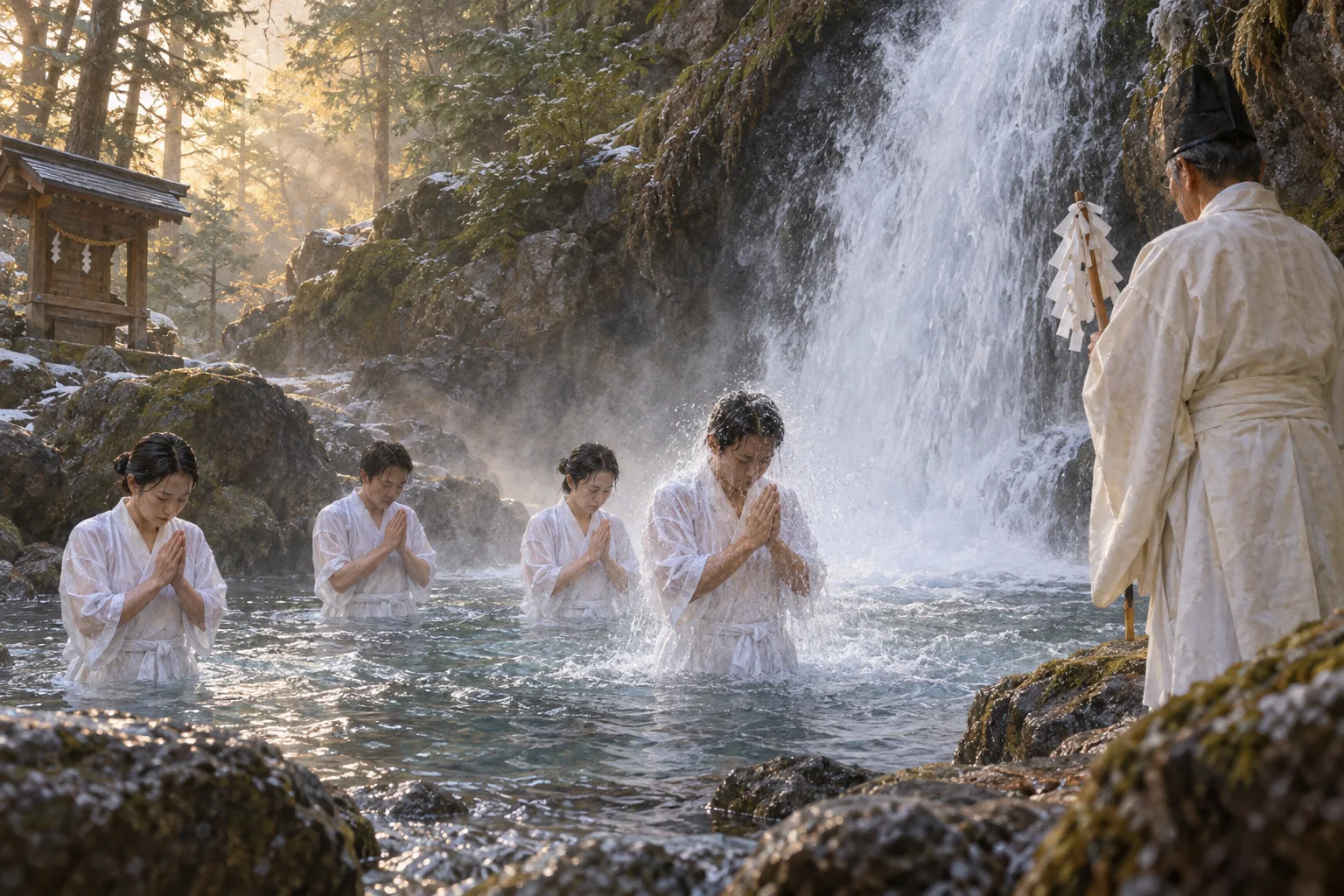
Misogi is washing yourself in water to remove impurity before approaching the sacred.
弐In 30 seconds30秒で説明する
Misogi means cleansing the body in water. In its full form it is done in a river, the sea or under a waterfall, often in winter, and it is still practiced by priests and by groups who train in cold water. The rinsing of hands and mouth that every visitor does at a shrine basin is the shortened everyday version of it.
参As a short speechスピーチ・英作文
Shinto does not divide the world into good and evil so much as into clean and unclean, and misogi is how the unclean is washed off. The idea has a mythological source: in the Kojiki, the deity Izanagi returns from the land of the dead and washes in a river, and gods are born from the washing, among them the sun goddess.
In practice misogi ranges from the full version, standing in cold sea water or under a waterfall while reciting, to the thirty seconds every visitor spends at the shrine water basin. Impurity here is not moral guilt; it attaches to death, illness and disorder, and it is removed by water rather than forgiven. That is why a shrine will hold a purification before a construction project, and why a sumo wrestler rinses his mouth before a bout.
禊みそぎmisogipurifying yourself with water
神社の手水は、川や海で全身を清める行いの簡略形。
壱一言で言うとIn one line
禊とは、神の前に出る前に、水で身を洗って穢れを落とすことです。
弐30秒で説明するIn 30 seconds
禊とは、水で身を清めることです。本来の形は川や海、滝で行うもので、冬に行うことも多く、今も神職や寒中の行を続ける人たちが実践しています。参拝者が水盤で手と口をすすぐのは、これを日常向けに短くした形です。
参スピーチ・英作文As a short speech
神道は世界を善と悪に分けるというより、清いものと穢れたものに分けます。その穢れを洗い落とす行いが禊です。神話に出どころがあります。古事記では、伊邪那岐命が死者の国から戻って川で身を洗い、その洗う行いから神々が生まれます。
太陽の神もその一柱です。実際の禊には幅があり、冷たい海や滝に入って唱えごとをする本格的なものから、参拝者が水盤で過ごす三十秒までが同じ流れの中にあります。
ここでいう穢れは、道徳的な罪ではありません。死や病、乱れに付くもので、赦されるのではなく、水で落とされます。工事の前に神社が祓いを行うのも、力士が取組の前に口をすすぐのも、同じ考えによります。
こう聞かれたらQuestions people actually ask
QIs impurity the same as sin?
ANo. It is closer to a state than to a fault, and it can attach to you through no act of your own, for instance after a death in the family. It is washed off rather than confessed or forgiven.
穢れとは罪のことですか。違います。過ちというより状態に近く、身内に不幸があったときのように、自分が何かをしなくても付きます。告白して赦されるものではなく、洗い落とすものです。
QDo ordinary people still do the full version?
ASome do. Cold water misogi in midwinter is held at a number of shrines, and groups enter the sea or a river in white cloth. Anyone taking part trains for it; it is not something to try on impulse.
今も本格的な禊をする人はいるのですか。います。真冬の寒中禊を行う神社がいくつもあり、白い装束で海や川に入ります。参加する人は準備をして臨みます。思いつきで試すものではありません。
QThe word is used in politics too. Why?
AIn modern Japanese, misogi is used loosely for a politician who resigns, sits out an election and then returns as if cleansed. It is usually said with irony, because nothing has actually been washed away.
政治の話でもこの語を聞きますが、なぜですか。現代の日本語では、辞職して一度選挙を離れ、また戻ってくることを禊と言うことがあります。たいていは皮肉で使われます。実際には何も落ちていないからです。
そのまま使えるフレーズPhrases you can use
- Rinse your hands before you approach.お参りの前に手を清めてください。
- Water washes away impurity here.ここでは水が穢れを落とします。
- They stand in the sea in midwinter.真冬の海に入ります。
- It is not about guilt.罪の意識とは別のものです。
- The shrine basin is the short version.水盤で清めるのが簡略な形です。
豆知識Background
禊は、川や海、滝で全身を清める行いです。古事記には、伊邪那岐命が黄泉の国から戻って川で身を清め、その際に天照大神をはじめとする神々が生まれたと記されています。神社の入口で手と口をすすぐ手水は、この簡略形とされます。穢れは道徳的な罪とは別のもので、死や病に触れることで付くと考えられ、水で落とすものとされました。現代の日本語では、政治家が一度退いて戻ることを比喩的に禊と呼ぶことがあり、これは皮肉を込めた使い方です。
出典日本文化ナビ(原田英語.com)「禊を英語で説明する(misogi)」https://www.haradaeigo.com/japanese-culture/w/misogi
- 文
- 日本文化ナビ編集部(原田英語.com)— 英文・和訳・解説はすべて独自に作成
- イラスト
- 日本文化ナビ オリジナル
- 発行
- 原田英語.com https://www.haradaeigo.com/
- 印刷日
- 2026.10.17
© 2026 Harada Eigo (原田英語.com). Text and illustration: Japan Culture Navi.
ページはこちら