組紐
壱In one line一言で言うと
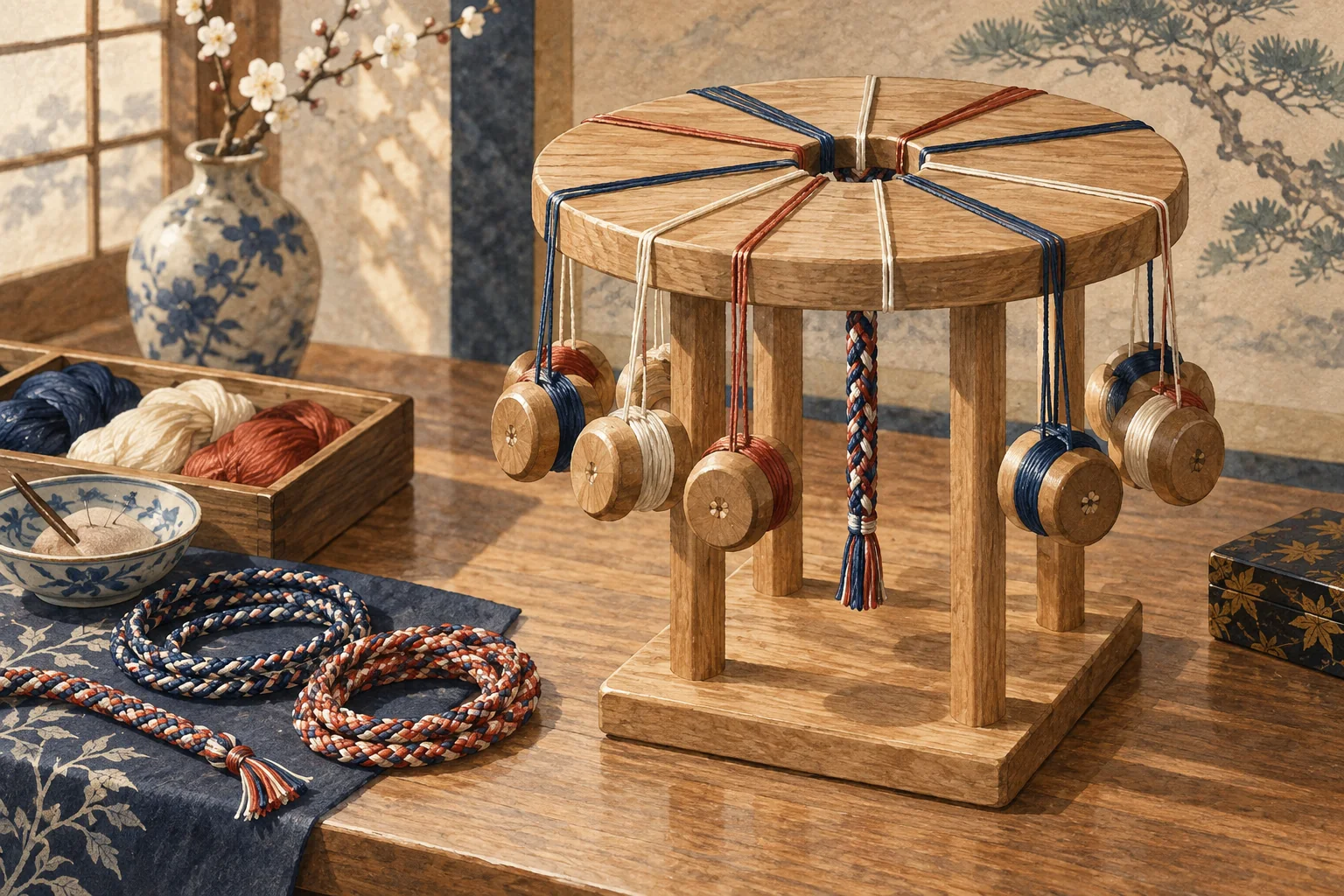
Kumihimo is Japanese braided cord, made by interlacing many threads on a special stand.
弐In 30 seconds30秒で説明する
Kumihimo is braided cord made by moving bundles of silk threads over a round or square wooden stand in a fixed order. It was used to fasten armor, to hang a sword, to tie a scroll, and today mainly to secure an obi. Different braiding patterns produce cords of different strength and cross-section.
参As a short speechスピーチ・英作文
Kumihimo is Japanese braided cord. Bundles of silk thread hang with weights from a round or square wooden stand, and the maker moves them across each other in a fixed repeating order, so the braid grows down through the center.
Different orders of movement give completely different cords: flat, round, square, hollow, each with its own strength and drape. The craft is old and was entirely practical. Cords laced together the plates of armor, hung a sword from a belt, tied documents and boxes, and secured the covers of Buddhist scriptures.
Today the main surviving use is the obijime, the cord tied over an obi to hold it, where the color is chosen to work with the kimono. It is also one of the easiest traditional crafts for a visitor to try: a short workshop on a simple stand produces a usable bracelet or strap in an hour or so, and the basic movement is learned in minutes.
組紐くみひもkumihimobraided cord
帯を留める紐、刀を下げる紐、鎧を綴じる紐。全部これ。
壱一言で言うとIn one line
組紐とは、専用の台で多くの糸を組み合わせて作る日本の紐です。
弐30秒で説明するIn 30 seconds
組紐とは、絹糸の束を丸台や角台と呼ばれる木の台の上で決まった順に動かして組む紐です。鎧を綴じ、刀を下げ、巻物を結ぶために使われ、今は主に帯を留めるために使われます。組み方の違いによって、強さも断面の形も変わります。
参スピーチ・英作文As a short speech
組紐は日本の組んだ紐です。絹糸の束が丸台や角台と呼ばれる木の台から錘で下げられ、作り手はそれを決まった順序で繰り返し交差させます。すると組み目が台の中心を通って下へ伸びていきます。動かす順序が違えば、まったく違う紐になります。
平たいもの、丸いもの、角ばったもの、中が空洞のもの。それぞれに強さと落ち方の違いがあります。この技は古く、まったく実用のものでした。紐は鎧の板をつなぎ、刀を帯から下げ、文書や箱を結び、経典の表紙を留めました。
今日まで残っている主な用途は帯締めで、帯の上に結んで押さえる紐です。色は着物に合わせて選びます。訪れた人が試しやすい伝統工芸のひとつでもあります。簡単な台を使う短い体験なら、一時間ほどで使える組紐の腕輪や紐が作れ、基本の動きは数分で覚えられます。
こう聞かれたらQuestions people actually ask
QWhat is it actually used for now?
AMostly the obijime, the cord tied over an obi. Also haori ties, sword fittings for practitioners and collectors, cords for scrolls and boxes, and modern items such as bracelets, phone straps and bag handles.
いまは実際に何に使われているのですか。主に帯締め、つまり帯の上に結ぶ紐です。ほかに羽織の紐、居合や収集家のための刀の下緒、巻物や箱を結ぶ紐、そして腕輪や携帯電話の紐、鞄の持ち手といった現代の品にも使われます。
QIs it hard to learn?
AThe basic braid is not. A short workshop teaches one pattern on a simple stand and you finish with a cord you can wear. Mastering the range of traditional patterns and keeping tension even over a long cord is the difficult part.
習得は難しいですか。基本の組み方は難しくありません。短い体験では簡単な台でひとつの組み方を習い、身につけられる紐が仕上がります。難しいのは、伝統的な組み方を幅広く身につけることと、長い紐の張りを一定に保つことです。
そのまま使えるフレーズPhrases you can use
- The threads are moved in a fixed order.糸を決まった順に動かします。
- It used to lace together armor.昔は鎧を綴じるのに使いました。
- Today it mostly holds an obi.今は主に帯を留めます。
- You can make one in an hour.一時間ほどで作れます。
豆知識Background
組紐の台には、丸台、角台、高台、綾竹台などがあり、台によって組める紐の種類が変わります。糸の束には錘を下げて張りを一定に保ちます。産地としては京都の京組紐、三重の伊賀組紐が国の伝統的工芸品に指定されています。かつては鎧の縅や刀の下緒、経典の紐として作られ、武具の需要が消えた明治以降は帯締めが主な用途になりました。2016年の映画をきっかけに、若い世代にも広く知られるようになりました。
出典日本文化ナビ(原田英語.com)「組紐を英語で説明する(kumihimo)」https://www.haradaeigo.com/japanese-culture/w/kumihimo
- 文
- 日本文化ナビ編集部(原田英語.com)— 英文・和訳・解説はすべて独自に作成
- イラスト
- 日本文化ナビ オリジナル
- 発行
- 原田英語.com https://www.haradaeigo.com/
- 印刷日
- 2026.10.17
© 2026 Harada Eigo (原田英語.com). Text and illustration: Japan Culture Navi.
ページはこちら