骨上げ
壱In one line一言で言うと
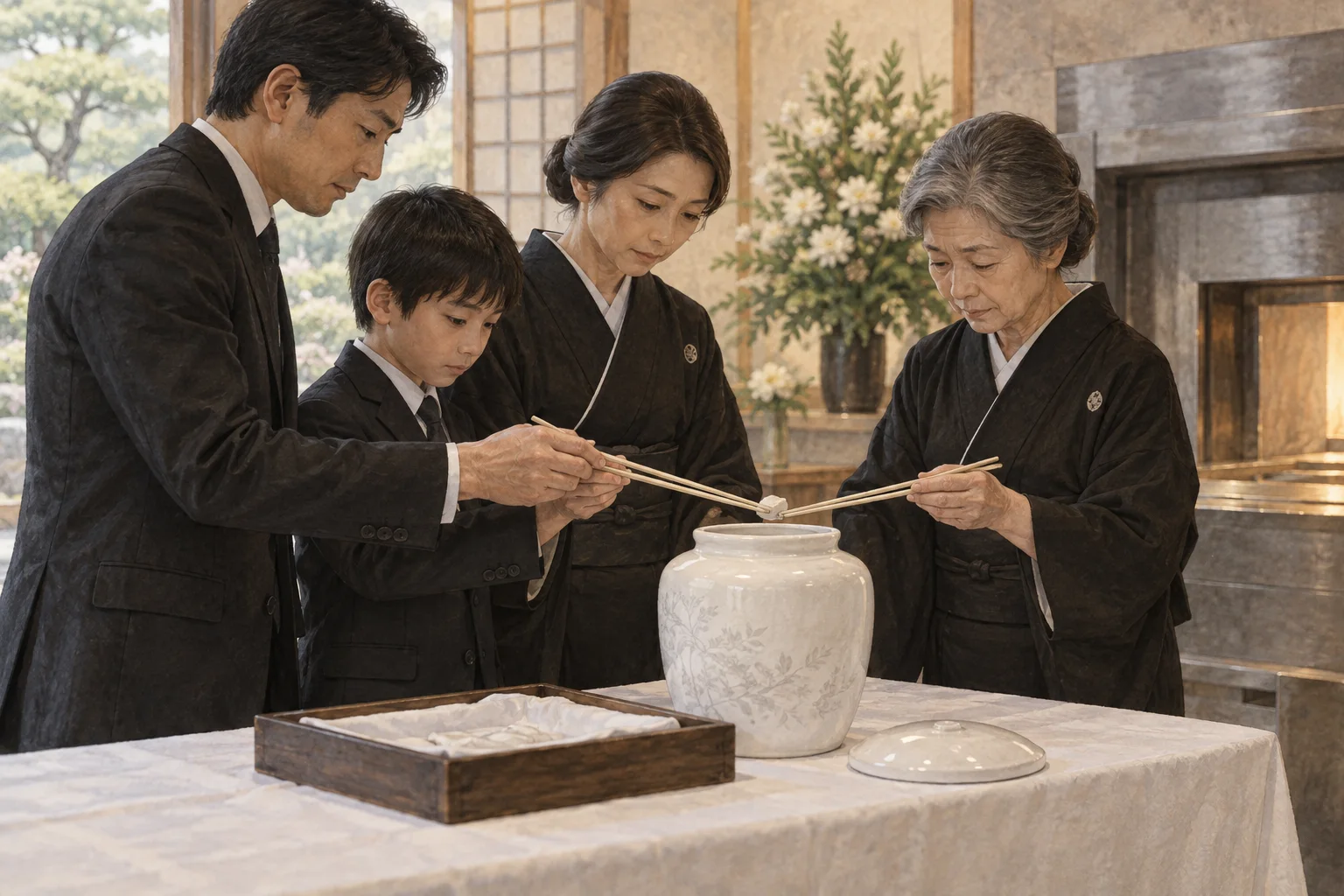
Kotsuage is the funeral custom where family members pass the cremated bones chopsticks-to-chopsticks into the urn.
弐In 30 seconds30秒で説明する
After cremation, the family gathers for kotsuage: two people hold one bone together with chopsticks, or pass it chopsticks-to-chopsticks, before it goes into the urn. Bones go in from the feet upward, so the skeleton sits upright. The very last piece, usually placed by the chief mourner, is a small neck bone said to resemble a seated Buddha. It is the one moment in Japanese life when passing something chopsticks-to-chopsticks is required, not forbidden.
参As a short speechスピーチ・英作文
Kotsuage is the part of a Japanese funeral that surprises visitors most: after cremation, the family lifts the bones themselves with chopsticks and places them in the urn. Two people often hold one bone together, each with a pair of chopsticks, or pass it directly from one pair of chopsticks to another, a motion called hashiwatashi.
Bones go in from the feet upward, so the skeleton ends up sitting upright rather than piled at random. The very last piece is usually placed by the chief mourner: a small neck bone said to resemble a seated, praying Buddha, called the throat Buddha. This is also where a well-known taboo comes from — passing food chopsticks-to-chopsticks at an ordinary meal is avoided because it repeats this exact funeral gesture.
骨上げこつあげkotsuagepicking up the cremated bones with chopsticks
骨は箸から箸へ渡す。食事でしてはいけない動きと、まったく同じ形。
壱一言で言うとIn one line
骨上げとは、火葬のあと、遺族が箸から箸へ骨を渡して骨壺に納める儀式です。
弐30秒で説明するIn 30 seconds
火葬のあと、遺族は骨上げを行います。二人一組で一つの骨を箸で挟んだり、箸から箸へ渡したりしながら、足のほうから骨壺に納めていきます。最後にふつう喪主が納めるのが、喉仏に見立てられる首の小さな骨です。日常では箸から箸へ渡すことを避ける日本人にとって、これは唯一その動きが求められる場面です。
参スピーチ・英作文As a short speech
骨上げは、日本の葬儀の中でも外国人がいちばん驚く場面です。火葬のあと、遺族自身が箸を使って骨を拾い上げ、骨壺に納めます。二人一組でそれぞれの箸を使って一つの骨を挟んだり、一方の箸からもう一方の箸へ直接渡したりします。
この動きを箸渡しと呼びます。骨は足のほうから順に納め、骨壺の中でばらばらに積むのではなく、人が座っているような形になるようにします。最後にふつう喪主が納めるのが、座って合掌する仏の姿に見立てられることから喉仏と呼ばれる、首の小さな骨です。
日常の食事で箸から箸へ食べ物を渡すことが避けられているのは、まさにこの葬儀の動きを繰り返すことになるからで、そこがこのタブーの由来でもあります。
こう聞かれたらQuestions people actually ask
QWhy do two people hold one bone together with chopsticks?
AIt lets the family share the act of sending a loved one on, bone by bone, rather than leaving it to one person. The same gesture at an ordinary meal is exactly what Japanese people are taught never to do.
どうして二人一組で一つの骨を箸で持つのですか。大切な人を送る作業を、一人にまかせるのではなく、家族みんなで骨ごとに分け合うためです。同じしぐさを食事の場で行うことは、日本人が決してしてはいけないと教えられていることそのものです。
QDoes the whole skeleton go into the urn?
AIt depends on the region. Around Tokyo, families usually collect the entire skeleton into a tall urn; around Osaka and Kyoto, they usually collect only the main bones into a smaller one, and the rest stays at the crematorium.
骨はすべて骨壺に納めるのですか。地域によって違います。東京周辺では骨をすべて丈の高い骨壺に納めることが多く、大阪や京都周辺では喉仏など主な骨だけを小さめの骨壺に納め、残りは火葬場に残されることが多いです。
QWhat is the throat Buddha?
AIt's a small bone in the neck, technically the second cervical vertebra, shaped like a tiny seated figure with hands together, so it came to be seen as a Buddha. It goes into the urn last, usually picked up by the chief mourner.
喉仏とは何ですか。首にある小さな骨で、医学的には第二頸椎にあたります。合掌して座る人の形に見えることから仏に見立てられました。骨壺に納める最後の一片で、拾うのはふつう喪主です。
誤解されやすいA common misunderstanding
MYTHPassing something chopsticks-to-chopsticks is always rude in Japan, no exceptions.箸から箸へ何かを渡すのは、日本ではいつでも失礼だと思われがちです。
FACTAt a funeral, passing the cremated bones chopsticks-to-chopsticks is not just allowed but the expected way to do it. The everyday taboo exists precisely because it copies this one ritual use.葬儀の骨上げでは、箸から箸へ骨を渡すことは許されているどころか、決められたやり方です。日常のタブーは、まさにこの儀式の動きを真似てしまうために存在します。
そのまま使えるフレーズPhrases you can use
- We're going to the crematorium for the bone-picking now.これから骨上げのために火葬場へ行きます。
- Please hold this bone together with me.この骨を一緒に持ってください。
- The chief mourner picks up the last bone.最後の骨は喪主が拾います。
- Never pass food chopsticks-to-chopsticks — that's only done at funerals.箸から箸へ食べ物を渡すのはやめましょう。それは葬儀でだけすることです。
- The bones go in starting from the feet.骨は足のほうから納めます。
豆知識Background
骨上げ(拾骨)は、遺骨を箸で拾い、二人一組で一つの骨を挟んだり箸から箸へ渡したりして骨壺に納める儀式で、足のほうから順に納めて骨壺の中で人の形になるようにし、第二頸椎にあたる骨を喉仏と呼んで、最後に喪主が納めることが多い。地域差があり、関東では遺骨をすべて骨壺に納める全収骨が多く骨壺は7寸(約21センチ)ほどと大きめになる一方、関西では喉仏など主な骨だけを納める部分収骨が多く骨壺は5寸(約15センチ)ほどと小さめになる。この違いが定着した背景には、明治時代の行政指導があったとされる。日常の食事で箸から箸へ食べ物を渡す「箸渡し」が避けられるのは、この骨上げの動きに重なるためである。
出典日本文化ナビ(原田英語.com)「骨上げを英語で説明する(kotsuage)」https://www.haradaeigo.com/japanese-culture/w/kotsuage
- 文
- 日本文化ナビ編集部(原田英語.com)— 英文・和訳・解説はすべて独自に作成
- イラスト
- 日本文化ナビ オリジナル
- 発行
- 原田英語.com https://www.haradaeigo.com/
- 印刷日
- 2026.10.17
© 2026 Harada Eigo (原田英語.com). Text and illustration: Japan Culture Navi.
ページはこちら