清水寺
壱In one line一言で言うと
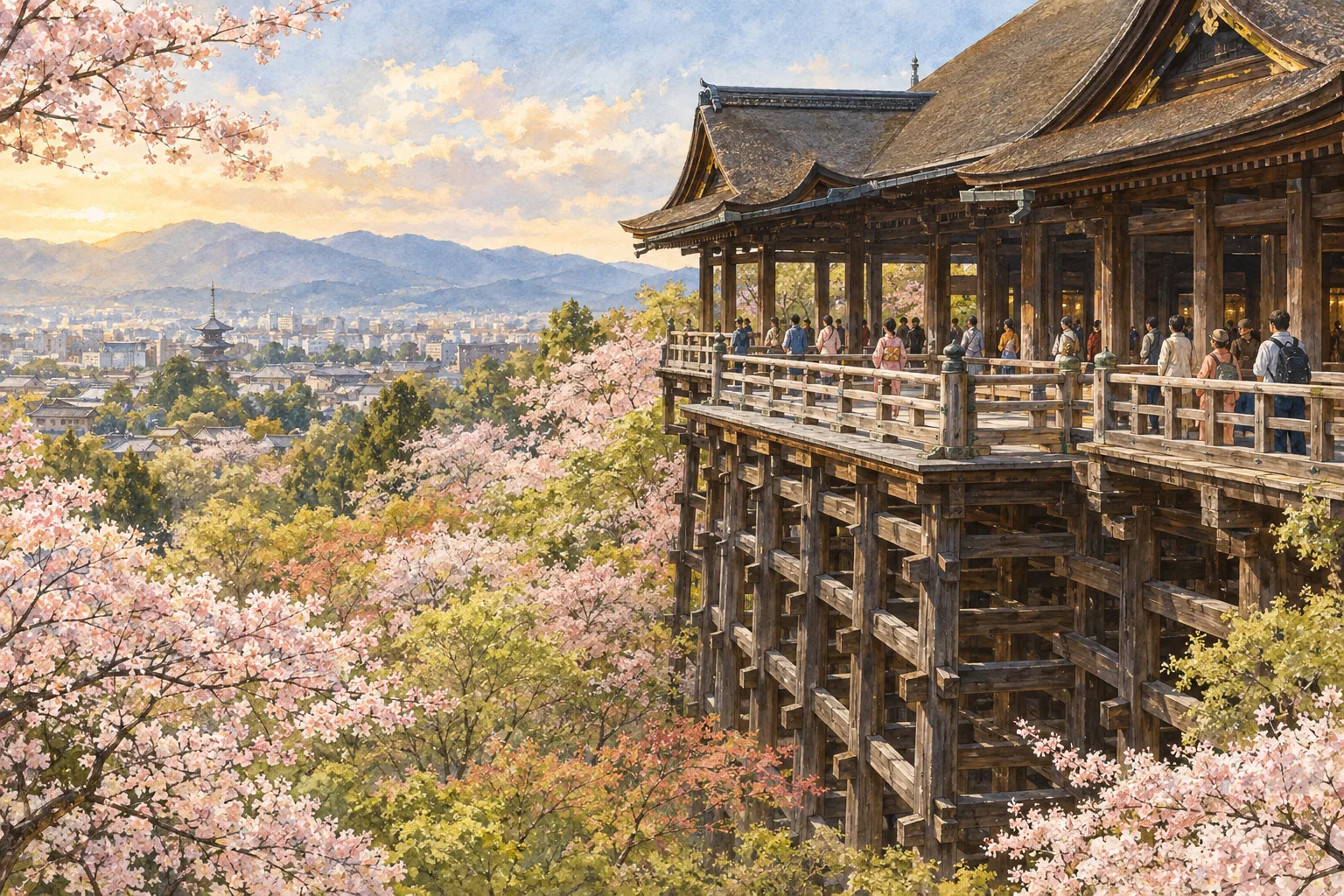
Kiyomizudera is a Kyoto temple whose main hall has a wooden stage projecting out over the hillside.
弐In 30 seconds30秒で説明する
Kiyomizudera stands on a wooded hillside in eastern Kyoto. Its main hall has a wide wooden platform, the stage, built out over the slope on tall pillars, about thirteen meters above the ground. The structure is assembled by joinery without nails. The present hall dates from 1633. The temple takes its name from the waterfall on the site, whose name means pure water.
参As a short speechスピーチ・英作文
Kiyomizudera in eastern Kyoto is built into a hillside, and its famous feature is the stage: a wide wooden platform projecting out from the main hall, standing about thirteen meters above the slope on tall pillars, assembled by joinery without nails. The current hall dates from 1633.
There is a Japanese expression, to jump from the stage at Kiyomizu, meaning to take a leap of faith on a big decision. What surprises people is that this was literal. The temple's own records list 234 people who jumped between 1694 and 1864, and thirty-four of them died, so roughly eight out of ten survived.
It was not suicide: the belief was that if you jumped entrusting your life to Kannon, your wish would be granted and you would be saved. The survival rate is usually explained by the trees and soft ground below, which are no longer there. The practice was banned in the Meiji era. Go early; by ten in the morning the approach is shoulder to shoulder.
清水寺きよみずでらKiyomizuderathe Kyoto temple with a wooden stage built out over a hillside
江戸時代に234人が実際に飛び降りた。しかも8割以上が助かっている。記録が残っている。
壱一言で言うとIn one line
清水寺とは、本堂から木の舞台が斜面にせり出している京都の寺です。
弐30秒で説明するIn 30 seconds
清水寺は京都の東の山あいにあります。本堂には舞台と呼ばれる広い木の床があり、高い柱で斜面にせり出していて、地面から13メートルほどの高さです。木を組み合わせる方法で建てられ、釘は使われていません。いまの本堂は1633年のものです。寺の名は、境内の滝に由来し、清らかな水という意味です。
参スピーチ・英作文As a short speech
京都の東にある清水寺は山の斜面に建てられていて、有名なのが舞台です。本堂からせり出した広い木の床で、高い柱に支えられて斜面から13メートルほどの高さにあり、木を組む方法で建てられ釘は使われていません。いまの本堂は1633年のものです。
日本語に「清水の舞台から飛び降りる」という言い方があり、大きな決断を思い切ってする、という意味です。驚かれるのは、これが文字どおりだったことです。寺に残る記録には、1694年から1864年のあいだに飛び降りた234人が記されていて、うち34人が亡くなっています。つまり8割ほどが助かっています。
自殺ではありません。観音に命を預けて飛べば願いがかない、命も助かる、という信仰でした。助かった理由は、下に木があり地面がやわらかかったからだと説明されます。いまはどちらもありません。この行為は明治時代に禁じられました。行くなら早朝です。朝10時には参道が肩の触れ合う混みようになります。
こう聞かれたらQuestions people actually ask
QIs it true there are no nails in it?
AThe stage structure is held together by wooden joinery rather than nails, which is a traditional technique. Eighteen zelkova pillars, from trees said to be over four hundred years old, support the platform.
釘が一本も使われていないというのは本当ですか。舞台の構造は釘ではなく木を組み合わせて支えており、これは伝統的な技法です。樹齢400年を超えるとされる欅の柱18本が床を支えています。
QWhat does the expression mean?
ATo jump from the stage at Kiyomizu means to make a decision you cannot take back — buying something far too expensive, quitting a job, proposing. English would say take the plunge.
あの言い回しはどういう意味ですか。「清水の舞台から飛び降りる」は、取り返しのつかない決断をする、という意味です。高すぎる買い物、退職、求婚。英語なら take the plunge にあたります。
QIs the water at the waterfall drinkable?
AYes, that is the point of Otowa waterfall. Three streams fall and visitors drink with long-handled cups. There is a custom that you should drink from only one, since taking all three is greedy.
滝の水は飲めるのですか。音羽の滝は飲むためのものです。三筋の水が落ち、長い柄の杓で受けて飲みます。三つとも飲むのは欲張りだとされ、ひとつだけにする慣習があります。
誤解されやすいA common misunderstanding
MYTHJumping from the stage at Kiyomizu is only a figure of speech.清水の舞台から飛び降りるのは言葉のあやだと思われがちです。
FACTIt was literal. Temple records list 234 jumps between 1694 and 1864, with thirty-four deaths. It was a prayer practice, not suicide, and it was banned in the Meiji era.実際にありました。寺の記録では1694年から1864年に234件、うち34人が亡くなっています。自殺ではなく願掛けで、明治時代に禁じられました。
そのまま使えるフレーズPhrases you can use
- The stage sticks out over the hillside, about thirteen meters up.舞台が斜面にせり出していて、高さは13メートルほどです。
- It's held together by joinery — no nails.木を組んで建ててあります。釘は使っていません。
- There's a saying about jumping off it, and people actually did.飛び降りるという言い回しがありますが、実際にやった人がいます。
- Come early. By mid-morning it's packed.早めに来てください。午前中にはもう混み合います。
- You can drink from the waterfall, but only pick one stream.滝の水は飲めますが、三筋のうちひとつだけにしてください。
豆知識Background
本堂は寛永10年(1633年)に徳川家光の援助で再建されたもので、国宝に指定されている。舞台は懸造という技法で、崖に柱を組んで床を張り出す。柱は欅で、釘を使わずに組まれている。舞台の高さは約13メートル。成就院日記などの記録には、1694年から1864年までに234件の飛び降りが記され、うち死亡は34人とされる。年齢が分かる人の7割以上が10代と20代で、観音への願掛けとして行われた。明治5年に禁止令が出ている。寺の名の由来である音羽の滝の水は、今も参拝者が汲んで飲む。
出典日本文化ナビ(原田英語.com)「清水寺を英語で説明する(Kiyomizudera)」https://www.haradaeigo.com/japanese-culture/w/kiyomizudera
- 文
- 日本文化ナビ編集部(原田英語.com)— 英文・和訳・解説はすべて独自に作成
- イラスト
- 日本文化ナビ オリジナル
- 発行
- 原田英語.com https://www.haradaeigo.com/
- 印刷日
- 2026.10.17
© 2026 Harada Eigo (原田英語.com). Text and illustration: Japan Culture Navi.
ページはこちら