北枕
壱In one line一言で言うと
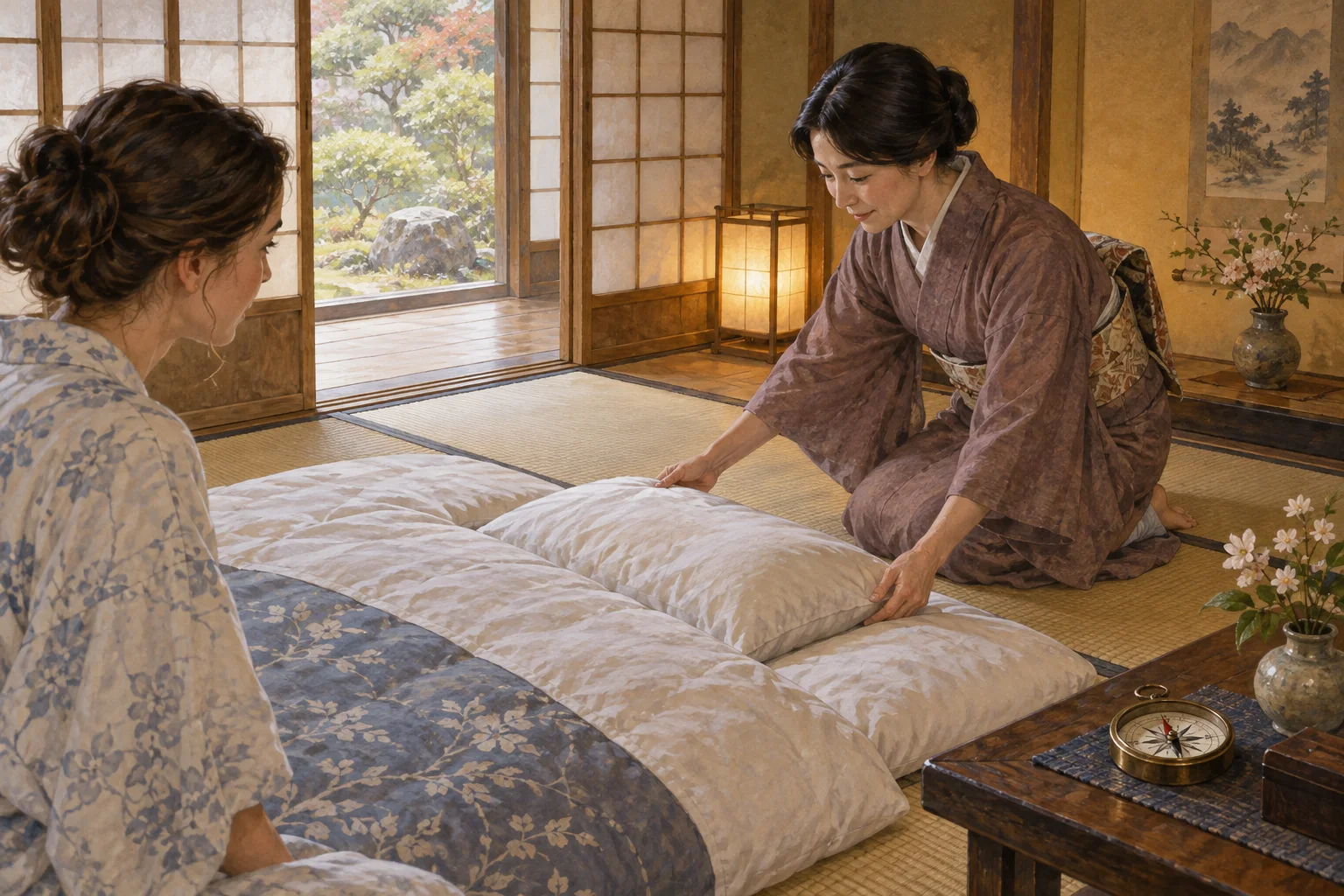
Kitamakura means sleeping with your head to the north, which some Japanese people avoid because it recalls death.
弐In 30 seconds30秒で説明する
Kitamakura means sleeping with your head pointing north. The Buddha is traditionally said to have died lying with his head to the north, and in many parts of Japan the body of someone who has just died is laid out the same way. Because of that link, some people feel uneasy sleeping in that position. It's a superstition, and how seriously people take it depends on the family.
参As a short speechスピーチ・英作文
In Japan, some people will tell you not to sleep with your head to the north. This is called kitamakura. The idea comes from Buddhism. In paintings of the Buddha's death, he is shown lying on his right side with his head to the north and his face to the west.
Following that image, many Japanese families lay out a person who has just died with the head pointing north before the funeral. So sleeping that way can feel like acting out a death, and older people in particular may move a futon to avoid it.
Younger people often don't care, and hotels can't arrange every room around it. Some even argue north is a healthy direction, though there's no solid evidence either way. If a host family turns your futon around, now you'll know why.
北枕きたまくらkitamakurasleeping with your head to the north, a direction linked with death
「北に頭を向けて寝るな」。理由はお釈迦さまの最期の姿にある。
壱一言で言うとIn one line
北枕とは北に頭を向けて寝ることで、死を連想させるため避ける日本人もいます。
弐30秒で説明するIn 30 seconds
北枕とは、頭を北に向けて寝ることです。お釈迦さまは頭を北に向けて横たわって亡くなったと伝えられ、日本の多くの地域では、亡くなったばかりの人も同じ向きに寝かせます。そのつながりから、この向きで寝るのを落ち着かないと感じる人がいます。迷信であり、どこまで気にするかは家庭によって違います。
参スピーチ・英作文As a short speech
日本では、北に頭を向けて寝てはいけないと言う人がいます。これを北枕といいます。この考えは仏教から来ています。お釈迦さまの最期を描いた絵では、お釈迦さまは右脇を下にして、頭を北に、顔を西に向けて横たわっています。
その姿にならい、多くの家庭では亡くなったばかりの人を、葬儀の前に頭を北に向けて寝かせます。そのため、この向きで寝るのは死をなぞるように感じられ、特に年配の人は、北枕にならないように布団の向きを変えることがあります。
若い人は気にしないことも多く、ホテルもすべての部屋をこれに合わせて作ることはできません。北枕はむしろ健康によいと言う人もいますが、どちらにもしっかりした根拠はありません。ホストファミリーが布団の向きを変えたら、これで理由がわかるはずです。
こう聞かれたらQuestions people actually ask
QIs it actually bad luck, or just a funeral thing?
AIt's the funeral custom that gives it the bad feeling. Nothing is supposed to happen to you, but it reminds people of death, so they'd rather not.
本当に縁起が悪いのですか、それとも葬式の決まりというだけですか。縁起が悪い感じがするのは、葬式の習わしがあるからです。何かが起きるとされているわけではありませんが、死を思い出させるので避けたいという人が多いのです。
QWhat should I do if my hotel bed faces north?
ANothing, really. Most people don't think about it when traveling, and staff won't expect you to. If it bothers you, sleeping the other way around is always an option.
ホテルのベッドが北向きだったらどうすればいいですか。特に何もしなくて大丈夫です。旅先でそこまで気にする人は少なく、スタッフもそれを求めてはいません。気になるなら、逆向きに寝ればいいだけです。
QAre there other sleeping directions people care about?
AWest is sometimes avoided for the same reason, since the Buddha faced west. Some people also follow directional ideas from feng shui, but beliefs differ a lot from family to family.
ほかにも、気にされる寝る向きはありますか。お釈迦さまが西を向いていたことから、同じ理由で西枕を避ける人もいます。風水の方角の考えを取り入れる人もいますが、信じ方は家庭によって大きく違います。
誤解されやすいA common misunderstanding
MYTHSleeping with your head to the north is forbidden in Japan.日本では北枕で寝ることが禁じられている。
FACTIt's a superstition, not a rule. Many people ignore it, while others, often older, would rather avoid it.決まりではなく迷信です。気にしない人も多い一方で、年配の人を中心に避けたいと思う人もいます。
そのまま使えるフレーズPhrases you can use
- Some Japanese people avoid sleeping with their head to the north.北枕を避ける日本人もいます。
- It's linked to how the dead are laid out.亡くなった人の寝かせ方と結びついています。
- Do you mind if I turn the futon around?布団の向きを変えてもいいですか。
- My grandmother always checks which way is north.祖母はいつも北がどちらかを確かめます。
- It's just a superstition, so don't worry about it.ただの迷信なので気にしなくて大丈夫です。
豆知識Background
お釈迦さまの最期を描いた涅槃図では、頭を北に、顔を西に向けて右脇を下にした姿が多く、これを「頭北面西(ずほくめんさい)」という。日本ではこの姿にならって、亡くなった人を安置するときに頭を北に向けることが多い。ただし部屋の造りの都合などで、必ずしも北にできるわけではなく、宗派や地域によっても扱いは違う。北枕を嫌う気持ちはここから生まれたとされる。なお「北枕」は、ふぐの一種の名前にもなっている。
出典日本文化ナビ(原田英語.com)「北枕を英語で説明する(kitamakura)」https://www.haradaeigo.com/japanese-culture/w/kitamakura
- 文
- 日本文化ナビ編集部(原田英語.com)— 英文・和訳・解説はすべて独自に作成
- イラスト
- 日本文化ナビ オリジナル
- 発行
- 原田英語.com https://www.haradaeigo.com/
- 印刷日
- 2026.10.17
© 2026 Harada Eigo (原田英語.com). Text and illustration: Japan Culture Navi.
ページはこちら