木曽のひのき
壱In one line一言で言うと
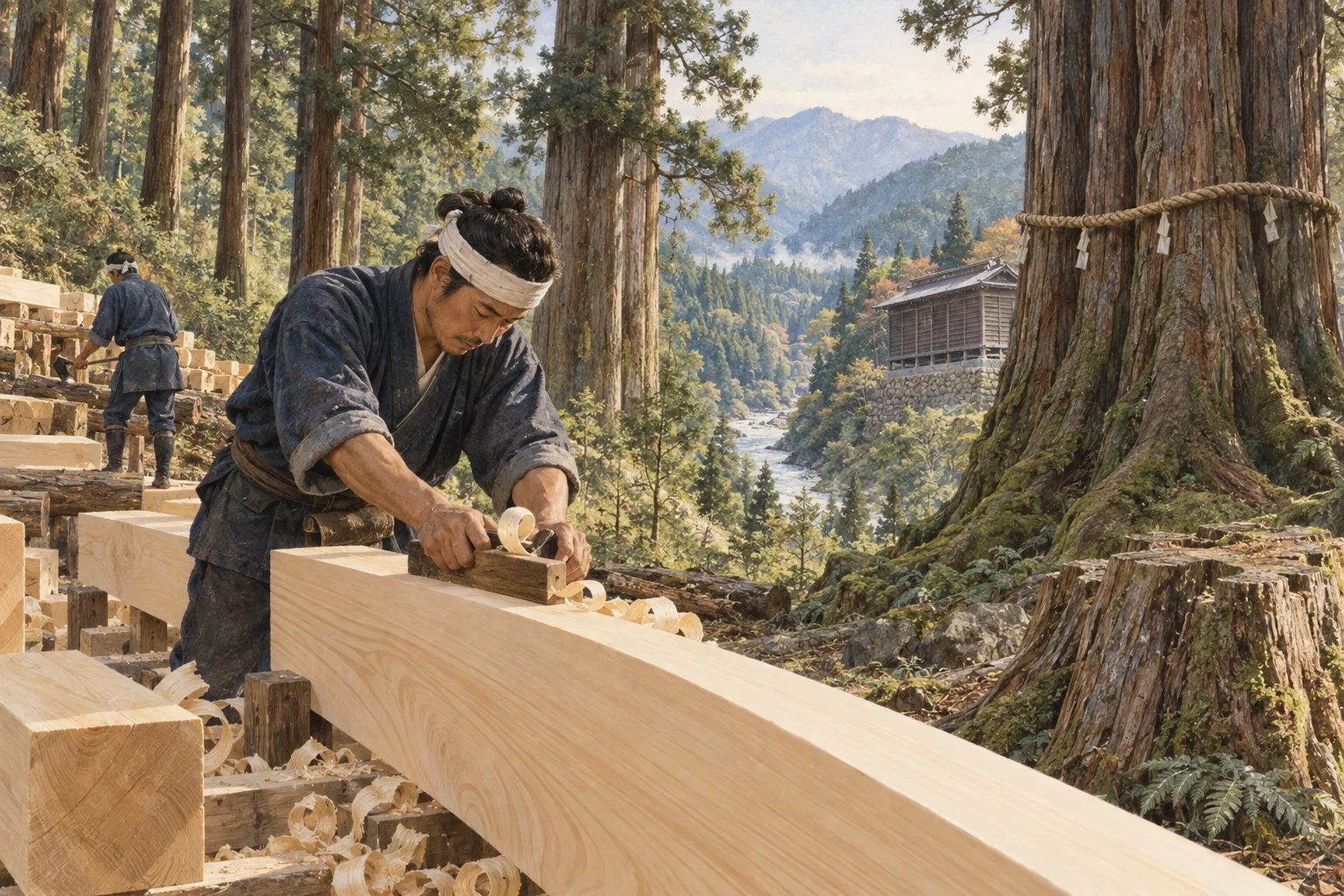
Kiso hinoki is prized cypress from a Nagano valley so strictly protected in the Edo period that people said one tree cost one head.
弐In 30 seconds30秒で説明する
Kiso hinoki is cypress grown in the Kiso valley of Nagano, prized for its straight grain, faint sweet scent, and resistance to rot and insects. In the early 1700s the Owari domain banned cutting five protected tree species there, including hinoki, after earlier logging had stripped the mountains bare; the penalty was so severe that people said cutting one tree cost one head. That protection is why old-growth hinoki still stands today, and it remains the wood of choice for shrine buildings, including the timber used to rebuild Ise Jingu every twenty years.
参As a short speechスピーチ・英作文
Kiso hinoki is cypress from the Kiso valley in Nagano, and the reason it is still around to talk about is a very harsh law. By the early 1700s, a century of heavy logging under the Tokugawa shogunate had stripped the mountains, so the Owari domain, which controlled the area, banned cutting five species, hinoki among them, under a system so strictly enforced that people summed it up as one tree, one head.
That protection let the forest recover over the following centuries, and it is the reason old-growth hinoki of real size still exists today. The wood itself is genuinely special: straight-grained, faintly fragrant, and resistant to rot, which is why it's used for cypress bathtubs in traditional inns as well as temples and shrines. Every twenty years, when Ise Jingu is rebuilt as part of its Shikinen Sengu ritual, the timber comes largely from Kiso, a direct line from a three-hundred-year-old forestry law to a shrine roof today.
木曽のひのききそのひのきKiso hinokiprized cypress from a valley protected by a harsh Edo-era logging law
一本切れば首が一つ。江戸時代、木曽の木は命より重かった。
壱一言で言うとIn one line
木曽ひのきは長野県の谷で育つ良質なヒノキで、江戸時代には一本切れば首が一つ飛ぶといわれるほど厳しく法で守られていました。
弐30秒で説明するIn 30 seconds
木曽ひのきは長野県の木曽谷で育つヒノキで、通った木目とほのかな甘い香り、腐りにくく虫に強い性質で重宝されています。1700年代初め、それ以前の乱伐で山が丸裸になったことを受け、尾張藩はヒノキを含む五種類の木の伐採を禁じ、その罰の厳しさから「木一本、首一つ」と言われたほどでした。その保護のおかげで今も樹齢を重ねた木が残り、20年ごとに社殿を建て替える伊勢神宮の式年遷宮の用材にも選ばれ続けています。
参スピーチ・英作文As a short speech
木曽ひのきは長野県の木曽谷でとれるヒノキで、今も語り継がれる理由は、たいへん厳しい法にあります。1700年代初め、徳川の治世下で一世紀にわたる乱伐が山を丸裸にしたため、この地を治めていた尾張藩は、ヒノキを含む五種類の木の伐採を禁じ、その取り締まりの厳しさは「木一本、首一つ」とまとめられるほどでした。
その保護によって、その後何世紀もかけて森は回復し、これが今も本当に大きな樹齢を重ねたヒノキが残っている理由です。木そのものも本当に特別で、まっすぐな木目、ほのかな香り、腐りにくさがあり、だからこそ旅館の檜風呂から寺社まで使われます。
20年ごと、伊勢神宮を式年遷宮で建て替えるとき、用材の多くは木曽から来ます。300年前の森林の法から、今日の社殿の屋根までが一直線につながっているのです。
こう聞かれたらQuestions people actually ask
QWhy is Ise Jingu rebuilt every twenty years instead of just repaired?
AThat is a separate tradition called Shikinen Sengu, tied to renewing the shrine rather than preserving one physical building, and it is what keeps demand for large old-growth hinoki alive.
伊勢神宮はなぜ修理ではなく20年ごとに建て替えるのですか。それは式年遷宮という別の伝統で、一つの建物を保存するというより、社殿を新しく作り替えることに意味があります。だからこそ大きな古木のヒノキの需要が今も続いているのです。
QCan anyone go cut hinoki in the Kiso forest today?
ANo. Much of the forest is now national forest managed by the government, and cutting old-growth hinoki is tightly controlled to keep the supply for shrines and historic buildings going.
今も木曽の森で自由にヒノキを切れるのですか。いいえ。森の多くは今、国が管理する国有林で、古木のヒノキの伐採は、神社仏閣向けの供給を保つために厳しく管理されています。
QWhy do I smell hinoki in an onsen or ryokan?
AHinoki bathtubs are a classic feature of traditional inns because the wood resists rot in constant moisture and releases a faint, calming scent when wet, which is part of why people associate it with relaxation.
温泉や旅館でひのきの香りがするのはなぜですか。ひのき風呂は伝統的な旅館の定番で、常に湿った状態でも腐りにくく、濡れるとほのかで落ち着く香りを放つためです。ひのきがくつろぎと結びつけられる理由の一つです。
そのまま使えるフレーズPhrases you can use
- This tub is made of real Kiso hinoki.この浴槽は本物の木曽ひのき製です。
- The scent gets stronger once it's wet.濡れると香りが強くなります。
- People here used to say one tree cost one head.ここでは昔、「木一本、首一つ」と言われました。
- This timber will go into the next Ise Jingu rebuilding.この木材は次の伊勢神宮の建て替えに使われます。
- The forest is protected national land now.この森は今、保護された国有林です。
豆知識Background
木曽ひのきは長野県木曽谷の名産で、江戸時代の乱伐で山が荒れたのち、尾張藩がヒノキ・サワラ・アスナロ・コウヤマキ・ネズコの五種を伐採禁止とした「木曽五木」の制度で守られてきた。その取り締まりは「木一本、首一つ」と俗にいわれるほど厳しかったとされる。現在も森の多くは国有林として管理され、20年ごとに社殿を建て替える伊勢神宮の式年遷宮の用材として使われ続けている。旅館の檜風呂に使われる香りの良さでも知られる。
出典日本文化ナビ(原田英語.com)「木曽のひのきを英語で説明する(Kiso hinoki)」https://www.haradaeigo.com/japanese-culture/w/kiso-hinoki
- 文
- 日本文化ナビ編集部(原田英語.com)— 英文・和訳・解説はすべて独自に作成
- イラスト
- 日本文化ナビ オリジナル
- 発行
- 原田英語.com https://www.haradaeigo.com/
- 印刷日
- 2026.10.17
© 2026 Harada Eigo (原田英語.com). Text and illustration: Japan Culture Navi.
ページはこちら