刀鍛冶
壱In one line一言で言うと
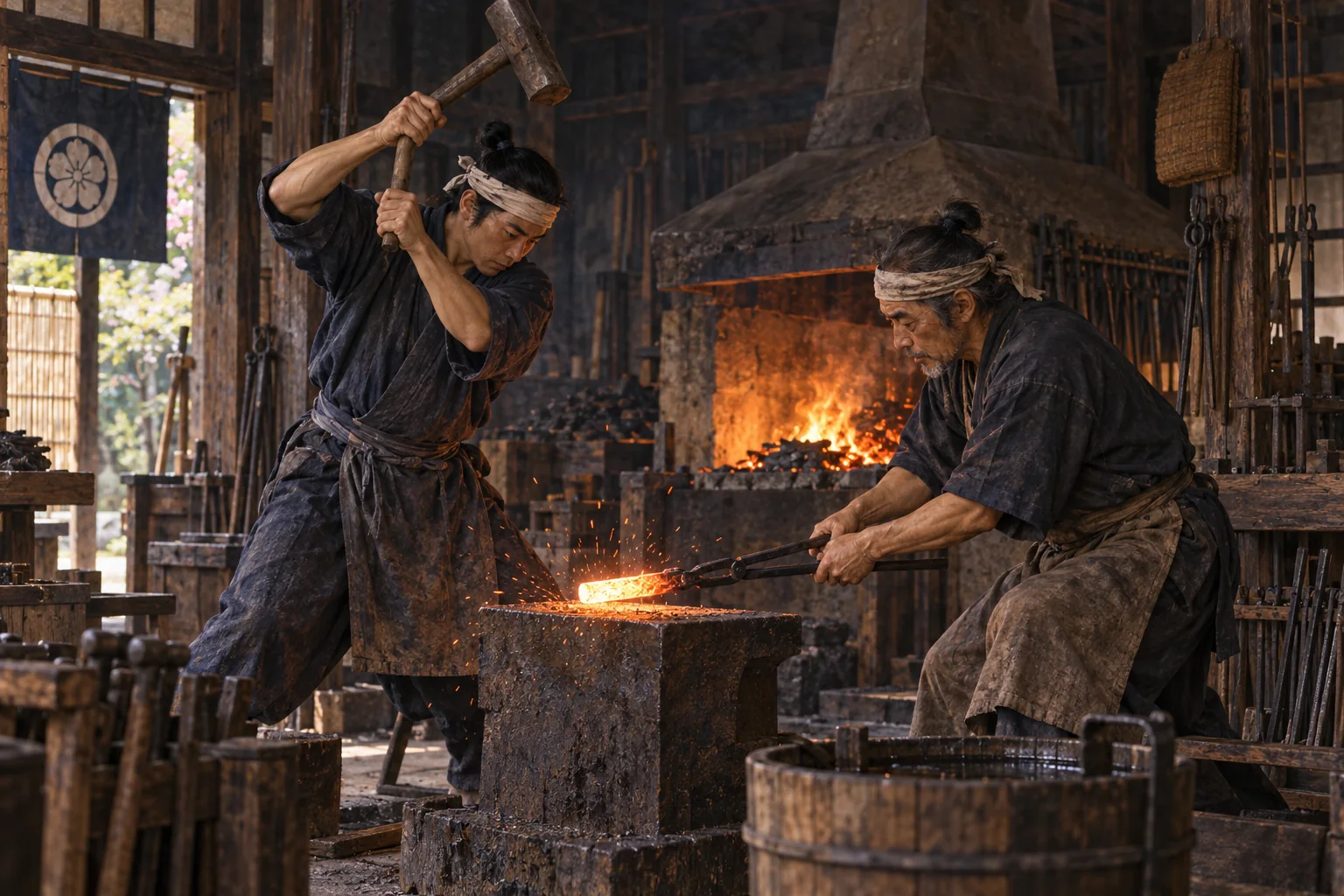
Katana kaji, or swordsmiths, are artisans who still forge Japanese blades by hand, under licenses limiting how many they make.
弐In 30 seconds30秒で説明する
Japanese swords are still made today by licensed smiths, using folded steel made from iron sand. A smith must train under a master for at least five years and pass a training course run under the Agency for Cultural Affairs to be licensed. Official rules then limit each licensed smith to a set number of long blades per month, which keeps the work slow and the price high.
参As a short speechスピーチ・英作文
People are often surprised that Japanese swords are still being made. They are, by a small number of licensed smiths. The steel is tamahagane, made from iron sand in a clay furnace, and the smith folds and welds it repeatedly to even out the carbon and drive out impurities.
Then comes the part that gives a Japanese blade its character: before quenching, the smith paints the blade with clay, thick along the spine and thin at the edge. In the water the edge cools fast and becomes hard, the spine cools slowly and stays tough, and the boundary between them appears as the wavy line you see on a polished blade.
Becoming a smith takes at least five years of apprenticeship and a government-run examination, and official rules then cap how many long blades each may make per month. That cap is why it is a craft and not an industry.
刀鍛冶かたなかじkatana kajithe swordsmiths who still forge Japanese blades by hand
いまも作られている。ただし、一人が作れる本数には決まりがある。
壱一言で言うとIn one line
刀鍛冶とは、いまも手で刀を鍛える職人のことで、作れる本数は許可のもとで制限されています。
弐30秒で説明するIn 30 seconds
日本刀はいまも、許可を受けた刀鍛冶が砂鉄から作った鋼を折り返して鍛えています。刀鍛冶になるには、師のもとで5年以上修業し、文化庁の研修会の審査を通る必要があります。そのうえで、一人が一か月に作れる長い刀の本数は決まりで定められており、仕事は遅く、値段は高くなります。
参スピーチ・英作文As a short speech
日本刀がいまも作られていると言うと、驚かれます。作られています。許可を受けた、数少ない刀鍛冶によって。鋼は玉鋼といい、砂鉄を粘土の炉で還元したもので、鍛冶はそれを折り返しては鍛接し、炭素を均し、不純物を叩き出します。
そして、日本刀の顔を決める工程が来ます。焼き入れの前に、刀身に粘土を塗る。棟側は厚く、刃側は薄く。水に入れると刃は速く冷えて硬くなり、棟はゆっくり冷えて粘りを残します。その境目が、研いだ刀に浮かぶあの波の線です。
刀鍛冶になるには5年以上の修業と国の審査があり、そのうえで一人が月に作れる長い刀の本数には上限が定められています。その上限があるから、これは産業ではなく工芸のままなのです。
こう聞かれたらQuestions people actually ask
QCan I buy one and take it home?
AA genuine sword comes with a registration certificate, and exporting it requires permission from the Agency for Cultural Affairs. Your own country's import rules matter too. Dealers who handle export will walk you through it; do not buy one intending to pack it in a suitcase.
買って持ち帰れますか。本物の刀には登録証が付き、輸出には文化庁の許可が要ります。持ち帰る国の側の決まりもあります。輸出を扱う業者なら手続きを案内してくれます。スーツケースに入れて帰るつもりで買ってはいけません。
QWhy is the wavy line on the blade?
AIt is the boundary between hard edge steel and tougher spine steel, created by covering the blade in clay of different thicknesses before quenching. It is structural first and beautiful second.
刀身の波の線は何ですか。硬い刃の鋼と、粘りのある棟の鋼の境目です。焼き入れの前に、厚みを変えて粘土を塗ることで生まれます。まず構造であり、美しさはその結果です。
QAre the smiths making a living from swords?
AMany cannot from blades alone. They also make kitchen knives, garden tools and commissioned pieces, and some run workshops for visitors. The number of full-time smiths has fallen for decades.
刀鍛冶は刀だけで生活できているのですか。刀だけでは難しい人が多いです。包丁や農具、注文の品も作り、見学や体験を受け入れる人もいます。専業の刀鍛冶は何十年も減り続けています。
誤解されやすいA common misunderstanding
MYTHJapanese swords are folded a thousand times, which is what makes them superior.日本刀は千回折り返すから優れている、と思われがちです。
FACTSmiths fold the steel roughly ten to fifteen times, which doubles the layers each time and gives thousands of layers or more. Folding evens out the carbon; it does not endlessly improve the blade, and over-folding harms it.折り返しはおよそ10回から15回です。一回ごとに層が倍になるので、層の数は数千以上になります。折り返しは炭素を均すためのもので、いくらでも良くなるわけではなく、やりすぎればかえって悪くなります。
そのまま使えるフレーズPhrases you can use
- Swords are still made by hand today.刀はいまも手で作られています。
- The steel is made from iron sand.鋼は砂鉄から作ります。
- Clay is painted on before quenching.焼き入れの前に粘土を塗ります。
- That wavy line is where hard meets tough.あの波の線は、硬い部分と粘る部分の境目です。
- Every genuine blade has a registration certificate.本物の刀には必ず登録証があります。
豆知識Background
日本刀の鋼である玉鋼は、砂鉄と木炭を粘土の炉で三日三晩かけて還元する「たたら製鉄」で作られる。島根県の日刀保たたらが操業を続け、材料を供給している。刀鍛冶になるには、文化庁が認める刀匠のもとで5年以上の修業を積み、美術刀剣刀匠技術保存研修会の審査に合格する必要がある。作刀には銃砲刀剣類所持等取締法にもとづく文化庁長官の承認が要り、その運用で、作れる本数は一人あたり長いもので月2振りまでとされている。刀は登録証があって初めて所持できる。
出典日本文化ナビ(原田英語.com)「刀鍛冶を英語で説明する(katana kaji)」https://www.haradaeigo.com/japanese-culture/w/katana-kaji
- 文
- 日本文化ナビ編集部(原田英語.com)— 英文・和訳・解説はすべて独自に作成
- イラスト
- 日本文化ナビ オリジナル
- 発行
- 原田英語.com https://www.haradaeigo.com/
- 印刷日
- 2026.10.17
© 2026 Harada Eigo (原田英語.com). Text and illustration: Japan Culture Navi.
ページはこちら