柏餅とちまき
壱In one line一言で言うと
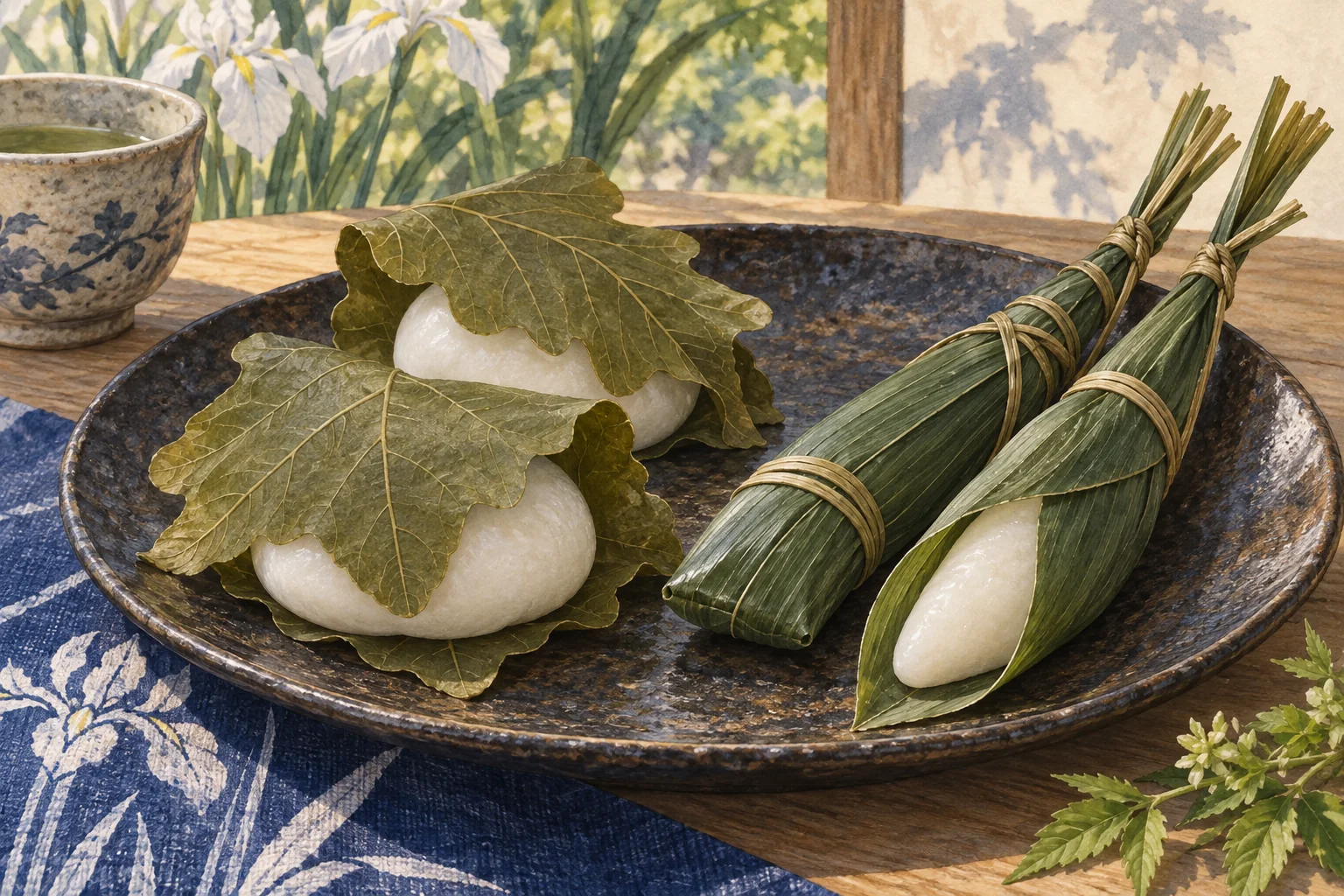
Kashiwamochi and chimaki, oak-leaf and bamboo-wrapped rice cakes, are eaten on Children's Day, mostly in eastern and western Japan respectively.
弐In 30 seconds30秒で説明する
Kashiwamochi is a rice cake with sweet bean paste, wrapped in an oak leaf. Chimaki is a rice cake wrapped in bamboo leaves and tied with a cord. Both are eaten on the fifth of May, but which one appears depends on where you are: the oak leaf dominates around Tokyo, the bamboo one around Kyoto and Osaka.
参As a short speechスピーチ・英作文
Children's Day on the fifth of May comes with a sweet, and which sweet depends on which half of the country you are in. In the east it is kashiwamochi, a plain rice cake folded around sweet bean paste and wrapped in an oak leaf. The leaf is not eaten; it is there for scent and for a reason people will tell you: the oak does not drop its old leaves until the new buds have come, so it stands for a family line continuing without a break, which suited a day that was originally for boys.
In the west it has traditionally been chimaki, a slimmer cake wrapped in bamboo leaves and tied, which came from China with a story attached about a poet who drowned himself in a river and offerings thrown in after him. The division runs roughly along the old boundary between Edo and Kyoto, and it is one of the clearest east-west splits you can taste, along with the shape of the rice cakes at New Year.
柏餅とちまきかしわもちとちまきkashiwamochi and chimakithe two sweets eaten on Children's Day, east and west
同じ日に、東は柏餅、西はちまき。理由がそれぞれある。
壱一言で言うとIn one line
柏餅とちまきとは、柏の葉で包んだ餅と笹で巻いた餅で、こどもの日に、主にそれぞれ東日本と西日本で食べられる菓子です。
弐30秒で説明するIn 30 seconds
柏餅は餡を包んだ餅を柏の葉でくるんだもの、ちまきは笹の葉で巻いて紐で結んだ餅です。どちらも五月五日に食べますが、どちらが出てくるかは土地によります。東京のあたりでは柏餅、京都や大阪のあたりではちまきが主流です。
参スピーチ・英作文As a short speech
五月五日のこどもの日には菓子がつきものですが、どちらの菓子かは、国の東か西かで分かれます。東は柏餅です。餡を包んだ素朴な餅を、柏の葉でくるみます。葉は食べません。香りのためであり、もう一つ、人がよく口にする理由があります。
柏は新しい芽が出るまで古い葉を落とさないので、家が絶えずに続くことを表す、というものです。もとは男の子の日とされていたことに合っていました。西では昔からちまきです。細い餅を笹の葉で巻き、紐で結びます。
中国から伝わったもので、川に身を投げた詩人と、そのあとに投げ入れられた供物という話が添えられています。この東西の分かれ目は、およそ江戸と京の境あたりを走ります。正月の餅の形と並んで、舌で確かめられる、いちばんはっきりした東西の違いの一つです。
こう聞かれたらQuestions people actually ask
QDo I eat the leaf?
ANo, for either of them. Peel the oak leaf off and set it aside; unwind the cord and unwrap the bamboo. The leaves are for scent, for keeping the cake from drying and, originally, for handling it cleanly.
葉は食べるのですか。どちらも食べません。柏の葉ははがして脇に置き、ちまきは紐をほどいて笹を開きます。葉は香りをつけ、餅が乾くのを防ぎ、もとは手を汚さずに持つためのものでした。
QWhere exactly is the dividing line?
AThere is no clean line. The oak cake spread from Edo and the bamboo one held on around Kyoto, so shops in central Japan often sell both and nobody argues about it. Many supermarkets and department stores now stock the pair.
境目はどのあたりですか。はっきりした線はありません。柏餅は江戸から広まり、ちまきは京のあたりに残りました。中部では両方を置く店が多く、誰も言い争ってはいません。今は両方を並べるスーパーや百貨店も多くあります。
QIs chimaki always sweet?
ANo. The Children's Day version is a sweet rice cake, but the same word covers a savory steamed sticky rice with meat sold in Chinese restaurants, and the two are quite different things sharing a wrapper.
ちまきはいつも甘いものですか。違います。こどもの日のものは甘い餅ですが、同じ語は、中華料理店で売られる肉入りのおこわも指します。同じ包み方をした別のものです。
そのまま使えるフレーズPhrases you can use
- Peel the leaf off before you eat it.葉をはがして食べてください。
- The leaf is not for eating.葉は食べるものではありません。
- In this region we eat the other one.このあたりでは、もう一方を食べます。
- These are only sold in early May.五月の初めだけ売られます。
- The bean paste can be white or red.餡は白いものと小豆のものがあります。
豆知識Background
柏餅は、上新粉の餅で餡を包み、柏の葉でくるんだ菓子です。柏は新芽が育つまで古い葉が落ちないため、家が絶えないしるしとされ、武家の間で端午の節句の菓子として広まったと言われます。ちまきは笹や茅の葉で巻いた餅で、中国から伝わり、川に身を投げた詩人の屈原に供えた話が由来として語られます。関東は柏餅、関西はちまきという分布が今も残り、正月の餅が角か丸かという違いと並ぶ、東西の境の例として挙げられます。
出典日本文化ナビ(原田英語.com)「柏餅とちまきを英語で説明する(kashiwamochi and chimaki)」https://www.haradaeigo.com/japanese-culture/w/kashiwamochi-and-chimaki
- 文
- 日本文化ナビ編集部(原田英語.com)— 英文・和訳・解説はすべて独自に作成
- イラスト
- 日本文化ナビ オリジナル
- 発行
- 原田英語.com https://www.haradaeigo.com/
- 印刷日
- 2026.10.17
© 2026 Harada Eigo (原田英語.com). Text and illustration: Japan Culture Navi.
ページはこちら