神無月
壱In one line一言で言うと
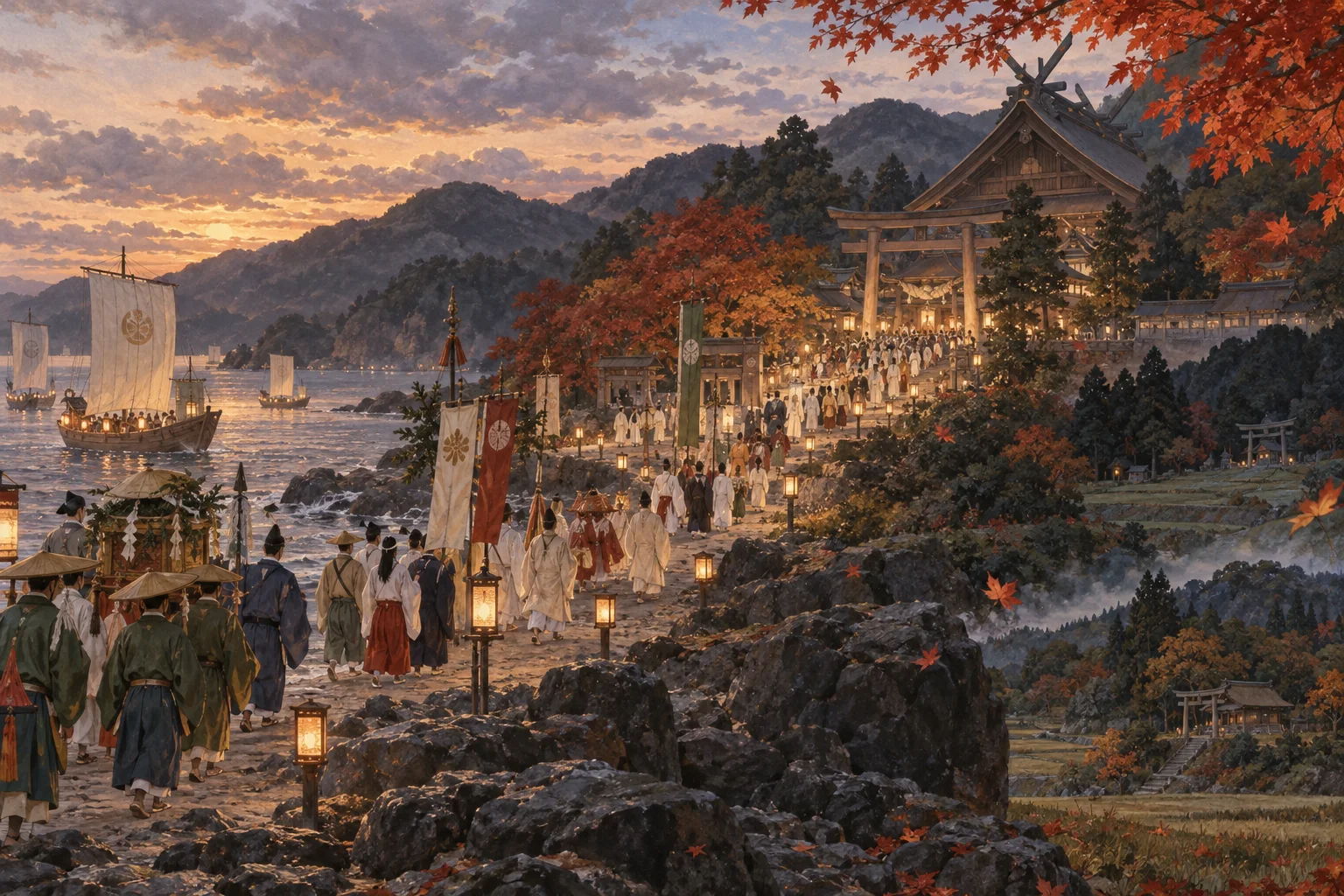
Kannazuki, or the month without gods, is the old calendar's name for the tenth month, used everywhere except Izumo.
弐In 30 seconds30秒で説明する
Kannazuki is the old name for the tenth lunar month, usually written with characters meaning month without gods. A widely told explanation is that the deities of the whole country gather at Izumo, so only there is the month called kamiarizuki, the month with gods. Izumo still holds rites for the visiting deities.
参As a short speechスピーチ・英作文
Each month in the old Japanese calendar has a poetic name, and the tenth is kannazuki, written with characters that read as the month without gods. The story attached to it is that all the deities of Japan leave their local shrines and travel to Izumo, on the Japan Sea coast, to hold a council about the coming year, including who should be matched with whom in marriage.
In Izumo the same month is therefore called kamiarizuki, the month with gods, and the great shrine there holds a series of rites to welcome and see off the visiting deities. Scholars point out that the name may originally have had nothing to do with absent gods, since the middle syllable can be read as a possessive rather than a negative, giving the month of the gods. That reading is probably older, and the travel story appears to have grown up later, but it is the version everyone knows and the one Izumo built its autumn calendar around.
神無月かんなづきkannazukithe month the gods are away
旧暦十月は神のいない月。出雲だけは神在月と呼ぶ。
壱一言で言うとIn one line
神無月とは、旧暦の十月の呼び名で、出雲だけは神在月と呼ばれます。
弐30秒で説明するIn 30 seconds
神無月は旧暦十月の古い呼び名で、神のいない月と書かれます。広く語られる説明では、全国の神々が出雲に集まるため、出雲だけがこの月を神在月と呼びます。出雲では今も、訪れる神々を迎える神事が行われています。
参スピーチ・英作文As a short speech
日本の旧暦の各月には風雅な呼び名があり、十月は神無月です。神のいない月と読める字が当てられています。これに結びつけられた話では、日本じゅうの神々が自分の社を離れ、日本海側の出雲に集まって、来る年についての会議を開きます。
誰と誰を結ぶかという縁組の相談もそこで行われるとされます。そのため出雲では同じ月を神在月と呼び、大社では訪れる神々を迎え、送る一連の神事が営まれます。研究者は、この名がもともと神の不在とは関係なかった可能性を指摘します。
真ん中の音は打ち消しではなく所有の助詞とも読め、その場合は神の月という意味になります。おそらくそちらが古い読み方で、旅の話は後から育ったようですが、誰もが知っているのはこの話のほうであり、出雲はそれを軸に秋の暦を組み立ててきました。
こう聞かれたらQuestions people actually ask
QWhen does it actually fall?
AThe tenth month of the lunar calendar, which in the modern calendar usually falls in November. Izumo's rites follow the lunar date, so they move each year.
神無月は実際にはいつですか。旧暦の十月で、今の暦ではたいてい十一月にあたります。出雲の神事は旧暦の日付に従うので、年ごとに日が動きます。
QAre shrines really empty that month?
AIt is a story, not a doctrine. Local shrines carry on as usual, and some traditions hold that a caretaker deity stays behind, which is one explanation given for certain deities remaining in place.
その月、神社は本当に留守なのですか。これは教えではなく物語です。地元の社はふだんどおりに営まれます。留守を預かる神が残るという伝えもあり、特定の神が動かないとされる理由として語られます。
QWhat happens at Izumo during it?
AA sequence of rites welcoming the deities at the shore, housing them in small buildings beside the main hall, holding the council and seeing them off. The dates are published each year.
その間、出雲では何が行われるのですか。浜で神々を迎え、本殿の脇の社に滞在していただき、会議が行われ、送り出すという一連の神事が営まれます。日程は毎年公表されます。
そのまま使えるフレーズPhrases you can use
- The tenth month is called the month without gods.旧暦十月は神無月と呼ばれます。
- In Izumo it is the opposite.出雲では逆の呼び方をします。
- The gods are said to gather there.神々が集まるとされています。
- The old months all have poetic names.旧暦の月にはどれも風雅な名があります。
- The dates follow the lunar calendar.日付は旧暦によります。
豆知識Background
旧暦の月の異名では、一月を睦月、二月を如月と呼ぶように、十月を神無月と呼びます。全国の神々が出雲に集まるという説明は広く知られていますが、中世以降に広まったものとされ、なの部分を打ち消しではなく助詞と解して神の月と読む説もあります。出雲では神在月と呼び、神迎神事から神等去出祭までの一連の神事が旧暦に合わせて行われます。縁結びの相談が行われるという言い伝えは、出雲が縁結びの社として知られる理由の一つになっています。
出典日本文化ナビ(原田英語.com)「神無月を英語で説明する(kannazuki)」https://www.haradaeigo.com/japanese-culture/w/kannazuki
- 文
- 日本文化ナビ編集部(原田英語.com)— 英文・和訳・解説はすべて独自に作成
- イラスト
- 日本文化ナビ オリジナル
- 発行
- 原田英語.com https://www.haradaeigo.com/
- 印刷日
- 2026.10.17
© 2026 Harada Eigo (原田英語.com). Text and illustration: Japan Culture Navi.
ページはこちら