家紋
壱In one line一言で言うと
A kamon is a family crest, and in Japan ordinary families have them, not just the nobility.
弐In 30 seconds30秒で説明する
A kamon is a family crest: a simple circular design based on a plant, a bird, a tool or a geometric shape. They began with court nobles and warriors, then spread to ordinary households, so many Japanese families have one even if they never use it. They appear on formal kimono, on gravestones, on temple buildings and on the curtains of old shops.
参As a short speechスピーチ・英作文
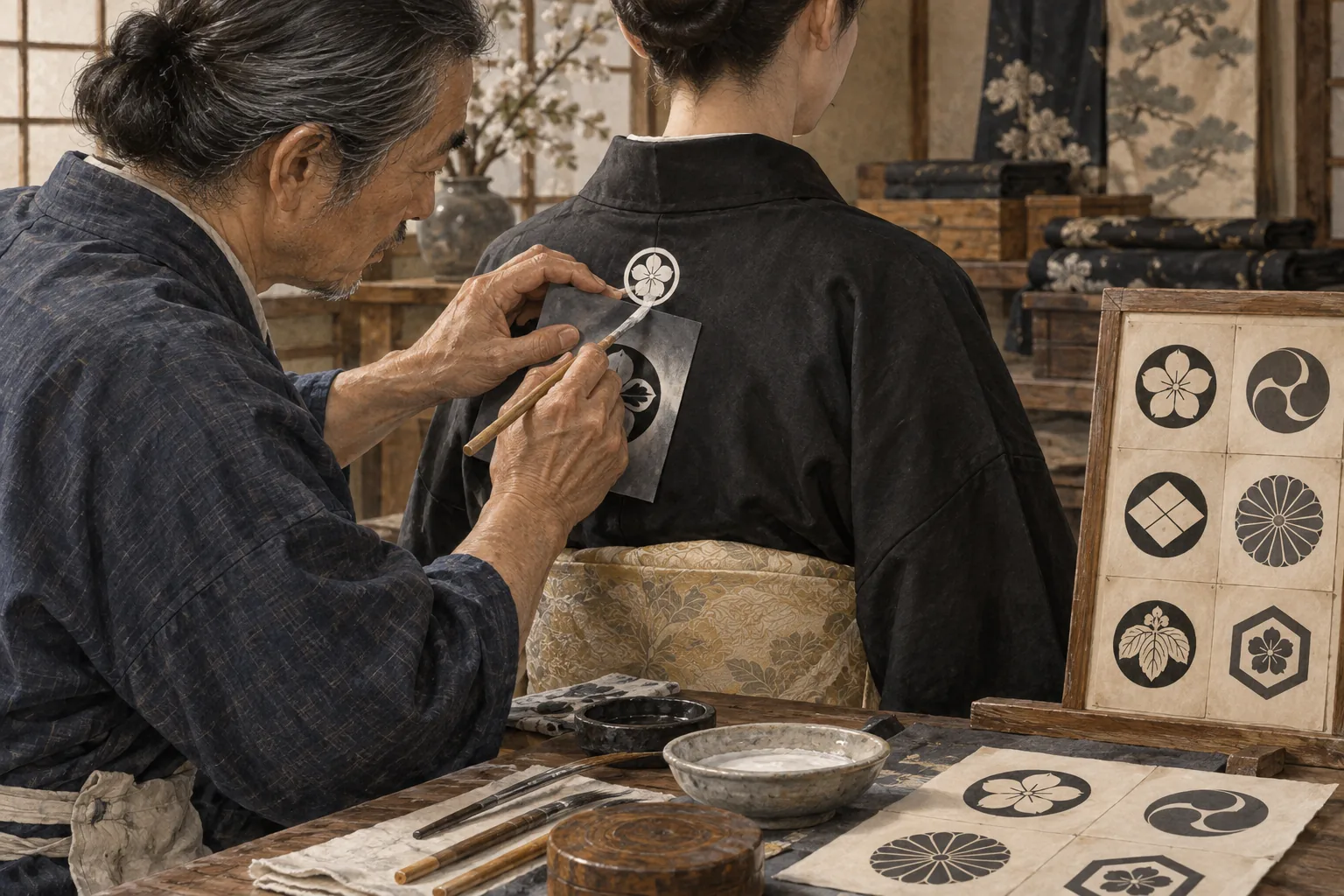
A kamon is a Japanese family crest. It is almost always a simple design that fits in a circle: a paulownia flower, a gentian, three scales, a crane, an arrow feather, a pair of crossed hawk feathers.
The system is said to have started among court nobles who marked their ox carriages, spread to warrior families who needed to be identified on a battlefield, and by the Edo period had reached ordinary townspeople and farmers, which is why Japanese crests are not a mark of nobility the way European coats of arms are.
Many families still have one, though plenty of people only discover theirs at a funeral. You see them on the sleeves and back of a formal black kimono, on gravestones, on the tiles of an old roof, and on shop curtains where they double as a logo. Design-wise they are extraordinarily good: reduced to flat shapes, readable at any size, and they have influenced modern logo design.
家紋かもんkamonfamily crests
日本の家には紋がある。貴族でなくても、多くの家にある。
壱一言で言うとIn one line
家紋とは家の紋章のことで、日本では貴族に限らずふつうの家にもあります。
弐30秒で説明するIn 30 seconds
家紋とは家のしるしで、植物や鳥、道具、幾何学の形をもとにした単純な円形の意匠です。公家や武家に始まり、やがて一般の家にも広まったため、使う機会がなくても、日本の多くの家には家紋があります。礼装の着物、墓石、寺の建物、古い店ののれんに見られます。
参スピーチ・英作文As a short speech
家紋は日本の家のしるしです。ほとんどが円に収まる単純な意匠で、桐の花、竜胆、三枚の鱗、鶴、矢の羽根、交差した鷹の羽などがあります。この仕組みは、牛車に目印をつけた公家に始まったとされ、戦場で見分けられる必要のあった武家に広まり、江戸時代には町人や農民にも届きました。
だから日本の家紋は、ヨーロッパの紋章のように貴族であることのしるしではありません。今も多くの家に家紋がありますが、多くの人は葬儀で初めて自分の家の紋を知ります。
礼装の黒い着物の袖と背、墓石、古い屋根の瓦、そして商標を兼ねた店ののれんに見られます。意匠として実に優れていて、平らな形に切り詰められ、どの大きさでも読み取れ、現代の商標の設計にも影響を与えてきました。
こう聞かれたらQuestions people actually ask
QHow do I find out my family's crest?
AThe usual sources are the family grave, an old formal kimono, or the household Buddhist altar, and older relatives generally know. There is no official register, and families that moved or split sometimes have more than one version.
自分の家の家紋はどうやって調べるのですか。ふつうは家の墓、古い礼装の着物、仏壇で分かりますし、年長の親族はたいてい知っています。公の登録はなく、分家や移転を経た家では複数の形が伝わっていることもあります。
QCan I use a crest I like from a famous clan?
AFamily crests have no official register, so in everyday use nothing stops you, although some designs are registered as company trademarks and the imperial chrysanthemum is restricted. Socially it would look odd, rather like printing someone else's family motto on your stationery, and people who know the design will notice.
有名な一族の紋で、気に入ったものを使ってもいいですか。家紋には公の登録制度がないので、ふだん使う分には妨げるものはありません。ただし企業の商標として登録された図柄もあり、皇室の菊の紋には制限があります。また社会的には奇妙に映ります。他人の家訓を自分の便箋に刷るようなもので、意匠に詳しい人には気づかれます。
誤解されやすいA common misunderstanding
MYTHHaving a family crest means you are descended from samurai.家紋があるのは武士の家系だからだと思われがちです。
FACTCrests spread to merchants, craftsmen and farming families in the Edo period, so many Japanese households have one regardless of ancestry.江戸時代に商人や職人、農家にも広まったため、家柄にかかわらず多くの家に家紋があります。
そのまま使えるフレーズPhrases you can use
- Many Japanese families have one.日本の多くの家に家紋があります。
- It's on the sleeves of a formal kimono.礼装の着物の袖に入っています。
- You can see it on the gravestone.墓石に入っています。
- It isn't a sign of noble birth.貴族の出であるしるしではありません。
豆知識Background
家紋の種類は数千とも、細かな違いを含めれば二万を超えるとも言われ、正確な総数は分かっていません。紋の数と位置で着物の格が変わり、背、両袖、両胸に入れた五つ紋が最も格の高い形です。皇室に関わる菊の紋と、政府が用いる桐の紋は特別な扱いを受けます。古い商家ののれんに入った紋は、そのまま商標の役目を果たしていました。単純な線と面で構成された家紋は、近代の図案の教科書にも取り上げられています。
出典日本文化ナビ(原田英語.com)「家紋を英語で説明する(kamon)」https://www.haradaeigo.com/japanese-culture/w/kamon
- 文
- 日本文化ナビ編集部(原田英語.com)— 英文・和訳・解説はすべて独自に作成
- イラスト
- 日本文化ナビ オリジナル
- 発行
- 原田英語.com https://www.haradaeigo.com/
- 印刷日
- 2026.10.17
© 2026 Harada Eigo (原田英語.com). Text and illustration: Japan Culture Navi.
ページはこちら