紙芝居
壱In one line一言で言うと
Kamishibai is storytelling with picture boards slid through a wooden frame, once performed in the street.
弐In 30 seconds30秒で説明する
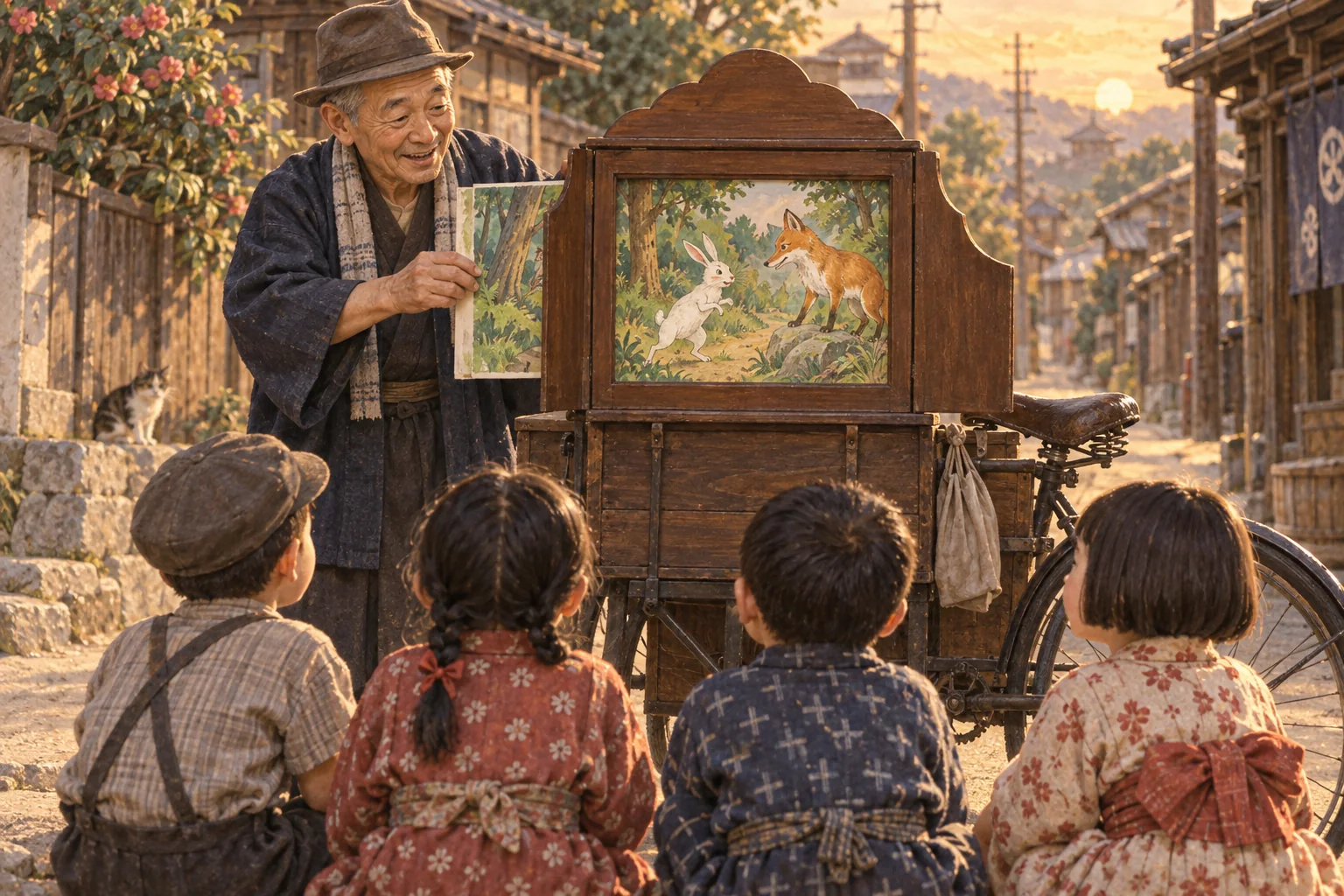
A kamishibai performer carried a small wooden stage on the back of a bicycle, stopped at a street corner, and drew a crowd of children by clapping wooden blocks. He sold them sweets, then told a story, sliding painted boards through the frame one by one. It was a mass entertainment before television, and it survives today in schools and libraries.
参As a short speechスピーチ・英作文
Before television, Japanese children got their serials from a man on a bicycle. Kamishibai means paper theater. The performer carried a wooden frame on his luggage rack, stopped where children gathered, and clapped two wooden blocks until a crowd formed.
He sold sweets first, which is how he was paid, and only the paying children got the good places at the front. Then he told the day's episode, sliding painted boards out of the frame one at a time, doing every voice himself and stopping at a cliffhanger.
It was at its height in the 1930s and again just after the war, when work was scarce and the equipment was cheap. Television killed it, and was nicknamed electric kamishibai as it did. The form did not disappear, though; it moved into nursery schools and libraries, and several well-known manga artists learned their craft drawing those boards.
紙芝居かみしばいkamishibaithe paper theater a storyteller carried on a bicycle
自転車に舞台を積んで、飴を売り、話をして去っていく。
壱一言で言うとIn one line
紙芝居とは、木の枠に絵を差し替えながら語る形の物語で、かつては街頭で演じられていました。
弐30秒で説明するIn 30 seconds
紙芝居の演者は、自転車の荷台に小さな木の舞台を載せ、街角に止まり、拍子木を打って子どもを集めました。飴を売り、それから絵の板を一枚ずつ枠から抜きながら物語を語ります。テレビ以前の大衆の娯楽で、今は学校や図書館で続いています。
参スピーチ・英作文As a short speech
テレビ以前、日本の子どもは自転車に乗った男から続きものを受け取っていました。紙芝居は、紙の芝居という意味です。演者は荷台に木の枠を積み、子どもが集まる場所で止まり、拍子木を打って人が集まるのを待ちました。まず飴を売ります。それが報酬でした。
買った子だけが前の良い場所に座れます。それから、その日の一話を語ります。絵の板を一枚ずつ枠から抜き、声はすべて一人で使い分け、いちばん気になるところで切り上げます。最盛期は1930年代と、仕事が少なく道具が安くすんだ戦後すぐでした。
これを終わらせたのはテレビで、そのテレビは電気紙芝居と呼ばれました。ただ形そのものは消えていません。保育園や図書館に移り、よく知られた漫画家の何人かは、この絵を描く仕事で腕を磨きました。
こう聞かれたらQuestions people actually ask
QCan I still see a street performance?
ARarely, and usually as a revival rather than a living trade. Some festivals, museums and shopping streets hire performers, and a few older practitioners still work. Nursery schools are where it is genuinely alive.
街頭の紙芝居を今も見られますか。めったに見られませんし、あっても商売というより復活の催しです。祭りや博物館、商店街が演者を呼ぶことがあり、続けている年配の演者も少数います。本当に生きているのは保育園です。
QHow did they make money?
AFrom the sweets, not from the story. The performer bought candy wholesale and the tale was free, which is why the stories were built to end on a hook that brought the same children back the next day.
どうやって収入を得ていたのですか。収入は飴で、話そのものは無料でした。演者は飴を仕入れ、物語はただで見せます。だから話は、翌日また同じ子が来るように、気になるところで終わる作りになっていました。
QIs it connected to manga?
ADirectly. Kamishibai boards trained artists in telling a story in sequential pictures with dramatic angles, and when the trade collapsed in the late 1950s a number of those artists moved into rental manga and then into publishing.
漫画とつながりがあるのですか。つながっています。紙芝居の絵は、連続する画面と劇的な構図で物語を運ぶ訓練になりました。1950年代の終わりにこの商売が崩れると、描き手の少なからぬ人が貸本漫画へ、さらに出版の漫画へ移っていきます。
そのまま使えるフレーズPhrases you can use
- He slides the pictures out one by one.絵を一枚ずつ抜いていきます。
- The stage sits on the back of a bicycle.舞台は自転車の荷台に載っています。
- He sold sweets before the story.話の前に飴を売りました。
- It always stopped at the exciting part.いつも良いところで終わりました。
- Nursery schools still use it.保育園では今も使われています。
豆知識Background
紙芝居は、木の枠に絵を差し込み、抜きながら語る形式の物語です。演者は自転車に舞台と飴を積み、拍子木で子どもを集めました。収入は飴の売り上げで、話は無料でした。1930年代と戦後すぐに広く行われ、テレビの普及とともに衰えます。そのテレビが電気紙芝居と呼ばれたのは、画面が次々に変わる点が似ていたためです。紙芝居の絵を描いた人の中には、のちに貸本漫画や雑誌の漫画に移った描き手が少なくありません。
出典日本文化ナビ(原田英語.com)「紙芝居を英語で説明する(kamishibai)」https://www.haradaeigo.com/japanese-culture/w/kamishibai
- 文
- 日本文化ナビ編集部(原田英語.com)— 英文・和訳・解説はすべて独自に作成
- イラスト
- 日本文化ナビ オリジナル
- 発行
- 原田英語.com https://www.haradaeigo.com/
- 印刷日
- 2026.10.17
© 2026 Harada Eigo (原田英語.com). Text and illustration: Japan Culture Navi.
ページはこちら