懐石料理
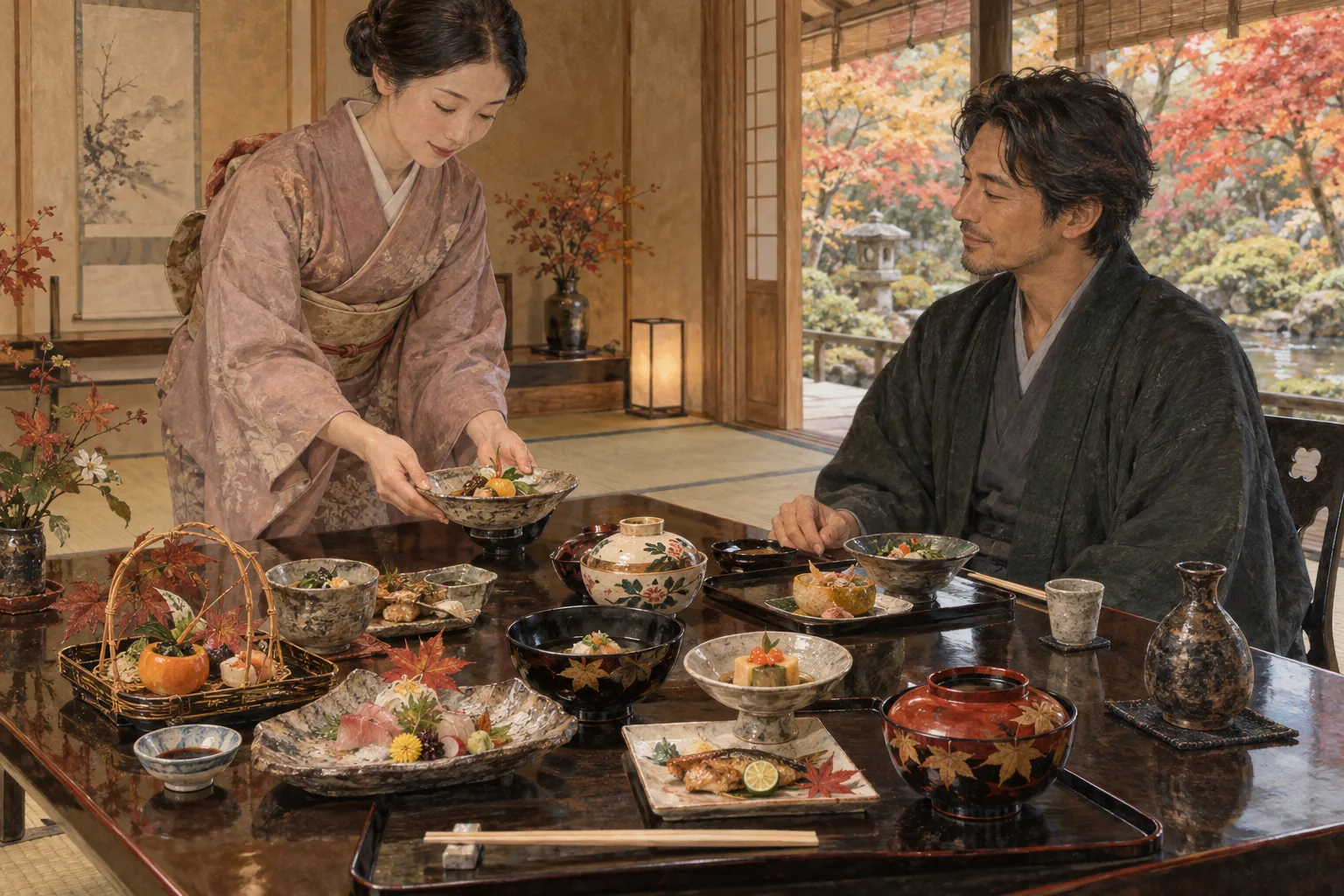
壱In one line一言で言うと
Kaiseki ryori is Japan's formal course meal, but the name covers two traditions: tea ceremony meals and banquets.
弐In 30 seconds30秒で説明する
Written one way, kaiseki is the light meal served before thick tea at a formal tea gathering: rice, soup and a few dishes, deliberately plain. Written another way with the same reading, it is the multi-course banquet meal built around sake, which is what restaurants and inns serve. Both follow the season closely. The second is what a visitor almost always means.
参As a short speechスピーチ・英作文
Kaiseki is the answer when someone asks what the top of Japanese cooking looks like, but the word needs untangling, because two traditions share the same sound. The original, written with characters meaning a stone in the robe, is the meal served before the thick tea at a formal tea gathering.
The name refers to a warmed stone that Zen monks were said to hold against the body to dull hunger, and the meal is supposed to do the same: rice, soup and a few small dishes, enough to settle the stomach so that strong tea on an empty one does no harm. It is deliberately restrained.
The other, written with characters meaning a meeting seat, grew out of banquet dining and is organized around sake, so the rice arrives at the end rather than the beginning, and the courses run through sashimi, a simmered dish, something grilled, something fried and so on. That is what a ryokan dinner or an expensive restaurant serves. What they share is that the season decides everything, the ingredients and the vessels alike, and that the order is fixed rather than chosen.
懐石料理かいせきりょうりkaiseki ryorithe formal multi-course meal, and the two different things called kaiseki
同じ「かいせき」に二種類ある。茶の前の簡素な食事と、酒を飲む宴の料理。
壱一言で言うとIn one line
懐石料理とは、日本の正式なコース料理で、茶の湯の料理と宴席の料理という二つの流れを指す言葉です。
弐30秒で説明するIn 30 seconds
一方の「懐石」は、正式な茶事で濃茶の前に出す軽い食事です。ご飯と汁と数品で、わざと簡素にします。読みが同じもう一方の「会席」は、酒を中心とした宴の料理で、料亭や旅館が出すのはこちらです。どちらも季節を強く映します。旅行者が言う「かいせき」は、ほぼ必ず後者です。
参スピーチ・英作文As a short speech
日本料理のいちばん上は何か、と聞かれたときの答えが「かいせき」です。ただ、同じ音を共有する二つの伝統があるので、まずそこをほどく必要があります。元は「懐石」。懐の石という字で、正式な茶事において濃茶の前に出す食事です。
名は、禅僧が空腹をしのぐために温めた石を懐に入れたという話に由来し、料理の役目も同じです。ご飯と汁と小さな数品。空腹のまま濃い茶を飲んで体を痛めないよう、腹を落ち着かせるためのもので、あえて控えめに作ります。もう一方は「会席」。会う席という字で、宴の食事から育ち、酒を中心に組み立てます。
ですからご飯は最初ではなく最後に出て、刺身、煮物、焼き物、揚げ物と進みます。旅館の夕食や高級な店が出すのはこちらです。共通するのは、季節がすべてを決めること、つまり材料も器も季節が決め、料理の順序は選ぶものではなく定まっている、という点です。
こう聞かれたらQuestions people actually ask
QSo which one will I be served?
AAlmost certainly the banquet kind, at a ryokan or a restaurant. The tea-ceremony meal is mainly served as part of a formal tea gathering, usually by invitation, though a few restaurants specialize in it.
自分が出されるのはどちらですか。ほぼ確実に会席のほうで、旅館や料亭で出されます。茶懐石は主に正式な茶事の一部として、たいてい招かれて口にするものです。茶懐石を専門に出す店も一部にはあります。
QWhy so many small dishes?
AEach course is a different cooking method — raw, simmered, grilled, steamed, fried — so the meal shows the range of what one kitchen can do with the same season's ingredients.
どうして小さな皿がたくさん出るのですか。一品ごとに調理法を変えるためです。生、煮る、焼く、蒸す、揚げる。同じ季節の材料で、厨房の幅を見せる組み立てです。
QDo I have to eat everything?
ANo, and saying in advance that a portion is too large or that you cannot eat something is normal and welcomed. Telling the inn before the day is much better than leaving food.
全部食べなければいけませんか。その必要はありません。量が多い、食べられないものがある、と先に伝えるのはふつうのことで、喜ばれます。当日残すより、前もって宿に伝えるほうがずっとよいです。
誤解されやすいA common misunderstanding
MYTHKaiseki means an elaborate, expensive banquet.懐石とは、豪華で高価な宴の料理のことだ、と思われがちです。
FACTThat describes kaiseki written as a meeting seat. The original tea-ceremony kaiseki is small and plain on purpose.それは「会席」のほうです。元の茶懐石は、意図して小さく簡素に作られます。
そのまま使えるフレーズPhrases you can use
- There are two kinds of kaiseki, with the same sound.「かいせき」には同じ読みで二種類あります。
- One is the plain meal before tea.一つは茶の前の簡素な食事です。
- The other is the banquet meal built around sake.もう一つは酒を中心にした宴の料理です。
- The season decides the ingredients and the dishes.季節が材料も器も決めます。
- Tell them in advance if you can't eat something.食べられないものは先に伝えてください。
豆知識Background
「懐石」の字は、禅僧が温めた石を懐に入れて空腹をしのいだという話に由来するとされる。茶懐石は一汁三菜を基本とし、飯と汁が最初に出るのに対し、会席料理では飯と汁が最後に出るのが一般的である。「会席」はもともと連歌や俳諧の席を指す語で、そこから宴の料理を指すようになった。千利休が茶の湯の食事を簡素に整えたと伝えられ、現在の茶懐石の形はその流れをくむとされる。
出典日本文化ナビ(原田英語.com)「懐石料理を英語で説明する(kaiseki ryori)」https://www.haradaeigo.com/japanese-culture/w/kaiseki
- 文
- 日本文化ナビ編集部(原田英語.com)— 英文・和訳・解説はすべて独自に作成
- イラスト
- 日本文化ナビ オリジナル
- 発行
- 原田英語.com https://www.haradaeigo.com/
- 印刷日
- 2026.10.17
© 2026 Harada Eigo (原田英語.com). Text and illustration: Japan Culture Navi.
ページはこちら