門松
壱In one line一言で言うと
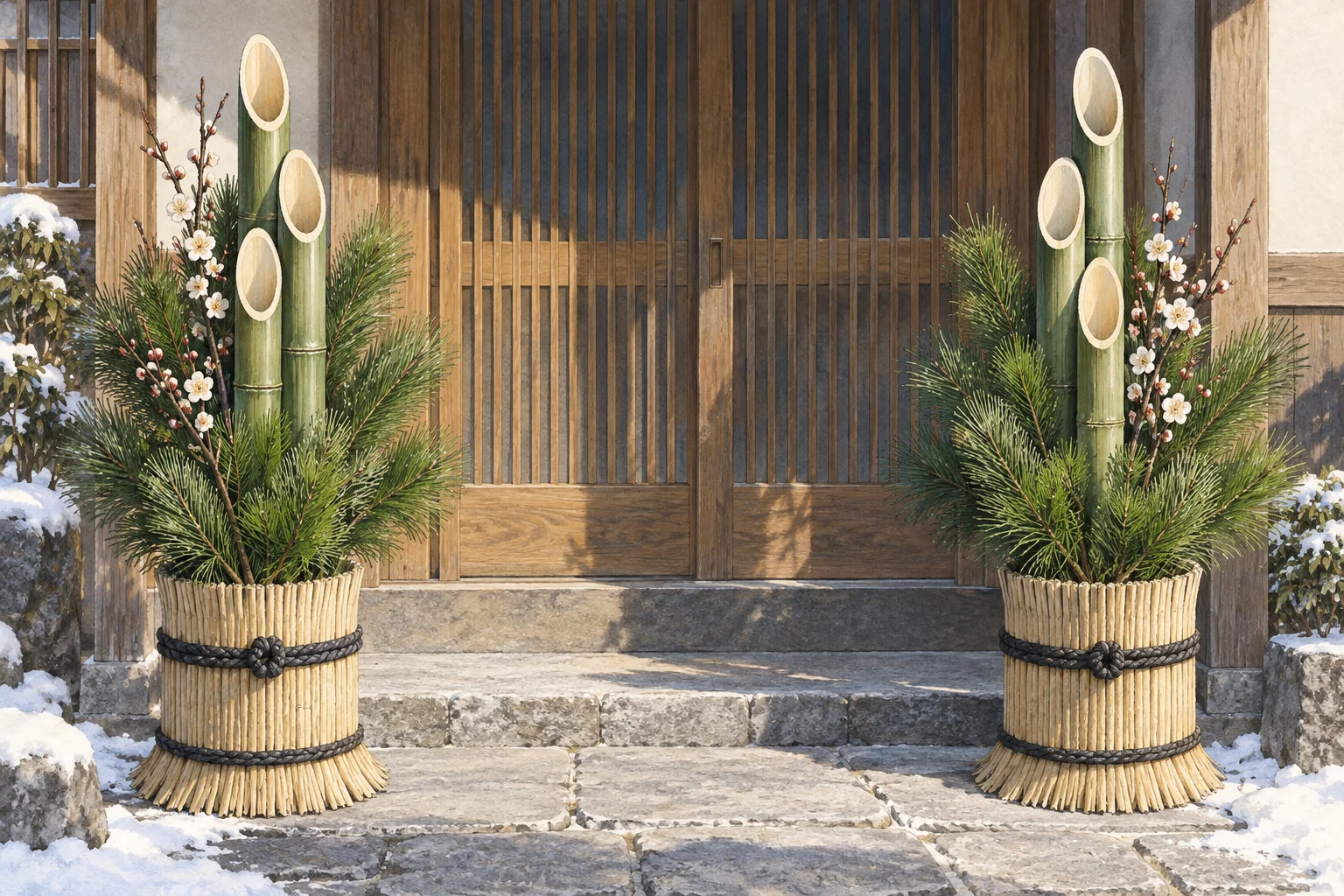
A kadomatsu is a pine and bamboo arrangement set by the door to welcome the New Year deity.
弐In 30 seconds30秒で説明する
A kadomatsu stands at the entrance of houses and offices from late December until the seventh or fifteenth of January. It is usually three bamboo stalks cut at a slant with pine around them. Its purpose is to mark the place where the deity of the incoming year can descend, which is why it is set outside rather than displayed indoors.
参As a short speechスピーチ・英作文
A kadomatsu is the arrangement of pine and bamboo you see beside doorways in Japan around New Year, and the reason it exists is worth knowing. It is not decoration. It is a marker: the deity of the incoming year is understood to come down to each household, and the pine is where it alights.
Pine was chosen because it stays green through winter and its name is a homophone of the verb to wait; bamboo for growing fast and straight; plum, when included, for flowering before anything else. There are timing customs that many people still follow.
You put it up by the twenty-eighth of December, because the twenty-ninth contains a sound meaning suffering and the thirty-first would be a single night's welcome, which is considered rude to a guest. It comes down at the end of the New Year period, usually the seventh of January around Tokyo and often the fifteenth around Osaka and Kyoto. Then it is taken to a shrine to be burned.
門松かどまつkadomatsuthe pine and bamboo arrangement placed at the door for the New Year
飾りではない。年神様が降りてくるための目印である。
壱一言で言うとIn one line
門松とは、年神様を迎えるために戸口に立てる松と竹の飾りです。
弐30秒で説明するIn 30 seconds
門松は12月の終わりから1月7日か15日まで、家や会社の入口に立てられます。斜めに切った三本の竹に松を添えた形が多いです。役目は、年神様が降りてくる場所を示すことです。だから室内に飾るのではなく、外に立てます。
参スピーチ・英作文As a short speech
門松は、正月のころ日本の戸口の脇に見かける松と竹の飾りです。なぜあるのかを知っておく値打ちがあります。飾りではありません。目印です。新しい年の神が家ごとに降りてくると考えられていて、その松に降り立つ。
松が選ばれたのは冬も緑を保つことと、「待つ」と音が通じるから。竹は速くまっすぐ伸びるから。梅を添えるのは、何より早く咲くからです。立てる時期にも習わしがあり、いまも守る人が多くいます。12月28日までに立てる。
29日は「苦」に通じ、31日は一夜飾りといって、客を迎えるのに失礼とされるからです。片づけるのは松の内の終わりで、関東ではふつう1月7日、関西では15日とするところが多くあります。そのあと神社へ持って行って焼いてもらいます。
こう聞かれたらQuestions people actually ask
QWhy are the bamboo stalks cut at an angle?
ATwo styles exist. The slanted cut is said to have spread from a Tokugawa household, while a straight cut is said to be the older form. Shops usually sell the slanted version, and neither is considered wrong.
どうして竹は斜めに切ってあるのですか。二つの形があります。斜めの切り口は徳川家に由来する話が伝わり、まっすぐ切るほうが古い形とされます。店で売られているのは斜めが多く、どちらが誤りということはありません。
QDo ordinary homes still put one up?
AFewer than before. Apartments often use a small printed version on the door instead, while shops, offices, banks and traditional inns still put out full-sized pairs.
いまも家に立てますか。以前より減りました。集合住宅では、戸に貼る小さな印刷のもので済ませることが多いです。商店、会社、銀行、旅館は、いまも一対の大きなものを出します。
QWhat happens to it afterwards?
AIt is taken to a shrine and burned in a mid-January bonfire along with New Year decorations and last year's charms. Burning is how the deity is seen off, so it is not thrown out as rubbish.
そのあとはどうするのですか。神社へ持って行き、1月半ばの火祭りで、正月飾りや古いお守りとともに焼きます。焼くことが年神様を送ることなので、ごみには出しません。
誤解されやすいA common misunderstanding
MYTHA kadomatsu is a Japanese version of a Christmas decoration.門松はクリスマスの飾りの日本版だ、と思われがちです。
FACTIt is not ornamental. It marks the landing place for the deity of the incoming year, which is why it stands outside the door and is burned rather than stored.飾りではありません。新しい年の神が降りる場所を示すもので、だから戸の外に立て、しまわずに焼きます。
そのまま使えるフレーズPhrases you can use
- It marks where the New Year deity comes down.年神様が降りてくる目印です。
- Pine stays green, bamboo grows straight.松は冬も緑、竹はまっすぐ伸びます。
- Put it up by the 28th of December.12月28日までに立てます。
- The 29th and the 31st are avoided.29日と31日は避けます。
- It's burned at a shrine in mid-January.1月半ばに神社で焼いてもらいます。
豆知識Background
門松は年神を迎える依り代とされ、松が用いられるのは常緑であること、「松」が「待つ」に通じることによる。12月29日を避けるのは「二重の苦」に通じるため、31日を避けるのは「一夜飾り」として忌まれるためである。竹の切り口には、斜めに削ぐ「そぎ」と水平に切る「寸胴」があり、そぎは徳川家康の故事に由来するという伝承がある。片づける時期の「松の内」は、関東では1月7日まで、関西では15日までとする地域が多い。下ろした門松はどんど焼きで燃やす。
出典日本文化ナビ(原田英語.com)「門松を英語で説明する(kadomatsu)」https://www.haradaeigo.com/japanese-culture/w/kadomatsu
- 文
- 日本文化ナビ編集部(原田英語.com)— 英文・和訳・解説はすべて独自に作成
- イラスト
- 日本文化ナビ オリジナル
- 発行
- 原田英語.com https://www.haradaeigo.com/
- 印刷日
- 2026.10.17
© 2026 Harada Eigo (原田英語.com). Text and illustration: Japan Culture Navi.
ページはこちら