石焼き芋
壱In one line一言で言うと
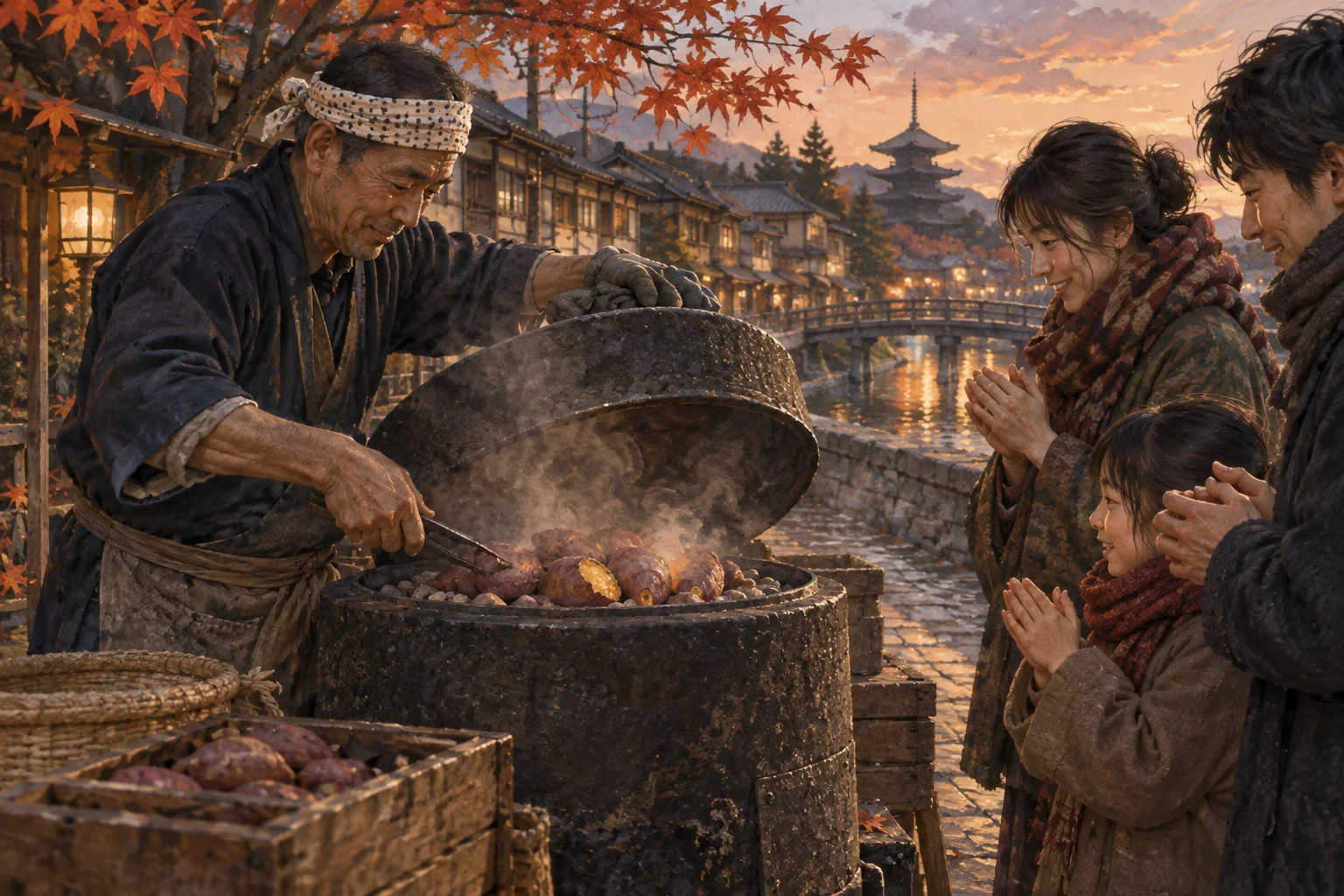
Ishiyakiimo are sweet potatoes slow-roasted in hot pebbles, sold in winter from small trucks with a recorded call.
弐In 30 seconds30秒で説明する
A winter street food. Sweet potatoes are buried in hot pebbles in a drum and roasted slowly, which turns the starch to sugar and makes them intensely sweet without anything added. They are sold from small trucks that circle residential streets playing a drawn-out recorded cry, and now also from cabinets at supermarkets and convenience stores.
参As a short speechスピーチ・英作文
If you are in a Japanese residential neighborhood on a cold evening and hear a slow, wailing recorded voice coming down the street, it is a sweet potato truck. Ishiyakiimo means stone-roasted sweet potato, and the method is the point. The potatoes sit buried in a bed of small pebbles heated in a drum, which surrounds them with steady, gentle heat for a long time rather than searing them.
At that temperature an enzyme in the potato keeps converting starch into sugar, so the result is genuinely sweet, wet and soft, with nothing added at all — no butter, no sugar, no salt. You buy one wrapped in paper, and the usual way to eat it is to break it in half and eat it out of the skin while walking, using it as a hand warmer first.
The truck vendors have become rarer, and most sales probably now come from heated cabinets in supermarkets and convenience stores, but the call is still recognized instantly by anyone who grew up in Japan, and it belongs to winter, just as the tofu seller's horn once belonged to the evening streets.
石焼き芋いしやきいもishiyakiimosweet potatoes roasted in hot stones, sold from a truck
冬になると、あの間延びした売り声を流す軽トラックが住宅地を回る。
壱一言で言うとIn one line
石焼き芋とは、熱した小石のなかでじっくり焼いた薩摩芋で、冬に売り声を流す軽トラックで売られるものです。
弐30秒で説明するIn 30 seconds
冬の路上の食べ物です。薩摩芋を熱した小石のなかに埋めてじっくり焼くと、でんぷんが糖に変わり、何も加えずにとても甘くなります。住宅地を回る軽トラックが間延びした売り声を流して売るほか、いまはスーパーやコンビニの焼き芋機でも売られています。
参スピーチ・英作文As a short speech
寒い夕方、日本の住宅地にいて、間延びした録音の声が通りをゆっくり近づいてきたら、それは焼き芋の車です。石焼き芋とは石で焼いた薩摩芋のことで、この焼き方こそが肝心です。芋は、釜のなかで熱した小石に埋められます。強い火で表面を焼くのではなく、穏やかな熱に長いあいだ包まれるのです。
その温度では芋のなかの酵素がでんぷんを糖に変え続けるので、何も足さなくても本当に甘くなります。バターも砂糖も塩も要りません。紙に包んで渡されたら、半分に割り、皮のまま歩きながら食べるのがふつうです。その前にしばらく手を温めます。
売り歩く車は少なくなり、いまはスーパーやコンビニの焼き芋機で売れる分のほうが多いでしょう。それでもあの売り声は、日本で育った人なら一瞬で分かります。あの声は冬のもので、かつて豆腐屋のラッパが夕方の町のものだったのと同じです。
こう聞かれたらQuestions people actually ask
QWhy is it so sweet?
ASlow heating holds the potato in the temperature range where an enzyme breaks starch down into sugar. Roasting it fast at high heat does not produce the same sweetness.
どうしてそんなに甘いのですか。ゆっくり熱することで、でんぷんを糖に分解する酵素が働く温度に長くとどまるからです。強火で短時間に焼いても、この甘さにはなりません。
QHow do I eat it?
ABreak it in half with your hands, peel the skin back as you go, and eat it hot. Many people eat the skin too. It is normal to eat it outdoors.
どうやって食べますか。手で半分に割り、皮を少しずつむきながら熱いうちに食べます。皮ごと食べる人も多いです。外で食べてかまいません。
QWhere can I buy one now?
ASupermarkets and convenience stores keep heated cabinets by the entrance in winter. Trucks still circulate in some areas, and there are specialist shops.
いまはどこで買えますか。冬はスーパーやコンビニの入口近くに焼き芋機が置かれています。売り歩く車が回る地域もありますし、専門店もあります。
誤解されやすいA common misunderstanding
MYTHSomething is added to make them sweet.甘くするために何か加えている、と思われがちです。
FACTNothing is added. The sweetness comes from the potato's own starch converting to sugar during long, gentle heating.何も加えていません。甘さは、長く穏やかに熱するあいだに芋自身のでんぷんが糖に変わることで生まれます。
そのまま使えるフレーズPhrases you can use
- That call means a sweet potato truck.あの声は焼き芋の車です。
- They're roasted slowly in hot stones.熱い石のなかでゆっくり焼きます。
- Nothing is added — it's naturally that sweet.何も加えていません。自然にその甘さです。
- Use it as a hand warmer first.まず手を温めるのに使ってください。
- Supermarkets sell them in winter too.冬はスーパーでも売っています。
豆知識Background
石焼き芋の移動販売は1950年代に始まったとされ、軽トラックに石焼きの釜を積んで住宅地を回る形が広まった。近年はスーパーマーケットやコンビニエンスストアが店頭に焼き芋機を置くようになり、販売の中心が移っている。紅はるか、安納芋、シルクスイートなど、甘みの強い品種が作られるようになったことも、近年の人気を後押ししている。
出典日本文化ナビ(原田英語.com)「石焼き芋を英語で説明する(ishiyakiimo)」https://www.haradaeigo.com/japanese-culture/w/ishiyakiimo
- 文
- 日本文化ナビ編集部(原田英語.com)— 英文・和訳・解説はすべて独自に作成
- イラスト
- 日本文化ナビ オリジナル
- 発行
- 原田英語.com https://www.haradaeigo.com/
- 印刷日
- 2026.10.17
© 2026 Harada Eigo (原田英語.com). Text and illustration: Japan Culture Navi.
ページはこちら