囲炉裏
壱In one line一言で言うと
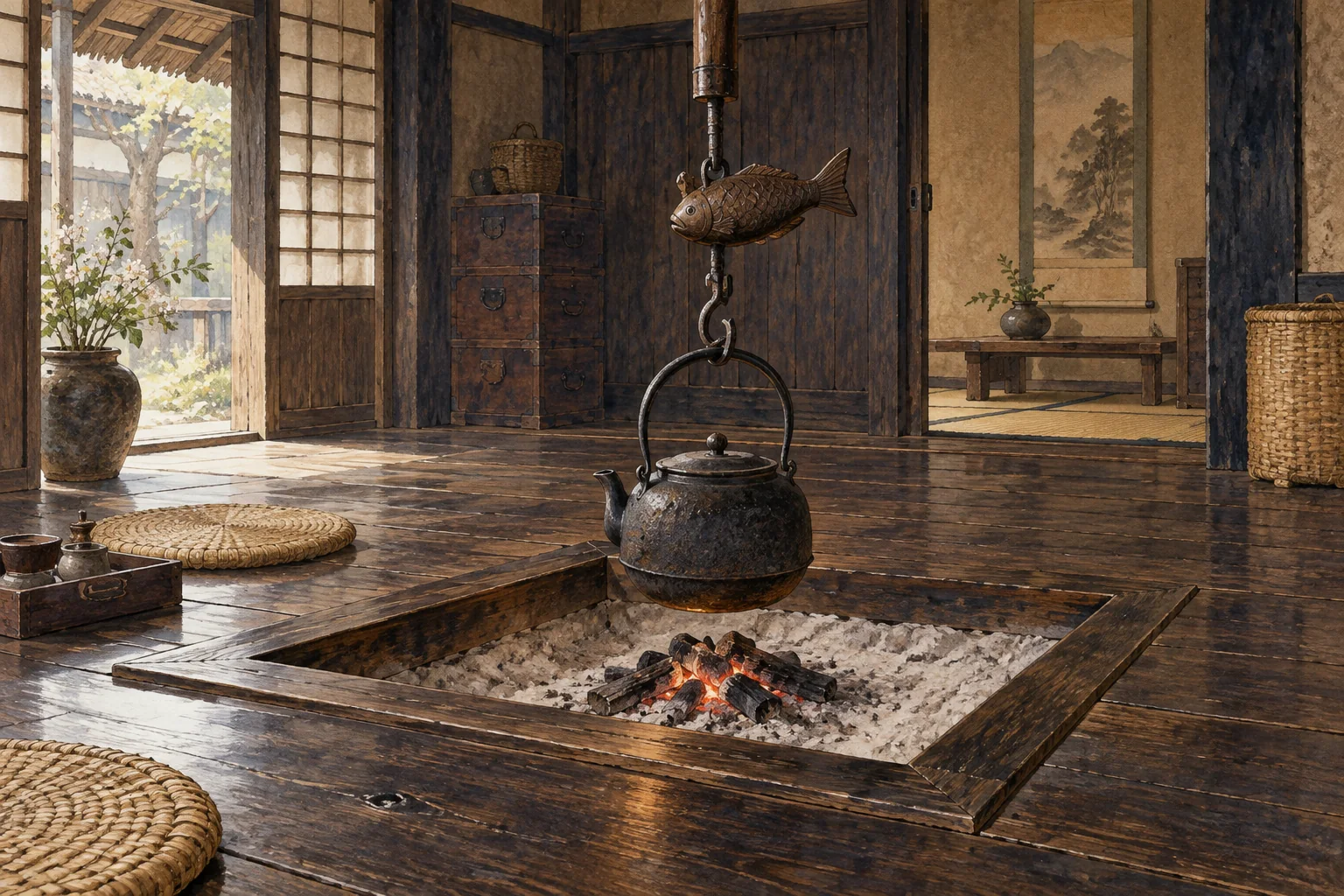
An irori is a square hearth cut into the floor, with no chimney, whose smoke protected the house itself.
弐In 30 seconds30秒で説明する
An irori is a square pit of ash in the middle of a room, where a fire burns for heat, cooking and light. There is no chimney; the smoke rises through the room and out through the roof, and in doing so it dries the timbers and keeps insects out of the thatch. Where people sat around it was fixed by role, with a named seat for the head of the household.
参As a short speechスピーチ・英作文
Before modern heating, the center of a rural Japanese house was a square hole in the floor filled with ash, with a fire in it. An adjustable hook hung above it from the roof beam, holding an iron pot at whatever height was wanted, and the fire did everything: cooked, heated, dried clothes and lit the room.
The striking part is that there was no chimney. Smoke filled the upper space and left through gaps in the roof, and this was not a design failure. The smoke dried the beams, kept insects and rot out of the thatch, and blackened the underside of the roof so thoroughly that a thatched house with a working hearth lasted far longer than one without.
Seating was fixed: the head of the household sat in a named place with his back to a particular side, the wife sat by the kitchen side, guests took another. Almost none are still in daily use, but you can sit at one in preserved farmhouses and in some country inns.
囲炉裏いろりirorithe open hearth sunk into the floor
煙突がない。煙が屋根を抜けることで、家そのものを守っていた。
壱一言で言うとIn one line
囲炉裏は床を四角く切った炉で、煙突がなく、その煙が家そのものを守っていました。
弐30秒で説明するIn 30 seconds
囲炉裏は、部屋の中央に四角く切った灰の炉で、暖房と煮炊きと灯りを兼ねた火を焚きます。煙突はありません。煙は部屋を抜けて屋根から出ていき、その過程で木を乾かし、茅に虫がつくのを防ぎます。誰がどこに座るかは決まっていて、家の主の席には名前がありました。
参スピーチ・英作文As a short speech
近代の暖房が入る前、地方の家の中心は、床を四角く切って灰を入れ、火を焚く炉でした。上の梁からは自在鉤が下がり、鉄の鍋を好きな高さに吊ります。火は何でもこなしました。煮炊きをし、暖を取り、着物を乾かし、部屋を照らす。驚くのは、煙突がないことです。
煙は上に溜まり、屋根の隙間から抜けていきます。これは設計の失敗ではありません。煙が梁を乾かし、茅に虫や腐りが入るのを防ぎ、屋根裏を真っ黒にします。囲炉裏を使っている茅葺きの家は、使っていない家よりずっと長もちしました。
座る位置も決まっていました。主人は名前のついた席に決まった側を背にして座り、妻は勝手に近い側、客はまた別の側です。今も日常で使っている家はほとんどありませんが、保存された民家や山あいの宿では、実際に囲炉裏端に座れます。
こう聞かれたらQuestions people actually ask
QWas the house not full of smoke?
AYes, in the upper part of the room, which is why people sat low. It was unpleasant and the health effects were real, but the trade-off was a roof that lasted much longer.
家の中は煙だらけではなかったのですか。部屋の上のほうは煙が溜まっていました。だから人は低い姿勢で座ります。快いものではなく、健康への影響も実際にありました。その代わりに、屋根がずっと長もちしました。
QWhat is the hook hanging above it?
AA jizai-kagi, an adjustable pot hook. Sliding a wooden stopper up or down moves the pot closer to or further from the fire, and the stopper is often carved as a fish, said to be a charm against fire.
上に吊るしてある鉤は何ですか。自在鉤です。木の止め具を上下させると、鍋を火に近づけたり遠ざけたりできます。止め具は魚の形に彫られていることが多く、火除けのまじないと言われます。
QCan I see one in use?
AYes. Some preserved farmhouses in Shirakawa-go and in open-air museums light them regularly to protect the buildings, and some mountain inns grill fish on skewers around one for guests.
実際に使っているところを見られますか。見られます。白川郷や野外博物館の民家には、建物を守るために定期的に火を入れているところがあります。山あいの宿には、囲炉裏で串の魚を焼いて出すところもあります。
そのまま使えるフレーズPhrases you can use
- The fire burns in the middle of the room.部屋の中央で火を焚きます。
- There is no chimney at all.煙突はまったくありません。
- The smoke preserves the roof.煙が屋根を守ります。
- Each seat belonged to someone.座る場所は決まっていました。
- They grill fish on skewers here.ここで串の魚を焼きます。
豆知識Background
囲炉裏は床を四角く切って灰を敷いた炉で、暖房、煮炊き、乾燥、照明を兼ねました。煙突を設けず、煙を屋根裏に回すのは、茅葺き屋根の防虫と防腐のためでもあります。天井から下がる自在鉤は鍋の高さを変える道具で、止め具は火除けを願って魚の形に作られることが多くあります。座る位置は役割で決まり、主人の席を横座、主婦の席をかか座などと呼ぶ地域があります。白川郷などの保存民家には、建物を守るために今も火を入れているところがあります。
出典日本文化ナビ(原田英語.com)「囲炉裏を英語で説明する(irori)」https://www.haradaeigo.com/japanese-culture/w/irori
- 文
- 日本文化ナビ編集部(原田英語.com)— 英文・和訳・解説はすべて独自に作成
- イラスト
- 日本文化ナビ オリジナル
- 発行
- 原田英語.com https://www.haradaeigo.com/
- 印刷日
- 2026.10.17
© 2026 Harada Eigo (原田英語.com). Text and illustration: Japan Culture Navi.
ページはこちら