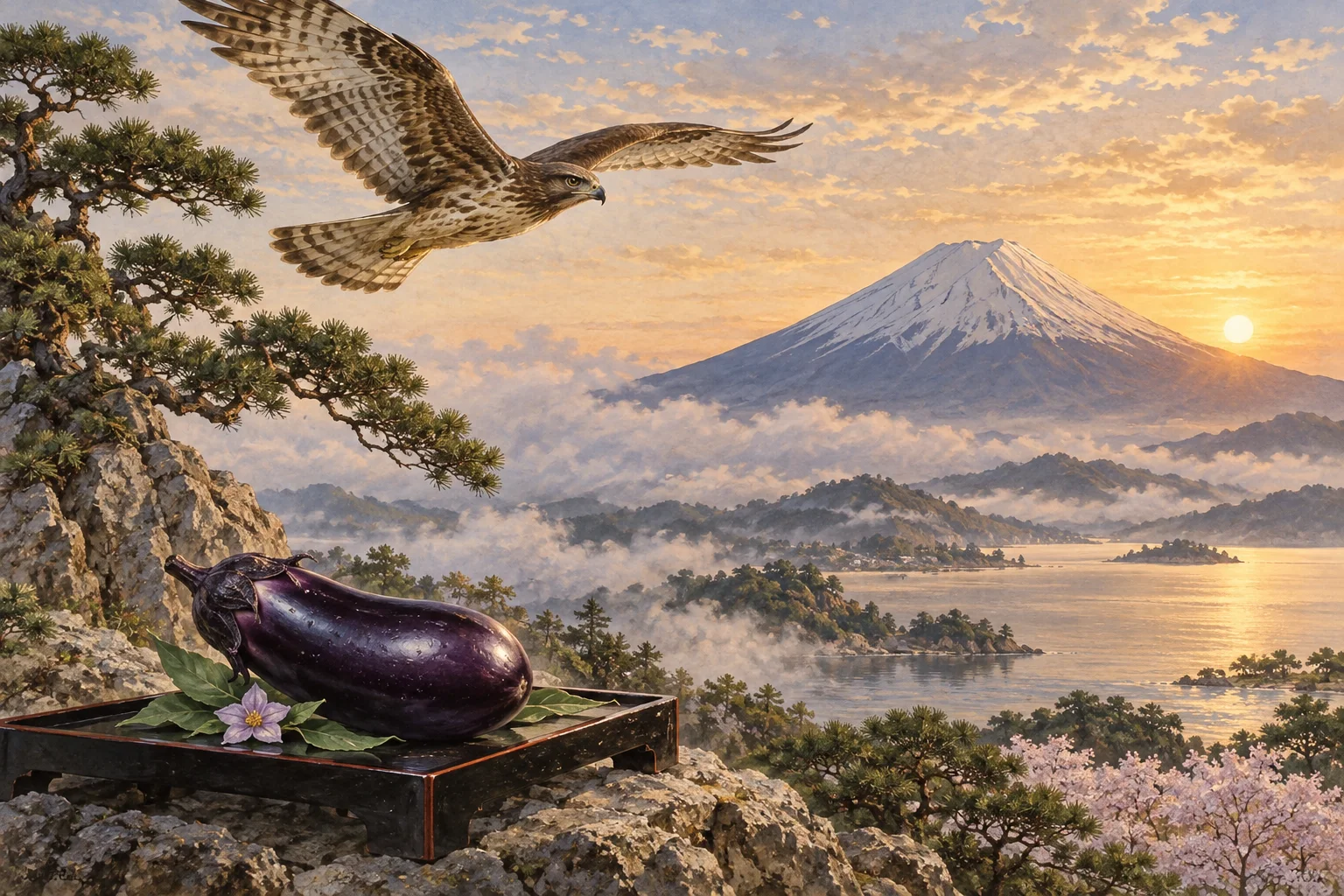
一富士二鷹三茄子
壱In one line一言で言うと
This saying ranks the luckiest things to see in your first dream of the new year: Mount Fuji, a hawk, then an eggplant.
弐In 30 seconds30秒で説明する
Ichifuji nitaka sannasubi ranks the luckiest possible subjects for hatsuyume, the first dream of the new year: Mount Fuji comes first, a hawk second, and an eggplant third. Nobody knows for certain why this exact combination became lucky, and several explanations circulate, including a folk story that these were simply the shogun Tokugawa Ieyasu's favorite things, and a separate theory linking all three to Suruga province, where Ieyasu spent his last years.
参As a short speechスピーチ・英作文
Ichifuji nitaka sannasubi is a saying that ranks the luckiest things you could possibly see in hatsuyume, your first dream of the new year: Mount Fuji in first place, a hawk in second, and an eggplant in third. Nobody can say for certain why these specific three items, and the explanations that survive don't agree with each other.
One popular story claims they were simply the favorite things of the shogun Tokugawa Ieyasu, tying the saying to his personal taste. Another links all three to Suruga province, where Ieyasu spent his last years and where Mount Fuji was visible, hawks were considered especially fine, and the area's early eggplant harvest was famous and expensive.
A few other theories exist as well, involving wordplay on the sounds of the words themselves. I find it a nice example of how a piece of folklore can stay popular for centuries without anyone ever settling on where it actually came from.
一富士二鷹三茄子いちふじにたかさんなすびichifuji nitaka sannasubithe traditional ranking of lucky first-dream images: Mount Fuji, a hawk, an eggplant
正月に見ると縁起がいい夢の順位。なぜ富士山・鷹・茄子かは諸説ある。
壱一言で言うとIn one line
これは正月の初夢で見ると縁起がいいものの順位で、一位が富士山、二位が鷹、三位が茄子です。
弐30秒で説明するIn 30 seconds
一富士二鷹三茄子とは、正月の初夢で見ると縁起がいいとされるものの順位で、一位が富士山、二位が鷹、三位が茄子です。なぜこの三つなのかは誰にもはっきりとは分かっておらず、徳川家康の好物を並べたという言い伝えや、家康が晩年を過ごした駿河国にちなむという説など、いくつもの説明が伝わっています。
参スピーチ・英作文As a short speech
一富士二鷹三茄子とは、正月の初夢で見られる最も縁起がいいものを順にならべた言い伝えで、一位が富士山、二位が鷹、三位が茄子です。なぜこの三つなのか、確かなことは誰にも分かっておらず、伝わっている説明も互いに食い違っています。
よく語られるのは、これらは将軍徳川家康の好物にすぎなかったという話で、家康個人の好みに結びつけています。別の説は、この三つすべてを家康が晩年を過ごした駿河国に結びつけます。
そこからは富士山が見え、鷹は特に上等とされ、その土地の早出しの茄子は高価で有名だったというものです。言葉の音にかけた説もいくつか存在します。何世紀にもわたって人気を保ちながら、誰もその本当の由来を突き止められずにいるという、民間伝承のよい例だと私は思います。
こう聞かれたらQuestions people actually ask
QIs there a scientific reason these three items are considered lucky?
ANot really. It's a folk saying, and the explanations for why these specific three were chosen are all traditional stories rather than confirmed history.
この三つが縁起物とされるのに、科学的な理由はあるのですか。特にありません。これは民間の言い伝えで、なぜこの三つが選ばれたのかについての説明は、確かな歴史というより伝承にすぎません。
QWhat happens if I don't dream about any of these on New Year's?
ANothing in particular. Most people treat it as lighthearted fun rather than something that actually predicts the year ahead.
正月にどれも夢に出てこなかったらどうなるのですか。特に何も起きません。多くの人はこれを、一年を実際に占うものというより、気楽な楽しみとして扱っています。
誤解されやすいA common misunderstanding
MYTHEveryone in Japan takes their New Year's first dream seriously as a real fortune-telling method.日本人は皆、正月の初夢を本物の占いとして真剣に受け止めていると思われがちです。
FACTIt's treated more as a fun, lighthearted tradition than an actual prediction, and plenty of people don't remember their hatsuyume at all.実際は本気の予言というより気楽な楽しい風習として扱われることが多く、初夢自体を覚えていない人も少なくありません。
そのまま使えるフレーズPhrases you can use
- Did you have a good hatsuyume this year?今年はいい初夢を見た?
- I dreamed about Mount Fuji, so I guess that's lucky.富士山の夢を見たから縁起がいいのかな。
- Nobody really knows why these three are the lucky ones.なぜこの3つが縁起がいいのかは誰も本当のところは知りません。
- It's just a fun New Year's tradition, not a serious prediction.ただの正月の楽しい言い伝えで、真剣な占いではありません。
豆知識Background
「一富士二鷹三茄子」の由来には諸説あり、徳川家康の好物を並べたという説や、家康ゆかりの駿河国の名産(富士山・鷹狩り・初茄子)にちなむという説などが伝わるが、どれも確定した史実ではないとされる。実際には初夢がいつの夜の夢を指すかについても、大晦日から元日、あるいは元日から2日にかけての夢など解釈が分かれており、地域や家庭による違いも大きい。
出典日本文化ナビ(原田英語.com)「一富士二鷹三茄子を英語で説明する(ichifuji nitaka sannasubi)」https://www.haradaeigo.com/japanese-culture/w/ichifuji-nitaka-sannasubi
- 文
- 日本文化ナビ編集部(原田英語.com)— 英文・和訳・解説はすべて独自に作成
- イラスト
- 日本文化ナビ オリジナル
- 発行
- 原田英語.com https://www.haradaeigo.com/
- 印刷日
- 2026.10.17
© 2026 Harada Eigo (原田英語.com). Text and illustration: Japan Culture Navi.
ページはこちら