一番風呂
壱In one line一言で言うと
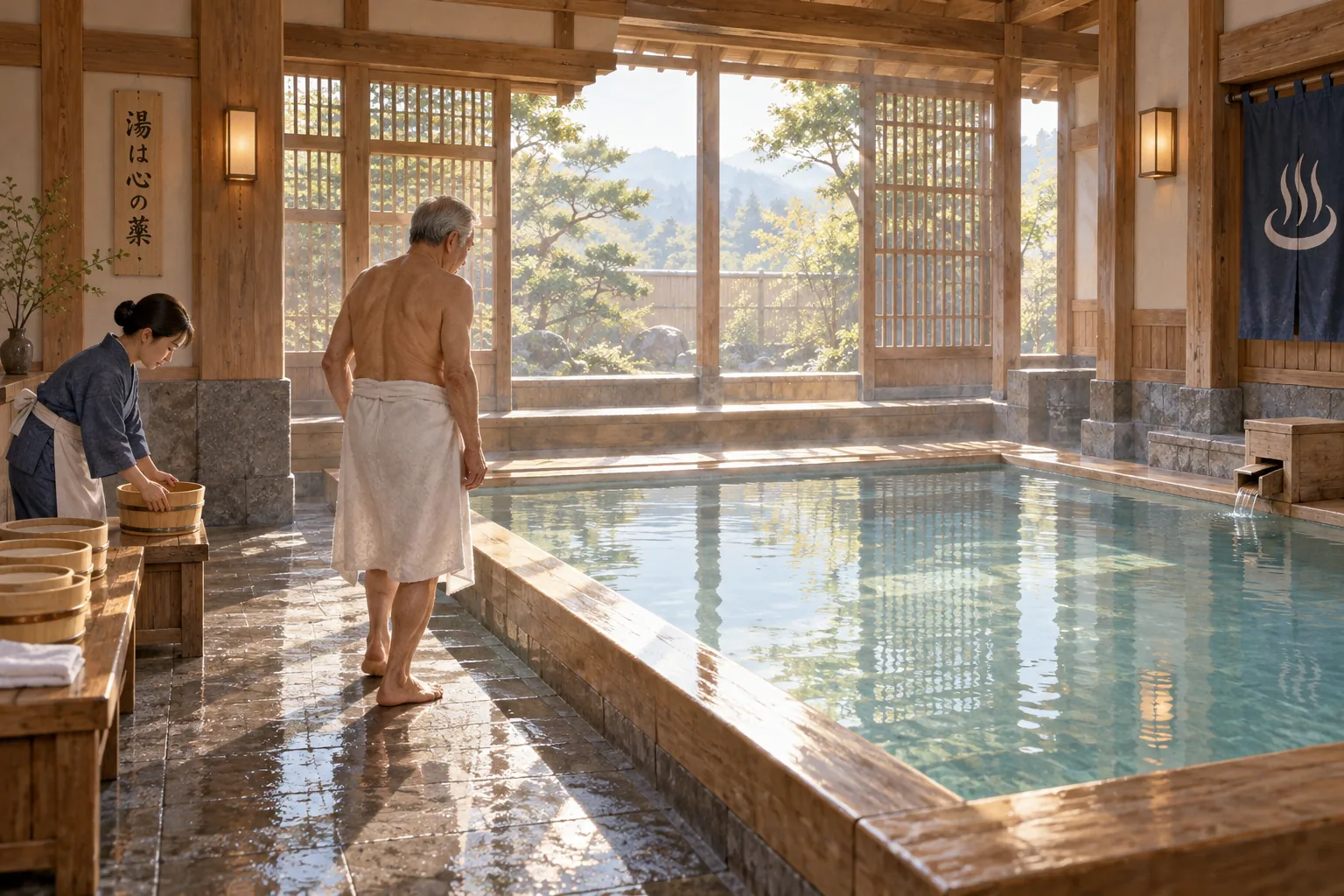
Ichiban-buro means being the first person into a bath after it has just been filled or cleaned.
弐In 30 seconds30秒で説明する
Ichiban-buro literally means the first bath, and it refers to being the very first person to step into water that has just been drawn, cleaned or refreshed. At a ryokan or public bath, that water is at its clearest and hottest, before anyone else's soap residue or body heat has touched it. In many households the phrase also carries an older meaning: whoever bathed first, often the head of the family, got the cleanest water while everyone else followed in turn.
参As a short speechスピーチ・英作文
Ichiban-buro, the first bath, is one of those small phrases that carries more weight than its size suggests. At a ryokan, the bath is drained, scrubbed and refilled at set times each day, and the guest who steps in right after that refill gets water that is at its clearest, hottest and least used, before it has absorbed anyone else's soap or sweat. Regulars at a favorite sento or onsen sometimes plan their visit around the schedule just to catch this moment.
The phrase has an older, more domestic layer too: in many households that shared one tub of hot water and reheated it rather than draining it after each person, whoever bathed first, traditionally the household head, got the water at its best, while family members followed one after another. That old ranking has largely faded, but the phrase, and the small pleasure of being first, has outlived it.
一番風呂いちばんぶろichiban-burobeing the very first person into freshly drawn bathwater
その日いちばん最初に入る湯。旅館では、時には家庭でも、特別な扱いを受けてきた。
壱一言で言うとIn one line
一番風呂とは、湯を張り替えたり洗ったりした直後の風呂に、一番に入ることです。
弐30秒で説明するIn 30 seconds
一番風呂とは文字どおり最初の風呂のことで、湯を張ったばかり、あるいは洗い替えたばかりの湯に一番に入ることを指します。旅館や共同浴場では、その湯がいちばん澄んでいて熱く、誰の石鹸の残りや体温もまだ混ざっていません。多くの家庭ではもう一つ古い意味もあり、家長など最初に入る人がいちばんきれいな湯を使い、あとの家族が順番に続いていました。
参スピーチ・英作文As a short speech
一番風呂という小さな言葉には、その大きさ以上の重みがあります。旅館では、風呂は毎日決まった時間に湯を抜いて洗い、また張り直しますが、その直後に入る客は、誰の石鹸も汗もまだ混ざっていない、いちばん澄んで熱い湯を使うことになります。
お気に入りの銭湯や温泉の常連の中には、この瞬間を逃さないよう、湯を替える時間に合わせて通う人もいます。この言葉にはもっと古い、家庭に根ざした意味もあります。
一つの湯船を家族で共有し、一人ごとに湯を抜くのではなく沸かし直して使っていた多くの家庭では、たいてい家長など最初に入る人がいちばん良い状態の湯を使い、そのあと家族が順番に続きました。家長から順に入るという序列はかなり薄れましたが、一番に入るというささやかな喜びを表す言葉そのものは、今も残っています。
こう聞かれたらQuestions people actually ask
QWhy does it matter who bathes first?
AFreshly drawn water is clearer and hotter, and hasn't picked up anyone else's soap or body oil yet, so being first is simply the most pleasant time to bathe, not a matter of rank at a ryokan or public bath today.
なぜ最初に入る人が重要なのですか。張り替えたばかりの湯は澄んでいて熱く、まだ誰の石鹸や皮脂も混ざっていません。そのため、今の旅館や共同浴場では、最初に入ることは単に気持ちのいいタイミングというだけで、序列の問題ではありません。
QDo families still bathe in the same water at home?
AMany still do, since it saves water and gas, and a reheating function keeps the water warm for the next person. Some households now run a fresh bath for each person, though.
今も家庭では同じ湯を使い回すのですか。今も同じ湯を使う家庭は多くあります。水道代やガス代の節約になり、追い焚き機能で次の人のために温め直せるからです。ただ、一人ずつ新しく湯を張る家庭もあります。
QCan I ask a ryokan when the bath was last refreshed?
AYes, staff usually know the cleaning schedule and are happy to tell you, and some inns even post the times the bath is drained and refilled near the entrance for guests who want to time their visit.
旅館に、風呂をいつ張り替えたか聞いてもいいのですか。はい、スタッフはたいてい清掃の時間を把握していて、喜んで教えてくれます。宿によっては、湯を抜いて張り替える時間を入り口近くに掲示していることもあります。
誤解されやすいA common misunderstanding
MYTHIchiban-buro is only an old-fashioned rule about the father of the house bathing first.一番風呂とは、家長が最初に入るという昔ながらの決まりごとに過ぎない、と思われがちです。
FACTThat household hierarchy is one older meaning, but today the phrase mostly describes the everyday pleasure of being the first guest into a freshly cleaned ryokan or sento bath, prized simply because the water is at its hottest and clearest.家庭内の序列はたしかに古い意味の一つですが、今では旅館や銭湯で洗い替えたばかりの湯に一番乗りする、日常的な楽しみを指すことがほとんどで、単に湯がいちばん熱く澄んでいることが理由です。
そのまま使えるフレーズPhrases you can use
- I got the ichiban-buro today.今日は一番風呂に入れました。
- The bath was just refreshed an hour ago.この風呂は1時間前に張り替えたばかりです。
- What time do you drain and refill the bath?風呂の湯を張り替えるのは何時ですか。
- Being first in means the clearest water.一番に入ると、いちばん澄んだ湯に入れます。
- In my grandparents' house, my grandfather always bathed first.祖父母の家では、祖父がいつも最初に入っていました。
豆知識Background
一番風呂という言葉には二つの層がある。一つは旅館や銭湯で、湯を抜いて洗い、張り替えた直後の湯に最初に入ることを指す使い方で、もう一つは、家族で一つの湯船を使い回していた時代の家庭内の習慣を指す使い方である。後者では家長が最初に入り、そのあと家族が順に続くのが一般的だったとされるが、今も家族で同じ湯を使う家庭は多いが、入る順番を家長から決めるような序列は薄れつつある。
出典日本文化ナビ(原田英語.com)「一番風呂を英語で説明する(ichiban-buro)」https://www.haradaeigo.com/japanese-culture/w/ichiban-buro
- 文
- 日本文化ナビ編集部(原田英語.com)— 英文・和訳・解説はすべて独自に作成
- イラスト
- 日本文化ナビ オリジナル
- 発行
- 原田英語.com https://www.haradaeigo.com/
- 印刷日
- 2026.10.17
© 2026 Harada Eigo (原田英語.com). Text and illustration: Japan Culture Navi.
ページはこちら