冷やし中華
壱In one line一言で言うと
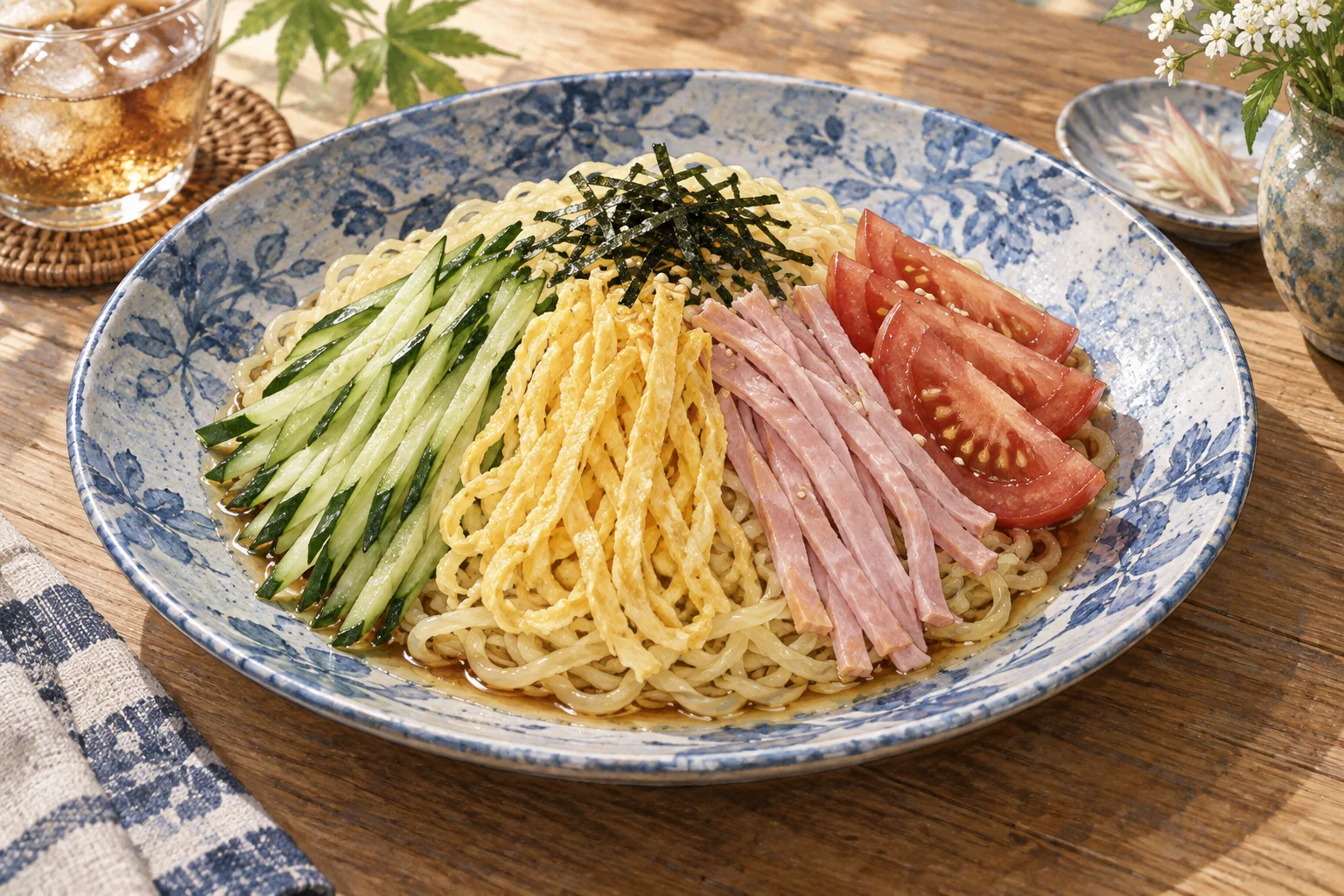
Hiyashi chuka is cold ramen noodles topped with strips of egg, ham, cucumber and tomato, sold only in summer.
弐In 30 seconds30秒で説明する
Hiyashi chuka is cold wheat noodles under a fan of thinly sliced toppings — omelet, ham, cucumber, tomato — with a tart soy-and-vinegar or sesame dressing poured over. It was invented in Japan, not China, despite the name. Most restaurants put it on the menu only from late spring to early autumn, and the paper sign announcing it has become a recognized marker of the season.
参As a short speechスピーチ・英作文
Hiyashi chuka is a good example of how Japan uses food to mark time. It is cold wheat noodles, rinsed in iced water, topped with thin strips of omelet, ham, cucumber and tomato laid out in a fan, with a sharp dressing of soy sauce and vinegar, or sometimes sesame, poured over the top.
It is light and sour in a way that works when it is too hot to want ramen. The name means chilled Chinese, but it was created in Japan, probably in the 1930s, by Chinese restaurants here looking for something to sell in summer. The interesting part is the rule around it. Restaurants do not serve it all year.
It appears around May and disappears around September, and the handwritten sign in the window saying that it has started is such a familiar sight that the phrase is used as shorthand for the beginning of summer. If you ask for it in November, you will usually be told, politely, that it is over.
冷やし中華ひやしちゅうかhiyashi chukathe cold noodle dish that appears for one season only
「冷やし中華はじめました」の貼り紙が、日本の夏の合図になっている。
壱一言で言うとIn one line
冷やし中華とは、冷たい中華麺に、細く切った卵、ハム、きゅうり、トマトをのせた、夏だけの料理です。
弐30秒で説明するIn 30 seconds
冷やし中華は、冷たい中華麺の上に細く切った具を扇のように並べたものです。薄焼き卵、ハム、きゅうり、トマト。そこに醤油と酢のたれか、胡麻だれをかけます。名前に反して、中国ではなく日本で生まれました。多くの店は春の終わりから秋の初めまでしか出さず、それを知らせる貼り紙は、季節の目印として広く通じています。
参スピーチ・英作文As a short speech
冷やし中華は、日本が食べ物で時を区切る例としてよくできています。中華麺を茹でて氷水で締め、薄焼き卵、ハム、きゅうり、トマトを細く切って扇のように並べ、醤油と酢のきいたたれか、胡麻だれをかけます。軽くて酸味があり、ラーメンを食べる気になれないほど暑い日に合います。
名は「冷やし中華」ですが、中国ではなく日本で生まれました。1930年代ごろ、日本の中華料理店が夏に売るものを探して考えたとされます。面白いのは、そこにある決まりのほうです。店は一年中は出しません。五月ごろに現れ、九月ごろには消えます。
窓に貼られた「冷やし中華はじめました」の手書きの紙はあまりに見慣れた光景で、この一言が夏の始まりを指す言い回しとして使われるほどです。十一月に頼めば、たいていは丁寧に、もう終わりましたと言われます。
こう聞かれたらQuestions people actually ask
QIs it Chinese?
ANo. The name says chilled Chinese because it was created by Chinese restaurants in Japan, but the dish does not exist in China in this form.
中国料理ですか。違います。日本の中華料理店が作ったので中華と付いていますが、この形の料理は中国にはありません。
QWhen can I get it?
ARoughly May to September. Convenience stores and supermarkets mostly follow the same season, so it usually disappears from those shelves too.
いつ食べられますか。おおよそ五月から九月です。コンビニやスーパーもおおむね同じ季節に合わせるので、たいてい棚からも消えます。
QWhat's the dressing?
AUsually soy sauce, vinegar, sugar and sesame oil, which is tart. The other standard option is a sesame paste dressing, which is richer and milder.
たれは何ですか。ふつうは醤油、酢、砂糖、胡麻油で、酸味があります。もう一つの定番は胡麻だれで、こちらは濃くて穏やかです。
誤解されやすいA common misunderstanding
MYTHRestaurants stop serving it because the ingredients run out.材料が手に入らなくなるから店が出さなくなる、と思われがちです。
FACTThe ingredients are available all year. It is a seasonal convention: serving it out of season feels off, so most places don't, though a few serve it all year.材料は一年中あります。これは季節の約束事です。季節外れに出すのは収まりが悪いので、出さない店が多いということです。一年中出す店もわずかにあります。
そのまま使えるフレーズPhrases you can use
- It's a cold noodle dish, only sold in summer.夏だけ売られる冷たい麺です。
- The sign in the window means summer has started.窓の貼り紙は、夏が始まった合図です。
- It was invented in Japan, not in China.中国ではなく日本で生まれました。
- The dressing is soy sauce and vinegar — it's tart.たれは醤油と酢で、酸味があります。
- Most places stop serving it in winter.冬はたいていの店で出すのをやめてしまいます。
豆知識Background
冷やし中華の発祥には、仙台の中華料理店が1937年に出した「涼拌麺」とする説と、東京の店を挙げる説があり、決着していない。関西では「冷麺」と呼ぶ店が多く、韓国の冷麺とは別のものである。名古屋周辺ではマヨネーズを添えるのが一般的とされる。「冷やし中華はじめました」は、季節の到来を告げる定型句として広く知られている。
出典日本文化ナビ(原田英語.com)「冷やし中華を英語で説明する(hiyashi chuka)」https://www.haradaeigo.com/japanese-culture/w/hiyashi-chuka
- 文
- 日本文化ナビ編集部(原田英語.com)— 英文・和訳・解説はすべて独自に作成
- イラスト
- 日本文化ナビ オリジナル
- 発行
- 原田英語.com https://www.haradaeigo.com/
- 印刷日
- 2026.10.17
© 2026 Harada Eigo (原田英語.com). Text and illustration: Japan Culture Navi.
ページはこちら