彼岸
壱In one line一言で言うと
Higan is the week around each equinox, when many Japanese families visit their ancestors' graves.
弐In 30 seconds30秒で説明する
Twice a year, for the three days either side of the spring and autumn equinoxes, Japanese families visit graves, clean them and make offerings. Both equinoxes are national holidays. The custom is Buddhist in framing but does not exist in this form in other Buddhist countries, and it is closely tied to the equinox itself.
参As a short speechスピーチ・英作文
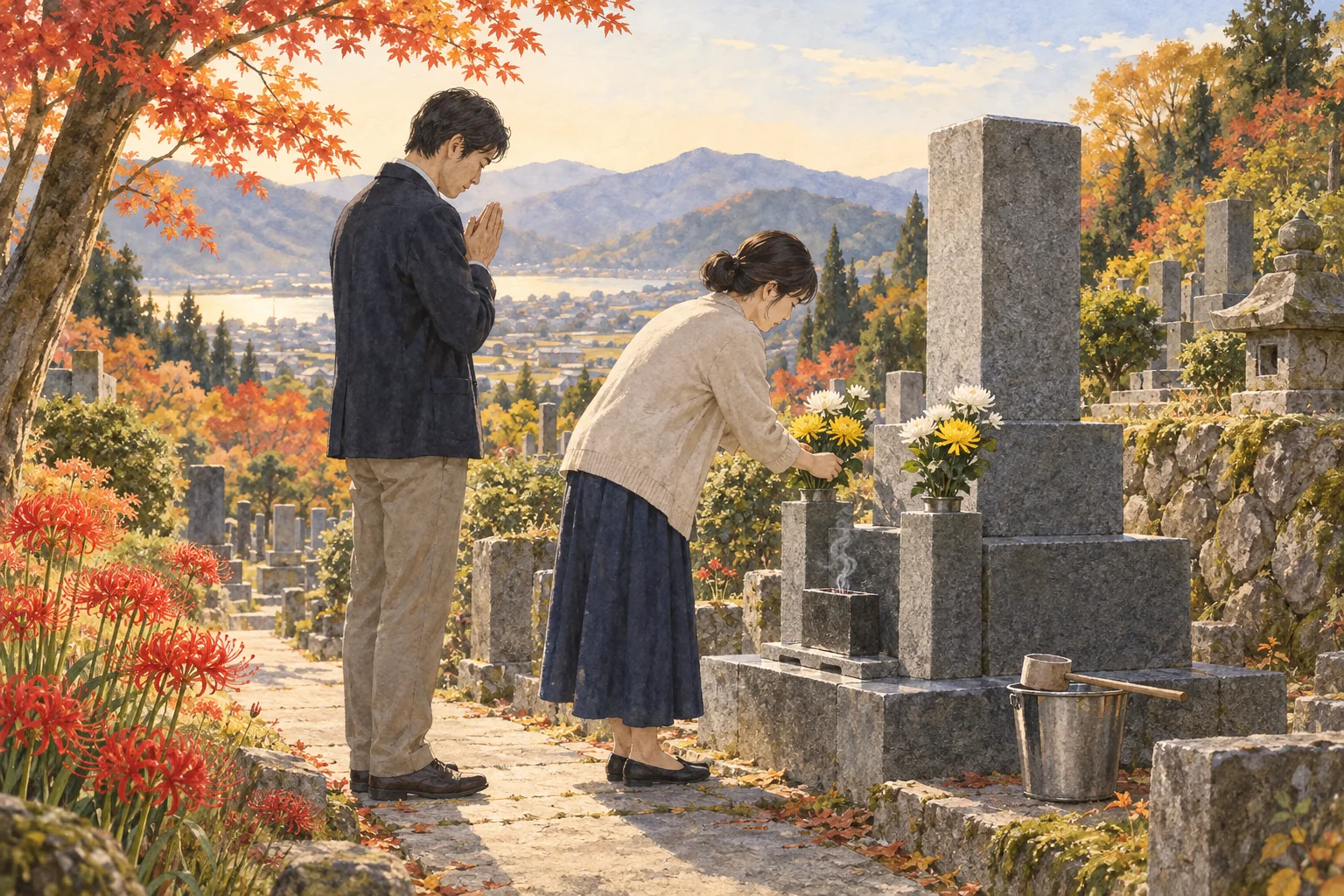
Higan happens twice a year, in the week containing the spring equinox and the week containing the autumn equinox. Each period runs for seven days, three days either side of the equinox itself, and in both cases the equinox is a national holiday. What families do is straightforward: they go to the family grave, pull the weeds, wash the stone, put out flowers and incense, and put their hands together.
Temples hold services. The word higan means the far shore, meaning the world of enlightenment, as opposed to this shore where we are, and the explanation given is that at the equinox the sun sets due west, in the direction of the western paradise, so the two worlds are at their closest.
Whether or not that framing means much to the people going, the practice is very widely kept. It is worth noting that higan in this form is specific to Japan and is not found in Indian or Chinese Buddhism.
彼岸ひがんhiganthe weeks around the equinoxes when families visit graves
春分と秋分をはさむ一週間。日本独自とされる仏教行事。
壱一言で言うとIn one line
彼岸とは、春分・秋分をはさむ一週間で、多くの家族が先祖の墓を訪ねる期間です。
弐30秒で説明するIn 30 seconds
年に二度、春分と秋分の前後三日ずつ、日本の家族は墓を訪ね、掃除をして供え物をします。春分の日も秋分の日も国民の祝日です。仏教の枠組みで語られますが、この形の行事は他の仏教国にはなく、春分・秋分そのものと強く結びついています。
参スピーチ・英作文As a short speech
彼岸は年に二度、春分を含む週と秋分を含む週にあります。それぞれ七日間で、春分・秋分の日の前後三日ずつ。どちらも春分・秋分の日が国民の祝日です。家族がすることは単純です。家の墓へ行き、草を抜き、石を洗い、花と線香を供え、手を合わせる。
寺では法要が営まれます。「彼岸」とは向こう岸、すなわち悟りの世界のことで、こちら側の岸である此岸と対になります。春分・秋分には太陽が真西に沈み、それが西方浄土の方角にあたるため、二つの世界がもっとも近づくのだ、と説明されます。
その枠組みが墓参りに行く人にとってどれほどの意味を持つかはともかく、この習慣はきわめて広く守られています。なお、この形の彼岸は日本独自のもので、インドや中国の仏教には見られません。
こう聞かれたらQuestions people actually ask
QHow is it different from Obon?
AAt Obon the ancestors are understood to come home to you. At higan you go to them. Obon is a summer event with fires and dancing; higan is quieter and consists mainly of grave visits.
お盆とはどう違うのですか。お盆は先祖が家に帰ってきます。彼岸はこちらから会いに行きます。お盆は火を焚き踊る夏の行事、彼岸はもっと静かで、中心は墓参りです。
QWhat do people eat?
ASweet rice balls coated in red bean paste. The same food has two names: botamochi in spring after the peony, and ohagi in autumn after the bush clover.
その日は何を食べるのですか。餡をまぶした甘い餅です。同じものに二つの名があり、春は牡丹にちなんでぼたもち、秋は萩にちなんでおはぎと呼びます。
QWhy is the equinox a holiday?
ABefore the war both were imperial rites for honoring the emperor's ancestors. In 1948 they became secular public holidays: the spring one for praising nature and caring for living things, the autumn one for honoring ancestors and remembering the dead.
どうして春分と秋分が祝日なのですか。どちらも戦前は皇室が歴代の天皇などを祀る祭日でした。1948年の祝日法で宗教色を離れた国民の祝日に改められ、春分の日は自然をたたえ生物をいつくしむ日、秋分の日は祖先をうやまい亡くなった人をしのぶ日とされました。
そのまま使えるフレーズPhrases you can use
- We visit the grave at higan.彼岸にはお墓参りに行きます。
- It's the week around the equinox.春分・秋分をはさむ一週間です。
- At Obon they come to us; at higan we go to them.お盆は来てもらい、彼岸はこちらから行きます。
- The same sweet has two names by season.同じ菓子が、季節で名前を変えます。
- Both equinoxes are public holidays here.春分も秋分も、日本では祝日です。
豆知識Background
彼岸は春分・秋分を中日とし、前後三日を合わせた七日間。初日を「彼岸の入り」、最終日を「彼岸明け」と呼ぶ。「彼岸」はサンスクリット語パーラミター(波羅蜜多)の漢訳「到彼岸」に由来し、悟りの世界を指す。ただし、この時期に墓参りをする行事としての彼岸は日本独自で、インドや中国の仏教には見られない。春分の日・秋分の日は戦前それぞれ「春季皇霊祭」「秋季皇霊祭」という祭日であり、1948年の祝日法で国民の祝日に改められた。ぼたもちとおはぎは基本的に同じ食べ物で、季節の花にちなんで呼び分ける。「暑さ寒さも彼岸まで」は、気候の区切りを表す言い回しとして広く使われる。
出典日本文化ナビ(原田英語.com)「彼岸を英語で説明する(higan)」https://www.haradaeigo.com/japanese-culture/w/higan
- 文
- 日本文化ナビ編集部(原田英語.com)— 英文・和訳・解説はすべて独自に作成
- イラスト
- 日本文化ナビ オリジナル
- 発行
- 原田英語.com https://www.haradaeigo.com/
- 印刷日
- 2026.10.17
© 2026 Harada Eigo (原田英語.com). Text and illustration: Japan Culture Navi.
ページはこちら