雷様とおへそ
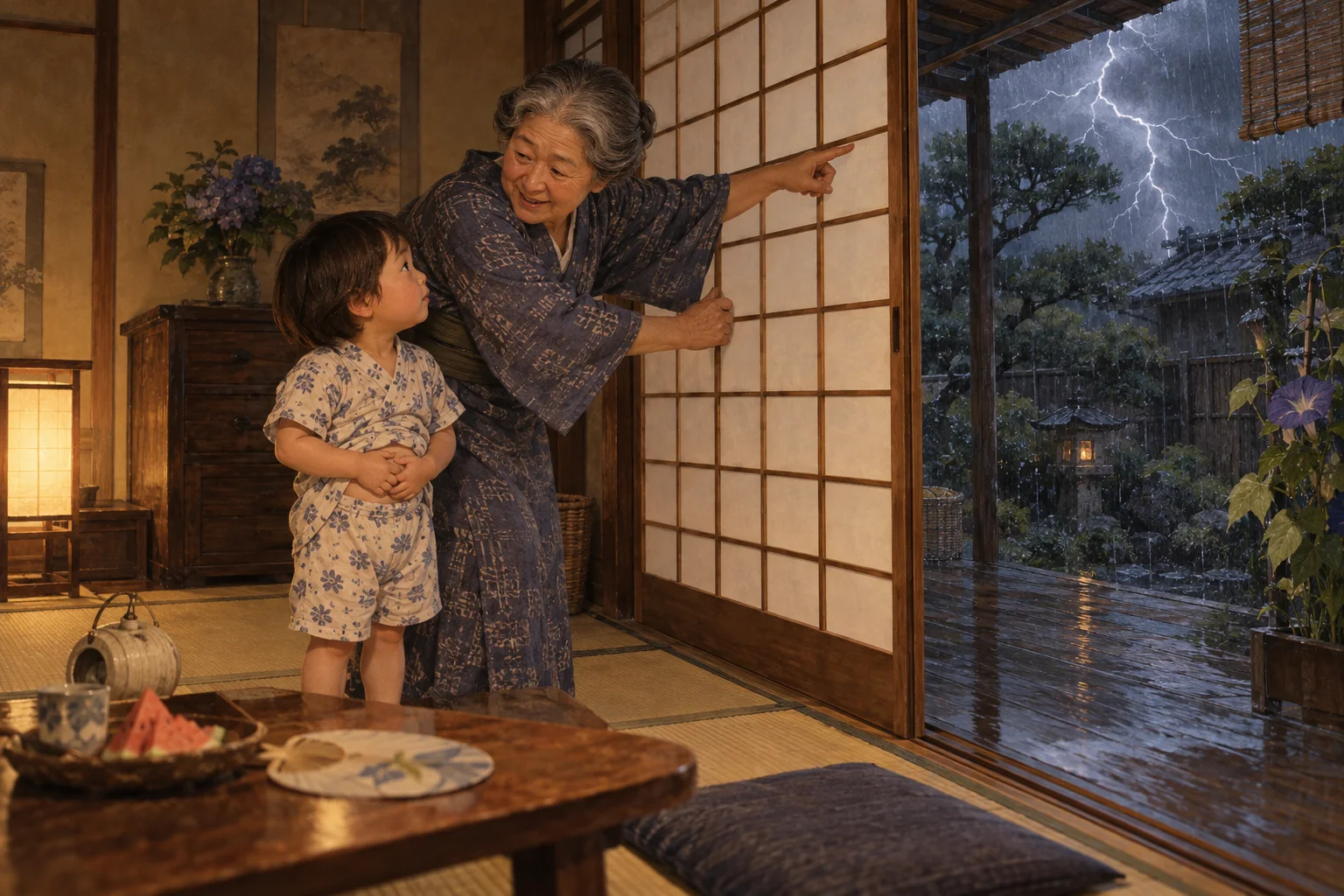
壱In one line一言で言うと
Japanese children are told to hide their belly buttons during thunderstorms so the thunder god can't steal them.
弐In 30 seconds30秒で説明する
Kaminari-sama, the thunder god, is often drawn as an oni, or ogre, beating a ring of drums. Japanese parents have long told children that if they leave their belly buttons showing during a thunderstorm, kaminari-sama will take them. Some children still cover their stomachs and giggle when thunder rolls. The saying is a joke, and one common explanation is that it began as a way to keep children from getting chilled.
参As a short speechスピーチ・英作文
In Japan, when a summer thunderstorm starts, you may see children quickly covering their stomachs. They are protecting their belly buttons, because of an old saying that kaminari-sama, the thunder god, likes to steal them.
In pictures, he often looks like an oni, a horned ogre in a tiger-skin loincloth, with a ring of drums on his back. No one knows exactly where the saying came from. One common explanation is practical: the air often turns cold when a storm comes, and parents wanted children to keep their stomachs covered.
Another says that covering your belly makes you crouch down instead of standing tall. Either way, it is a warning parents give with a smile. Personally, I still feel like covering my stomach when I hear thunder.
雷様とおへそかみなりさまとおへそkaminarisama to ohesothe saying that the thunder god will steal your belly button if you leave it uncovered
雷が鳴ったら、おへそを隠せ。子どもが本気で信じた、夏の言い伝え。
壱一言で言うとIn one line
日本では、雷が鳴ったら雷様に取られないようおへそを隠しなさい、と子どもに言い聞かせます。
弐30秒で説明するIn 30 seconds
雷様は、輪になった太鼓を打ち鳴らす鬼の姿で描かれることがよくあります。日本の親は昔から子どもに、雷が鳴っているときにおへそを出していると雷様に取られる、と言ってきました。今でも、雷が鳴るとおなかを押さえて笑う子どもがいます。冗談のような言い伝えですが、子どもがおなかを冷やさないようにするために始まった、という説明がよく聞かれます。
参スピーチ・英作文As a short speech
日本では、夏に雷雨が始まると、子どもがあわてておなかを押さえる姿を見かけることがあります。おへそを守っているのです。雷様はおへそを取るのが好きだ、という昔からの言い伝えがあるからです。絵では、雷様は角を生やし、虎の皮のふんどしを締め、背中に輪になった太鼓を背負った鬼の姿で描かれることが多くあります。
この言い伝えがどこから来たのか、はっきりしたことは分かっていません。よく言われるのは実用的な説明で、雷雨が来ると気温が下がることが多いので、親が子どもにおなかを冷やさせたくなかった、というものです。
おなかを隠そうとすると体をかがめるので、突っ立っているより姿勢が低くなる、という説明もあります。いずれにせよ、親が笑いながら言う注意です。私自身、今でも雷が鳴るとついおなかを押さえたくなります。
こう聞かれたらQuestions people actually ask
QDo Japanese people really believe this?
ANot as adults. Most people hear it as small children and later treat it as a joke, but the phrase is so familiar that most people know it.
日本人は本当にこれを信じているのですか。大人は信じていません。たいていの人は小さいころに聞いて、大きくなると冗談として扱いますが、とてもなじみのある言い回しなので、ほとんどの人が知っています。
QWhy would a god want someone's belly button?
AThe saying never really explains it. It is a warning rather than a story with a full plot, so the point is simply to get children to cover up.
なぜ神様が人のおへそを欲しがるのですか。言い伝えは、そこをきちんと説明していません。筋のある物語というより注意の言葉なので、要は子どもにおなかを隠させることが目的です。
QWhy does the thunder god carry drums?
AThe drums stand for the sound of thunder. Pictures of a thunder god with a ring of drums go back centuries, and the most famous may be the Wind God and Thunder God screens painted by Tawaraya Sotatsu in the early Edo period.
なぜ雷様は太鼓を持っているのですか。太鼓は雷の音を表しています。輪になった太鼓を持つ雷神の絵は何百年も前からあり、最も有名なのは、江戸時代の初めに俵屋宗達が描いた「風神雷神図屏風」でしょう。
誤解されやすいA common misunderstanding
MYTHCovering your belly button protects you from lightning.おへそを隠せば雷から身を守れる。
FACTIt doesn't. When you hear thunder, the safe thing to do is get inside a solid building or a car.守れません。雷が聞こえたら、しっかりした建物や車の中に入るのが安全です。
そのまま使えるフレーズPhrases you can use
- Cover your belly button, or the thunder god will take it!おへそを隠して。雷様に取られるよ!
- It's just something parents say to their kids.親が子どもに言うお決まりの文句です。
- When you hear thunder, it's safest to go inside.雷が聞こえたら、屋内に入るのがいちばん安全です。
- In pictures, the thunder god carries a ring of drums.絵の中の雷様は、輪になった太鼓を背負っています。
- Did your parents tell you anything like that?あなたのご両親も、似たようなことを言っていましたか。
豆知識Background
雷様は、角を生やし虎の皮のふんどしを締めた鬼の姿で描かれることが多い。鬼が出入りするとされる「鬼門」が丑寅(北東)の方角にあたることから、牛の角と虎の皮で鬼を表すようになった、という説がよく知られている。おへその言い伝えの由来ははっきりせず、雷雨のあとは気温が下がるのでおなかを冷やさないため、という説や、おへそを隠そうとすると姿勢が低くなるから、という説がある。実際の雷への備えとして、気象庁は、雷の音が聞こえたら建物や車の中などの安全な場所へ移るよう呼びかけている。
出典日本文化ナビ(原田英語.com)「雷様とおへそを英語で説明する(kaminarisama to oheso)」https://www.haradaeigo.com/japanese-culture/w/hiding-your-belly-button-from-thunder
- 文
- 日本文化ナビ編集部(原田英語.com)— 英文・和訳・解説はすべて独自に作成
- イラスト
- 日本文化ナビ オリジナル
- 発行
- 原田英語.com https://www.haradaeigo.com/
- 印刷日
- 2026.10.17
© 2026 Harada Eigo (原田英語.com). Text and illustration: Japan Culture Navi.
ページはこちら