初日の出
壱In one line一言で言うと
Hatsuhinode is the first sunrise of the year, which many people in Japan get up early to watch.
弐In 30 seconds30秒で説明する
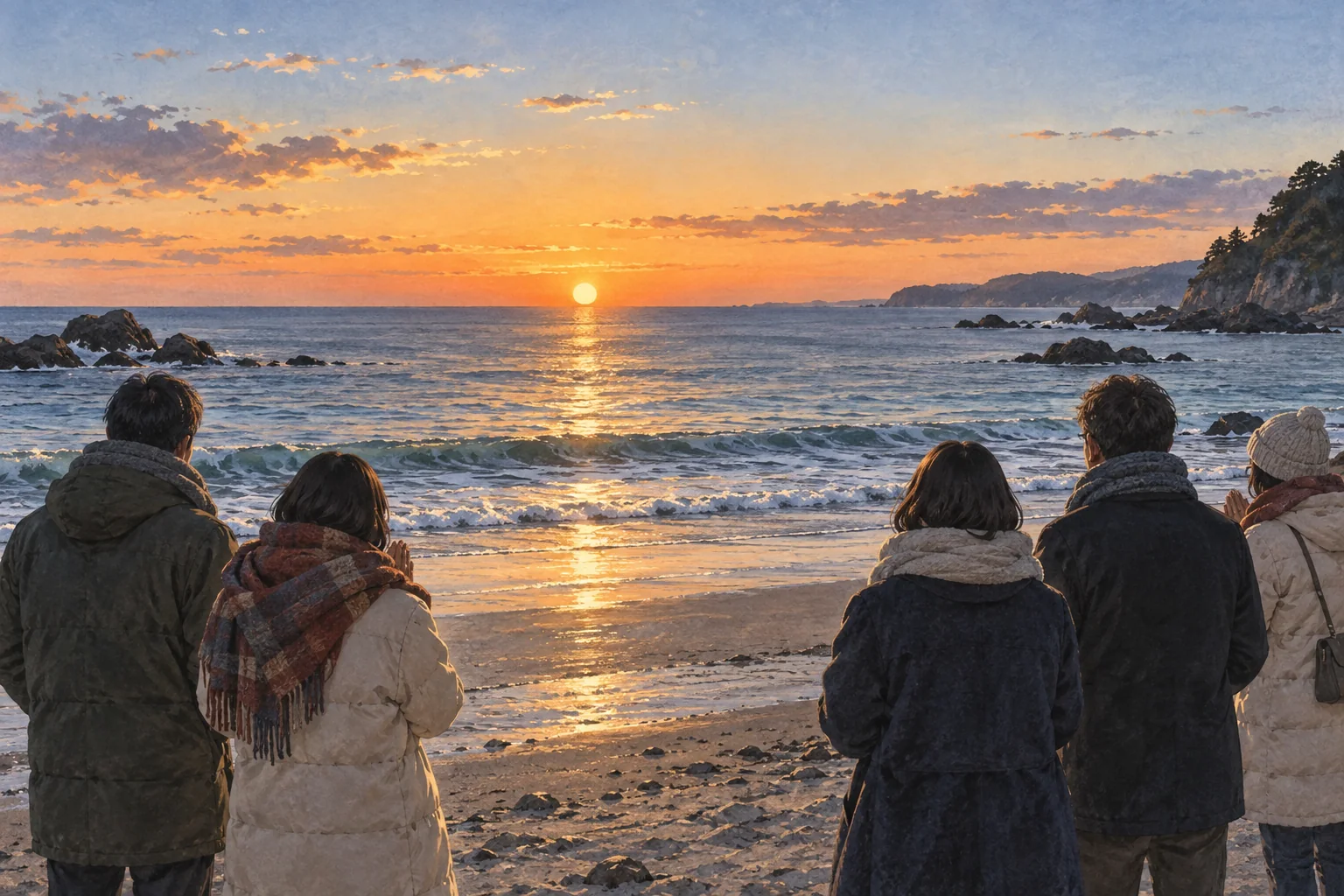
On the morning of January 1st, people climb hills, drive to the coast or stand on high buildings to watch the sun come up. The custom is often linked to an old belief that the New Year's deity arrives with the first light of the year, so watching it is a small act of welcome, and many people make a wish as the sun clears the horizon. Popular spots get crowded and cold well before dawn.
参As a short speechスピーチ・英作文
Watching the first sunrise of the year, hatsuhinode, is one of the few times Japanese people set an alarm for before dawn on purpose. The custom goes back to an old folk belief that toshigami, a deity of the New Year, arrives with the year's first light, so greeting the sunrise was a way of welcoming it in.
Today most people who go are not thinking about the deity at all; they simply want a clear, hopeful start to the year, and it has become common to make a silent wish as the sun clears the horizon. Mountains, beaches and observation decks with an open eastern view fill up in the dark, sometimes hours early, and the crowd is part of the appeal. Weather can ruin it entirely — a cloudy coastline on January 1st leaves a lot of disappointed people standing in the cold with nothing to see.
初日の出はつひのでhatsuhinodethe first sunrise of the New Year
1月1日の朝だけ、山や海に人が集まって日の出を待つ。
壱一言で言うとIn one line
初日の出とは、その年最初の日の出のことで、早起きしてわざわざ見に行く人が多くいます。
弐30秒で説明するIn 30 seconds
1月1日の朝、高台に登ったり、海辺まで車を走らせたり、高い建物から眺めたりして日の出を待つ人がいます。この習わしは、年の初めの光とともに歳神様が来るとされる古い考えに結びついているとされ、日の出を見ることが小さな出迎えになります。日が昇る瞬間に願い事をする人も多く、人気の場所は夜明け前から冷え込む中で混み合います。
参スピーチ・英作文As a short speech
初日の出を見ることは、日本人がわざわざ夜明け前に目覚ましをかける数少ない機会の一つです。この習わしは、年の初めの光とともに歳神様という神が訪れるとされる古い民間の考えにさかのぼるとされ、日の出を出迎えることがその小さな歓迎だったとされます。
今日集まる人の多くは、神のことを特に考えているわけではありません。ただ、晴れやかな気持ちで一年を始めたいと思い、日が昇る瞬間に静かに願い事をすることが習わしになっています。
東の空が開けた山や海辺、展望台は、夜のうちから、時には何時間も前から人で埋まり、その混み合う様子自体も楽しみの一部です。天気にはまったく左右され、1月1日の海沿いが曇っていれば、何も見えないまま冷えた中に立たされた人が大勢出ます。
こう聞かれたらQuestions people actually ask
QIs this a religious ritual?
AIt has folk roots in the idea that a New Year deity arrives with the first light, but most people today treat it as a personal, hopeful custom rather than worship. Some do combine it with a shrine visit on the same trip.
これは宗教的な儀式なのですか。年の初めの光とともに神が訪れるという民間の考えに根がありますが、今日の多くの人は信仰というより、個人的で前向きな習わしとして行っています。同じ機会に神社参拝と組み合わせる人もいます。
QWhere do people go to see it?
AAnywhere with a clear eastern view — a nearby hill, a beach, or a tall building's observation deck. Spots with a view of Mount Fuji and well-known coastlines draw large crowds, but plenty of people just watch from their own neighborhood.
どこへ見に行くのですか。東側が開けていればどこでもよく、近くの丘や海辺、高い建物の展望台などです。富士山を望む場所や知られた海岸には大勢が集まりますが、近所で見るだけの人もたくさんいます。
QWhat if it's cloudy?
AThen you simply don't see it, and people accept that without much fuss. Some treat the second or third sunrise of the year as good enough, though it doesn't carry quite the same meaning.
曇っていたらどうするのですか。その場合は単に見られず、多くの人はあっさり受け入れます。1月2日や3日の日の出で済ませる人もいますが、意味合いは少し違うとされています。
そのまま使えるフレーズPhrases you can use
- We're going to watch the first sunrise.初日の出を見に行きます。
- It's freezing, but worth waiting for.とても寒いですが、待つ値打ちがあります。
- Make a wish as the sun comes up.日が昇るときに願い事をしてください。
- That spot is famous for the view.あそこは眺めのよさで有名です。
- We couldn't see it — too cloudy.曇っていて見えませんでした。
豆知識Background
初日の出を出迎える習わしは、年の初めの光とともに歳神様が来るとされる民間の考えに由来するとされる。富士山を望む場所や、太平洋側の岬や高台など見晴らしのよい場所は、元日未明から場所取りで混み合う。初日の出のあと、その足で近くの神社に初詣に向かう人も多く、二つの習わしが同じ朝にまとめて行われることも珍しくない。地域や家庭によっては、この習わし自体を特に意識しない場合もある。
出典日本文化ナビ(原田英語.com)「初日の出を英語で説明する(hatsuhinode)」https://www.haradaeigo.com/japanese-culture/w/hatsuhinode
- 文
- 日本文化ナビ編集部(原田英語.com)— 英文・和訳・解説はすべて独自に作成
- イラスト
- 日本文化ナビ オリジナル
- 発行
- 原田英語.com https://www.haradaeigo.com/
- 印刷日
- 2026.10.17
© 2026 Harada Eigo (原田英語.com). Text and illustration: Japan Culture Navi.
ページはこちら