二分の一成人式
壱In one line一言で言うと
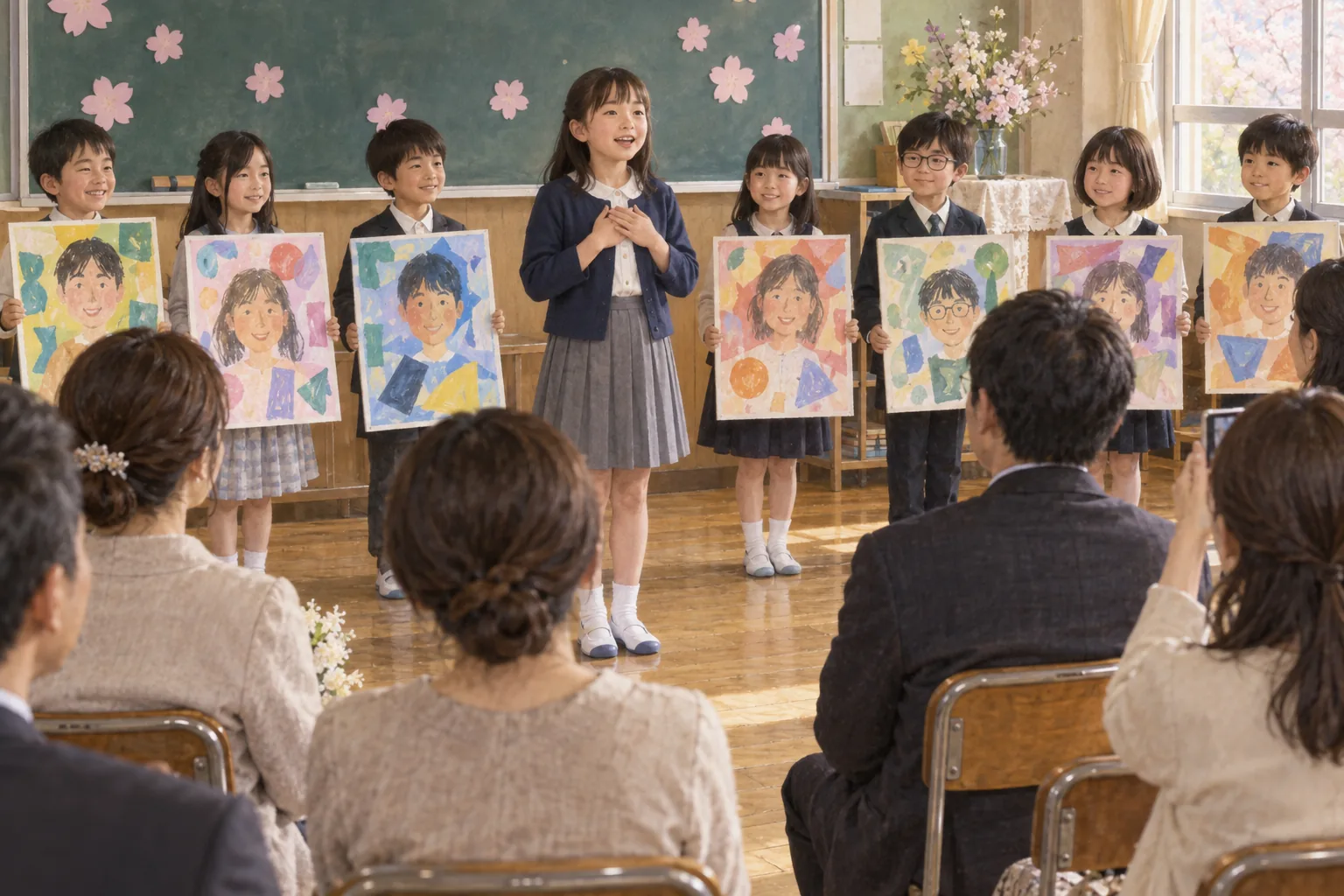
The half coming-of-age ceremony is an elementary school event marking a child's tenth birthday with letters to parents.
弐In 30 seconds30秒で説明する
The half coming-of-age ceremony marks age ten, half of the traditional twenty, and is a fourth-grade classroom event rather than a national holiday. Students typically write thank-you letters to their parents, sometimes read them aloud, and look back on how much they have grown. It is not required by the national curriculum, so practice varies widely, and some schools have changed the format because the letters can be hard for children in difficult family situations.
参As a short speechスピーチ・英作文
The half coming-of-age ceremony marks age ten, roughly halfway to the traditional coming-of-age at twenty, held in an ordinary fourth-grade classroom rather than as a public holiday. It is said to have started at an elementary school in Hyogo Prefecture around 1980 and spread nationwide after it was featured in a fourth-grade textbook.
The classic version has children write a thank-you letter to their parents and sometimes read it aloud, alongside baby photos or a timeline of their growth so far. Because it isn't in the national curriculum, schools run it very differently, and the letter-writing part has drawn real criticism: children in single-parent homes, foster care, or without a warm relationship with a parent can find it genuinely painful, so some schools now offer alternatives instead.
二分の一成人式にぶんのいちせいじんしきnibun no ichi seijinshikian elementary school event around age ten where children reflect on their first decade and thank their families
成人式の20年ではなく10年目。両親への手紙を書く小学校の行事。
壱一言で言うとIn one line
二分の一成人式とは、10歳の節目を祝う小学校の行事で、多くは両親への手紙を書きます。
弐30秒で説明するIn 30 seconds
二分の一成人式は、伝統的な成人式の20歳の半分にあたる10歳の節目を祝うもので、国の祝日ではなく、小学4年生のクラスで行う行事です。児童はたいてい両親への感謝の手紙を書き、読み上げることもあり、これまでの成長を振り返ります。学習指導要領で定められた行事ではないため、行い方は学校によって大きく違い、複雑な家庭の事情を抱える子どもには手紙がつらい場合があることから、形式を見直した学校もあります。
参スピーチ・英作文As a short speech
二分の一成人式は、20歳で行う成人式のちょうど半分にあたる10歳の節目を祝うもので、国の祝日ではなく、ふつうの小学4年生の教室で行われます。1980年ごろ、兵庫県のある小学校で始まったとされ、4年生の教科書で取り上げられたことをきっかけに全国に広まったといわれます。定番の形は、児童が両親への感謝の手紙を書き、それをみんなの前で読み上げることもあり、赤ちゃんのころの写真やこれまでの成長の記録を並べて振り返ります。
学習指導要領には定められていないため、学校によって行い方はかなり違い、特に手紙を書く部分には本当の批判もあります。ひとり親家庭や里親のもとで育つ子ども、親との関係が温かいとは言えない子どもにとって、これは本当につらいことがあり、そのため代わりの形を用意する学校も出てきています。
こう聞かれたらQuestions people actually ask
QIs this the same as the coming-of-age ceremony at twenty?
ANo. That is a separate, more formal event that local governments hold for young people turning twenty, although legal adulthood has been eighteen since 2022. The half ceremony is an informal classroom event with no legal significance, built around gratitude.
これは20歳の成人式と同じものなのですか。違います。あちらは自治体が20歳を迎える若者のために開く、もっと正式な式典です(法律上の成人は2022年から18歳)。二分の一成人式は法律上の意味を持たない、教室で行う非公式な行事で、感謝の気持ちを中心にしています。
QDo all Japanese schools hold this ceremony?
ANo. It isn't required by the national curriculum, so whether a school holds one, and in what form, depends entirely on the individual school and even the individual teacher.
日本のすべての学校でこの行事があるのですか。いいえ、学習指導要領に定められていないため、行うかどうか、どんな形で行うかは、学校や、時には担任の先生ごとに完全に違います。
QWhy has it become controversial?
AThe letter-writing exercise assumes every child has a parent to thank and a happy story to tell, which can be painful or even impossible for children who are estranged from a parent, in foster care, or dealing with abuse, so critics argue schools shouldn't force a single emotional script on every student.
なぜ議論の的になってきたのですか。手紙を書くという課題は、すべての子どもに感謝すべき親がいて、語れる幸せな物語があるという前提に立っています。親と疎遠だったり、里親のもとで育っていたり、虐待に向き合っていたりする子どもにとっては、つらいどころか不可能な場合すらあります。だからこそ、学校がすべての生徒に同じ感情の筋書きを強いるべきではないという批判があります。
誤解されやすいA common misunderstanding
MYTHEvery child looks forward to the half coming-of-age ceremony as a sweet, uncomplicated family celebration.どの子も、二分の一成人式を、複雑な事情のない温かい家族の祝い事として楽しみにしていると思われがちです。
FACTFor children without a straightforward, loving relationship with a parent, being asked to write and read a thank-you letter in front of classmates can be genuinely distressing, which is why some schools have revised or dropped the letter-writing assignment.親との関係が単純に温かいものではない子どもにとって、感謝の手紙を書いてクラスメートの前で読むよう求められることは、本当につらい経験になり得ます。だからこそ、手紙を書く課題を見直したり取りやめたりした学校もあります。
そのまま使えるフレーズPhrases you can use
- Our class is having its half coming-of-age ceremony next month.来月、クラスで二分の一成人式があります。
- She wrote a letter thanking her parents.両親への感謝の手紙を書きました。
- It's not required, so not every school does it.必須ではないので、すべての学校が行うわけではありません。
- Some schools have changed the letter-writing part.手紙を書く部分を見直した学校もあります。
- It's held around the child's tenth year.10歳前後の節目に行われます。
豆知識Background
二分の一成人式は、1980年ごろに兵庫県のある小学校で、高学年に上がる前の節目として教師が考案したのが始まりとされ、その後、小学4年生の国語の教科書で取り上げられたことをきっかけに全国に広まったといわれる。国の制度や学習指導要領に定められた行事ではないため、行うかどうかは学校ごとの判断による。両親への感謝の手紙を書いて読み上げる形式が定番だが、ひとり親家庭や複雑な事情を抱える子どもへの配慮から、手紙の宛先を選べるようにしたり、行事自体を見直したりする学校も出てきている。
出典日本文化ナビ(原田英語.com)「二分の一成人式を英語で説明する(nibun no ichi seijinshiki)」https://www.haradaeigo.com/japanese-culture/w/half-coming-of-age-ceremony
- 文
- 日本文化ナビ編集部(原田英語.com)— 英文・和訳・解説はすべて独自に作成
- イラスト
- 日本文化ナビ オリジナル
- 発行
- 原田英語.com https://www.haradaeigo.com/
- 印刷日
- 2026.10.17
© 2026 Harada Eigo (原田英語.com). Text and illustration: Japan Culture Navi.
ページはこちら