引っ越しの挨拶
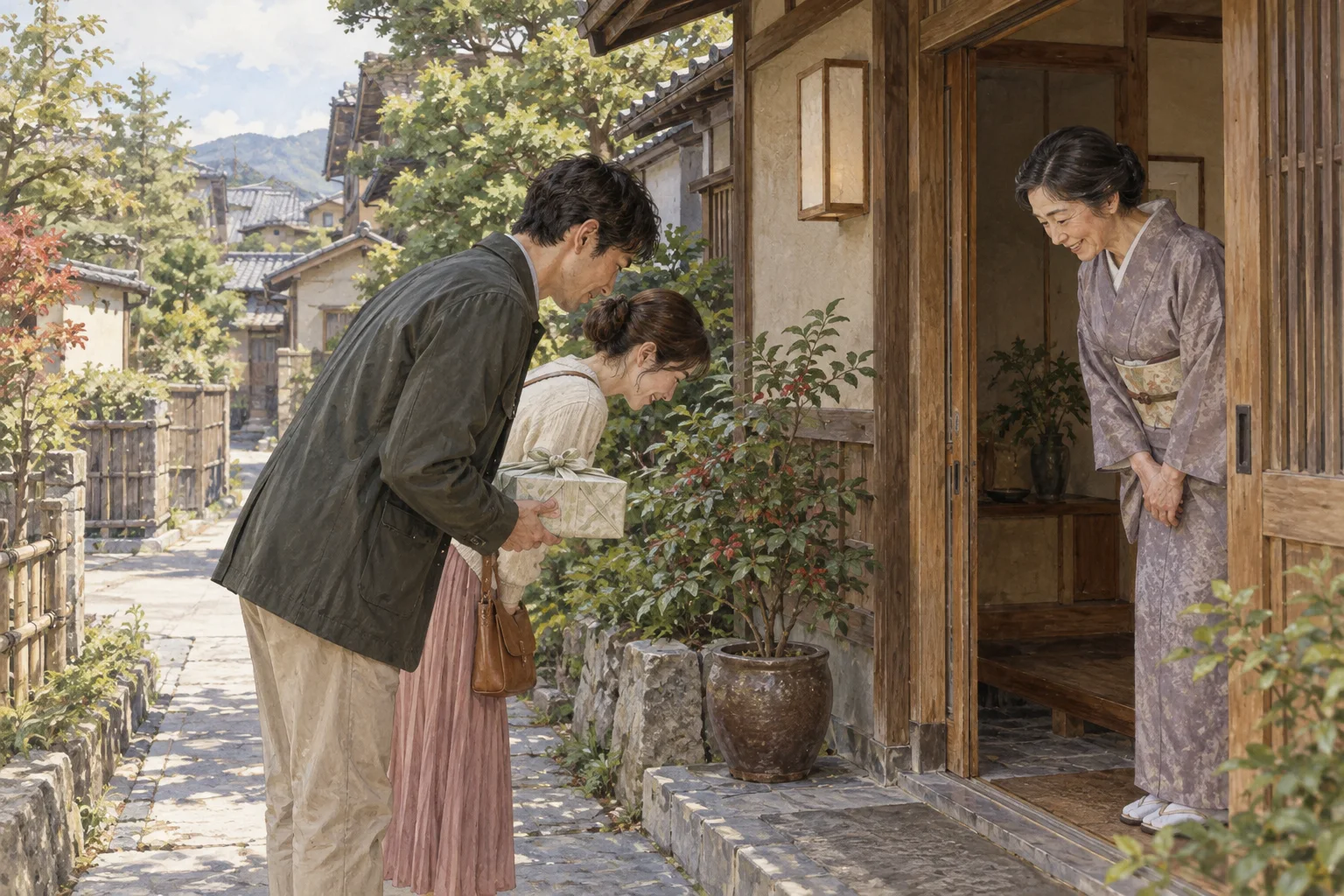
壱In one line一言で言うと
Hikkoshi no aisatsu, or the moving-in greeting, is visiting your immediate neighbors with a small gift to introduce yourself.
弐In 30 seconds30秒で説明する
The custom is to visit the households immediately around you soon after moving in, say who you are, and hand over an inexpensive item such as towels, detergent or sweets, often with a short note of your name. In apartment buildings the scope is usually the apartments on either side and directly above and below.
参As a short speechスピーチ・英作文
Moving into a Japanese neighborhood traditionally means going around to introduce yourself. You visit the households immediately adjacent, which in a house means the two either side and the three opposite, and in an apartment building usually the two on either side plus directly above and below.
You say your name, that you have just moved in, and ask for their goodwill, and you hand over a small gift: towels, laundry detergent, a box of sweets, usually five hundred to a thousand yen, with a paper band showing your surname. The purpose is practical as much as polite.
You are likely to make noise during the move, you may need to ask about garbage collection days, and knowing who lives next door matters in an earthquake. The custom is weakening in cities, where many people skip it entirely and some landlords advise single women not to announce themselves to strangers. In smaller towns and in owned houses it remains close to expected.
引っ越しの挨拶ひっこしのあいさつhikkoshi no aisatsuthe visit you make after moving in
引っ越したら、両隣と向かいに挨拶に行く。小さな品を持って。
壱一言で言うとIn one line
引っ越しの挨拶とは、引っ越したあと、近くの数軒に小さな品を持って自己紹介に行くことです。
弐30秒で説明するIn 30 seconds
引っ越してまもなく、すぐ周りの家を訪ね、名乗って、タオルや洗剤、菓子といった手ごろな品を渡すのが習わしです。名前を書いた短い紙を添えることもよくあります。集合住宅では、両隣と真上、真下の部屋が対象になるのがふつうです。
参スピーチ・英作文As a short speech
日本の町に引っ越すことは、伝統的には挨拶に回ることを意味します。すぐ隣接する家を訪ねます。一戸建てなら向こう三軒両隣、集合住宅ならたいてい両隣と真上と真下です。名を名乗り、越してきたことを伝え、よろしくお願いしますと言い、小さな品を渡します。
タオル、洗濯洗剤、菓子の箱。五百円から千円ほどで、名字を記した紙の帯を掛けます。目的は礼儀であると同時に実際的です。引っ越しでは音を立てるでしょうし、ごみの収集日を尋ねることもあるでしょうし、地震のときに隣に誰が住んでいるかを知っていることには意味があります。
都市ではこの習慣は弱まっていて、まったくしない人も多く、一人暮らしの女性には見知らぬ相手に名乗らないよう助言する家主もいます。小さな町や持ち家では、今もほぼ当然のこととして残っています。
こう聞かれたらQuestions people actually ask
QDo I have to do it?
ANot obligatory, and in a large city block many people do not. It is still worth doing if you will be renovating or making noise, or if you are in a house rather than an apartment, because it makes later requests much easier.
必ずしなければいけないものですか。義務ではありませんし、大きな集合住宅ではしない人も多くいます。それでも、工事や音を出す予定があるなら、また集合住宅ではなく一戸建てなら、しておく値打ちがあります。あとで何か頼むときがずっと楽になります。
QWhat if nobody is home?
ATry once or twice more at a different time of day, and if still nobody answers, leave the gift with a note giving your name and apartment number in the mailbox. Do not leave it outside the door, where it may be taken.
留守だったらどうすればいいですか。時間帯を変えて一、二度訪ねてみて、それでも不在なら、名前と部屋番号を書いた紙を添えて郵便受けに入れてください。持ち去られることがあるので、扉の前には置かないでください。
そのまま使えるフレーズPhrases you can use
- I've just moved in next door.隣に越してきました。
- This is just a small thing.つまらないものですが。
- I look forward to being your neighbor.よろしくお願いします。
- Which day is burnable garbage collected?燃えるごみは何曜日ですか。
豆知識Background
一戸建てでは「向こう三軒両隣」といって、向かいの三軒と両隣に挨拶するのが習わしでした。品には名字を記した「のし」を掛け、表書きは「御挨拶」とします。集合住宅では大家や管理人にも挨拶することがあります。近年は防犯上の理由から挨拶を控える人もおり、不動産会社が判断を利用者に委ねる例も増えました。町内会への加入を勧められるのも、この挨拶の場であることが多くあります。
出典日本文化ナビ(原田英語.com)「引っ越しの挨拶を英語で説明する(hikkoshi no aisatsu)」https://www.haradaeigo.com/japanese-culture/w/greeting-the-neighbors
- 文
- 日本文化ナビ編集部(原田英語.com)— 英文・和訳・解説はすべて独自に作成
- イラスト
- 日本文化ナビ オリジナル
- 発行
- 原田英語.com https://www.haradaeigo.com/
- 印刷日
- 2026.10.17
© 2026 Harada Eigo (原田英語.com). Text and illustration: Japan Culture Navi.
ページはこちら