卒業式の袴
壱In one line一言で言うと
Sotsugyoshiki no hakama, or graduation hakama, are the pleated skirt-trousers that Japanese women commonly wear to university graduation.
弐In 30 seconds30秒で説明する
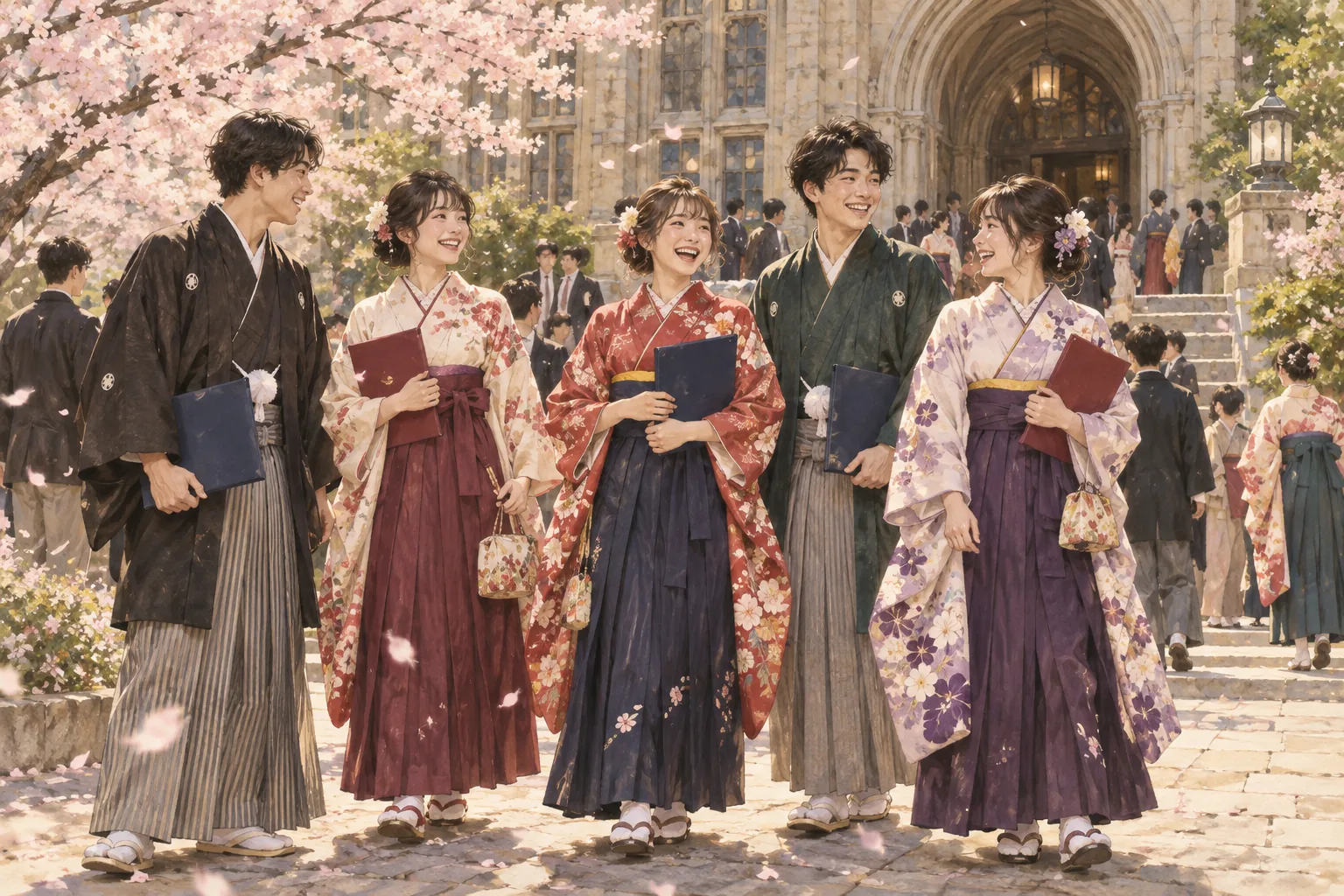
At Japanese university graduations, many women wear a kimono top with hakama, wide pleated trousers tied high at the waist, with boots or zori. The look comes from the uniform of female students in the Meiji period. Most students rent the whole set, and salons book up months in advance.
参As a short speechスピーチ・英作文
If you see photographs of a Japanese university graduation, many of the women will be wearing hakama: wide pleated trousers, tied high at the waist over a kimono top, usually with lace-up boots rather than traditional sandals. The combination looks traditional but has a specific history.
In the Meiji period, when women began attending school in numbers, the long kimono was impractical for sitting at desks and moving between classrooms, so a hakama was adopted as the school uniform, and boots came with it as part of the same westernizing moment. That uniform disappeared, but the image stayed attached to female students, and it returned as graduation dress.
Men wear hakama too, in a more formal black version with a crested kimono, but at graduations they are outnumbered. Most people rent. A set costs tens of thousands of yen to hire with dressing and hair included, and the good salons are booked from the previous autumn.
卒業式の袴そつぎょうしきのはかまsotsugyoshiki no hakamathe skirt-trousers worn at graduation
明治の女学生の制服だった格好が、今は卒業式の晴れ着になっている。
壱一言で言うとIn one line
卒業式の袴とは、日本で女性が大学の卒業式によく着る、襞のあるスカート状の下衣です。
弐30秒で説明するIn 30 seconds
日本の大学の卒業式では、多くの女性が着物の上衣に袴を合わせます。袴は襞のある幅広い下衣で、腰の高い位置で結び、ブーツか草履を履きます。この装いは明治期の女学生の制服に由来します。学生の多くは一式を借り、美容室の予約は何か月も前に埋まります。
参スピーチ・英作文As a short speech
日本の大学の卒業式の写真を見ると、女性の多くが袴を着けています。襞のある幅広い下衣を、着物の上衣の上から腰の高い位置で結び、草履ではなく編み上げのブーツを履くのがふつうです。この組み合わせは伝統的に見えますが、はっきりした来歴があります。
明治期、女性が数多く学校に通うようになったとき、長い着物は机に向かい教室を移動するのに不便でした。そこで袴が学校の制服として採り入れられ、同じ西洋化の流れの中でブーツも一緒に来ました。その制服はなくなりましたが、姿は女学生と結びついたまま残り、卒業式の装いとして戻ってきました。
男性も袴を着けます。紋付の着物に黒い袴という、より格の高い形ですが、卒業式では数で圧倒されています。多くの人は借ります。着付けと髪の仕上げを含めて一式で数万円、評判のよい美容室は前の年の秋から予約が入ります。
こう聞かれたらQuestions people actually ask
QWhy boots instead of traditional footwear?
ABecause that is how the Meiji student uniform looked. Boots came in as western dress spread, and the pairing stuck. Zori are also worn and are the more traditional choice, but boots are easier in March weather and on stairs.
どうして伝統的な履物ではなくブーツなのですか。明治の女学生の制服がそうだったからです。洋装が広がる中でブーツが入り、その組み合わせが定着しました。草履を履く人もいて、そちらが伝統的ですが、三月の天候と階段を考えるとブーツのほうが楽です。
QCan a foreign student wear one?
AYes, and many do. Rental shops handle international students routinely, and the package includes dressing on the day. Book several months ahead, because the whole graduating class is competing for the same morning slots.
留学生でも着られますか。着られますし、実際に多くの留学生が着ています。貸衣装店は留学生の利用に慣れていて、当日の着付けも料金に含まれます。数か月前に予約してください。卒業する学年の全員が同じ朝の時間帯を取り合うからです。
そのまま使えるフレーズPhrases you can use
- Most students rent the whole set.多くの学生は一式を借ります。
- Boots come from the Meiji student uniform.ブーツは明治の女学生の制服から来ています。
- Book the salon months ahead.美容室は何か月も前に予約します。
- Men wear a more formal black version.男性は黒い格の高い形を着けます。
豆知識Background
女学生が袴を着けるようになったのは明治期で、椅子と机で学ぶために動きやすい装いが求められたためです。海老茶色の袴を着けた女学生は「海老茶式部」と呼ばれました。現在の卒業式では、着物の上衣と袴、ブーツという組み合わせが定番になっています。男性の紋付袴は成人式や結婚式でも着られる正装です。袴は弓道や剣道の稽古着としても使われ、神職の装束にも用いられます。
出典日本文化ナビ(原田英語.com)「卒業式の袴を英語で説明する(sotsugyoshiki no hakama)」https://www.haradaeigo.com/japanese-culture/w/graduation-hakama
- 文
- 日本文化ナビ編集部(原田英語.com)— 英文・和訳・解説はすべて独自に作成
- イラスト
- 日本文化ナビ オリジナル
- 発行
- 原田英語.com https://www.haradaeigo.com/
- 印刷日
- 2026.10.17
© 2026 Harada Eigo (原田英語.com). Text and illustration: Japan Culture Navi.
ページはこちら