土下座
壱In one line一言で言うと
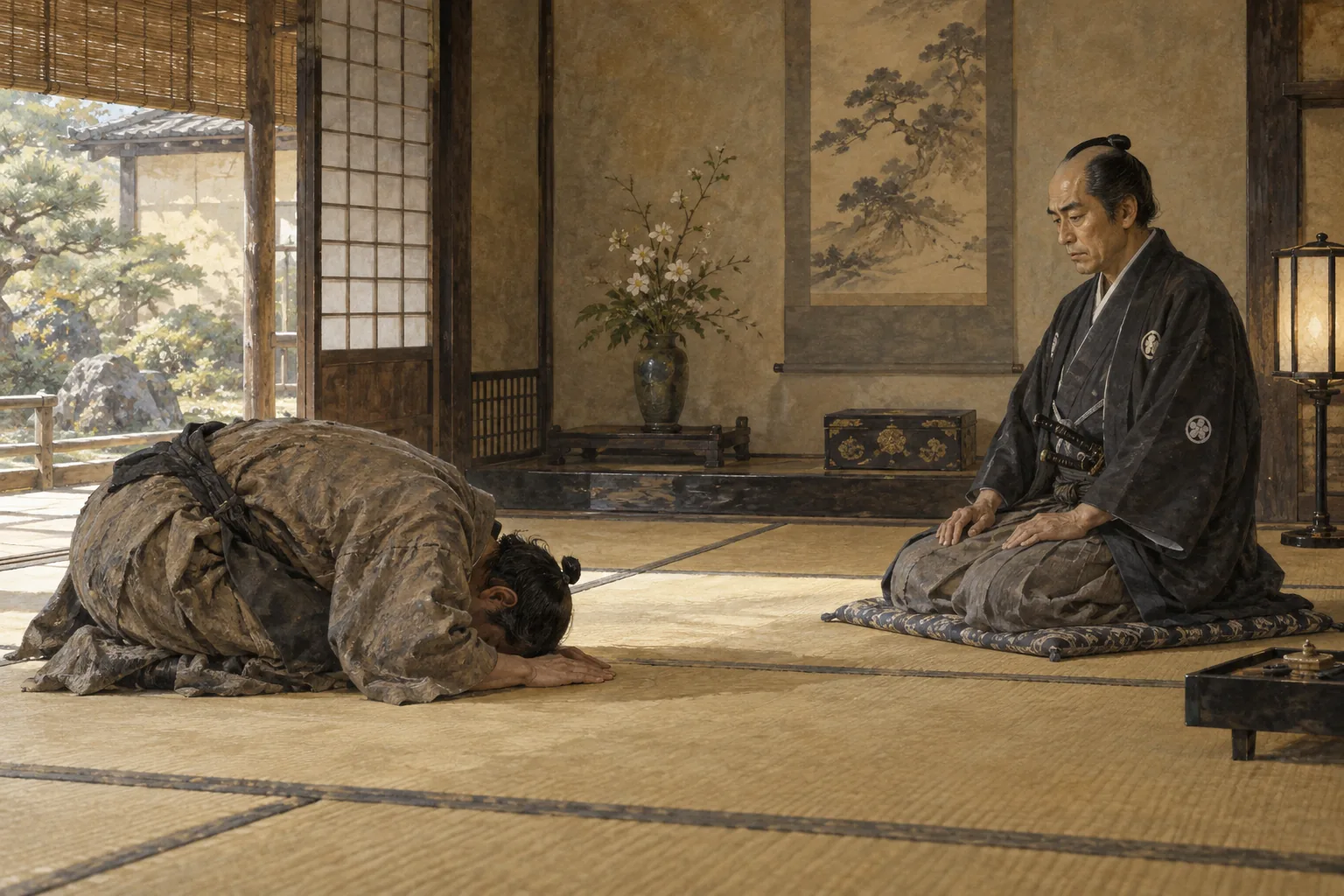
Dogeza is kneeling and putting your forehead on the ground, the most extreme form of apology in Japan.
弐In 30 seconds30秒で説明する
Dogeza means kneeling on the ground and lowering your head until your forehead touches it. It is the most extreme apology available, and in ordinary life it is almost never done. Visitors who have seen it in dramas often assume it is common. It is not, and forcing someone to do it can be a crime.
参As a short speechスピーチ・英作文
Dogeza is the act of kneeling on the floor and lowering your forehead until it touches the ground. It is the strongest apology in Japanese body language, and that is precisely why it is almost never used. Most Japanese people will go their whole lives without doing it once.
Where visitors see it is in television dramas and manga, where it works as a dramatic device, and one very popular business drama in 2013 made it famous abroad. In real life, seeing someone do dogeza would be shocking rather than normal. It is also worth knowing the legal side.
Demanding that someone perform dogeza has led to arrests in Japan, because forcing another person to do something through intimidation is a criminal offense. So if you ever see it, you are not watching politeness. You are watching something go badly wrong.
土下座どげざdogezakneeling with your forehead on the floor
ドラマで見た人が「日常的にやるのか」と聞いてくる。答えは「ほぼやらない」。
壱一言で言うとIn one line
土下座とは、ひざまずいて額を床につける、日本で最も強い謝罪の形です。
弐30秒で説明するIn 30 seconds
土下座とは、地面にひざまずき、額が床につくまで頭を下げることです。謝罪の形としては最も極端で、日常生活ではまず行われません。ドラマで見た方はよくあることだと思いがちですが、そうではありませんし、人に強要すれば犯罪になりえます。
参スピーチ・英作文As a short speech
土下座は、床にひざまずいて額が地面につくまで頭を下げる行為です。日本の身体表現でいちばん強い謝罪であり、だからこそ、ほとんど使われません。多くの日本人は生涯に一度もしません。外国の方が目にするのはテレビドラマや漫画で、そこでは劇的な装置として働きます。
2013年のあるビジネスドラマが、これを海外にまで知らしめました。現実に誰かが土下座しているのを見たら、それは普通のことではなく、衝撃的な場面です。法律の面も知っておく価値があります。
土下座を要求して逮捕された事例が日本にはあります。他人に威圧して何かをさせることは犯罪にあたるからです。ですから、もし目にすることがあっても、それは礼儀正しさではありません。何かがひどくこじれている場面です。
こう聞かれたらQuestions people actually ask
QDo people really do this?
AVery rarely. It exists, but it is reserved for extraordinary situations. Most apologies in Japan are a deep standing bow and words, not kneeling.
本当にそんなことをする人がいるのですか。ほとんどしません。存在はしますが、よほどの場面に限られます。日本の謝罪のほとんどは、ひざまずくのではなく深いお辞儀と言葉です。
QWhy is it in every drama then?
ABecause it is visually unambiguous. A viewer instantly understands the power relationship and the severity. Fiction uses it for the same reason it uses slaps and dramatic rain.
では、どうしてドラマでは必ず出てくるのですか。見た瞬間に意味が分かるからです。上下関係と事の重さが一目で伝わります。フィクションが平手打ちや土砂降りを使うのと同じ理由です。
QIs it always about apology?
ANot historically. It was also a formal greeting to a person of very high rank in earlier centuries. The modern meaning is almost entirely apology or desperate pleading.
いつも謝罪のためのものですか。歴史的にはそうとは限りません。かつては非常に身分の高い人に対する正式な挨拶の形でもありました。現代の意味は、ほぼ謝罪か、切羽詰まった懇願です。
誤解されやすいA common misunderstanding
MYTHJapanese people perform dogeza regularly to apologize.日本人は謝罪のためによく土下座をすると思われがちです。
FACTIt is extremely rare in real life and would be shocking to witness. Demanding it from someone has led to criminal arrests in Japan.現実にはきわめてまれで、見かければ衝撃を受ける場面です。人に土下座を要求して逮捕された事例もあります。
そのまま使えるフレーズPhrases you can use
- Almost nobody actually does this.実際にやる人はほとんどいません。
- It's the most extreme apology there is.謝罪としては最も極端な形です。
- A deep bow is what people actually do.実際にするのは深いお辞儀です。
- You see it in dramas, not in life.ドラマでは見ますが、日常では見ません。
- Demanding it from someone can be a crime.人に強要すれば犯罪になりえます。
豆知識Background
土下座は古くは身分の高い人を迎える際の礼法でもあり、『魏志倭人伝』には、身分の低い者が道で身分の高い者に会うと草むらに退き、話すときはうずくまるかひざまずいて両手を地につけたという記述がある。現代の「謝罪としての土下座」の像を広めたのは、映像作品の影響が大きい。2013年のテレビドラマ『半沢直樹』は土下座の場面が話題となり、この語が海外にも知られるきっかけになった。一方で、客が店員に土下座を要求する行為は強要罪にあたるとして逮捕・起訴された事例があり、カスタマーハラスメントの典型例として扱われている。「土下座営業」「土下座強要」は否定的な文脈で使われる語である。
出典日本文化ナビ(原田英語.com)「土下座を英語で説明する(dogeza)」https://www.haradaeigo.com/japanese-culture/w/dogeza
- 文
- 日本文化ナビ編集部(原田英語.com)— 英文・和訳・解説はすべて独自に作成
- イラスト
- 日本文化ナビ オリジナル
- 発行
- 原田英語.com https://www.haradaeigo.com/
- 印刷日
- 2026.10.17
© 2026 Harada Eigo (原田英語.com). Text and illustration: Japan Culture Navi.
ページはこちら