大仏
壱In one line一言で言うと
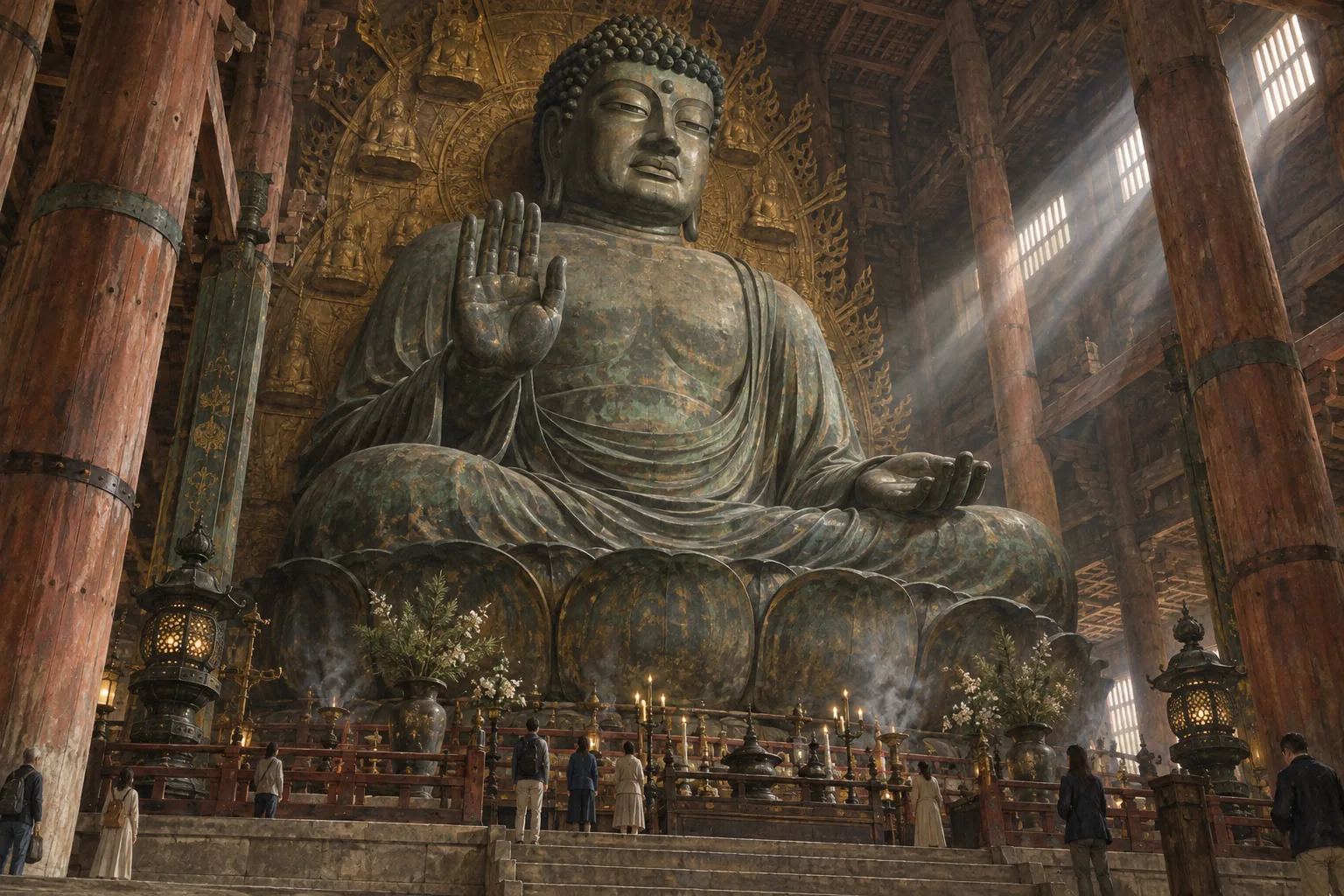
Daibutsu means a great Buddha, and Japan's two most famous are in Nara and Kamakura.
弐In 30 seconds30秒で説明する
Daibutsu means great Buddha. The most famous is at Todaiji in Nara, a bronze figure about fifteen meters high, dedicated in 752 and housed in a vast wooden hall. The second is at Kamakura, about eleven meters and cast in the thirteenth century, which now sits in the open because the hall that covered it was destroyed.
参As a short speechスピーチ・英作文
Daibutsu simply means great Buddha, and two of them are on almost every itinerary. The Nara one, at Todaiji, is a seated bronze about fifteen meters high, dedicated in the year 752. It was a state project on a scale that strained the country: enormous quantities of copper, and a workforce drawn from across the provinces.
The hall that houses it is one of the largest wooden buildings in the world, and the present hall is smaller than the original. The Kamakura one is about eleven meters, cast in the thirteenth century, and it sits in the open air because the building that covered it was destroyed and never rebuilt, which is why photographs of it look so different.
Both have been damaged and repaired repeatedly, so parts of what you see are later work. At Kamakura you can go inside the statue for a small fee and see the joins in the bronze from within.
大仏だいぶつdaibutsuthe great Buddha statues
奈良の大仏は屋内、鎌倉の大仏は屋外。建物のほうが失われた。
壱一言で言うとIn one line
大仏とは大きな仏像のことで、日本で最も知られているのは奈良と鎌倉の二体です。
弐30秒で説明するIn 30 seconds
大仏とは大きな仏像のことです。最もよく知られているのは奈良の東大寺の像で、高さおよそ15メートルの銅の仏で、752年に開眼供養が行われ、巨大な木造の堂に納められています。もう一体は鎌倉の像で、高さおよそ11メートル、13世紀に鋳造されました。覆っていた堂が失われたため、今は屋外に座っています。
参スピーチ・英作文As a short speech
大仏とは単に大きな仏という意味で、そのうち二体はほとんどの旅程に入っています。奈良の東大寺の大仏は高さおよそ15メートルの座像で、752年に開眼供養が行われました。これは国を挙げた事業で、その規模は国力を圧迫しました。
膨大な量の銅と、諸国から集められた人手が必要だったからです。これを納める大仏殿は世界でも有数の木造建築で、現在の堂は当初のものより小さくなっています。鎌倉の大仏は高さおよそ11メートル、13世紀に鋳造されました。
覆っていた建物が失われ、再建されなかったため屋外に座っています。写真の印象がまるで違うのはそのためです。どちらも何度も損壊と修理を経ているので、今見えている部分には後の時代の仕事も含まれます。鎌倉では少額を納めれば像の内部に入り、銅の継ぎ目を内側から見ることができます。
こう聞かれたらQuestions people actually ask
QWhy is the Kamakura one outdoors?
AIt was originally housed in a hall, which was destroyed by storms and, according to records, a great wave in the late fifteenth century. It was never rebuilt, and the statue has sat in the open ever since.
鎌倉の大仏はどうして屋外にあるのですか。もとは堂に納められていましたが、暴風で倒れ、記録によれば15世紀末の大波でも被害を受けました。再建されることはなく、以来、像は屋外に座っています。
QCan you go inside a daibutsu?
AAt Kamakura, yes. A small entrance in the side lets you climb into the hollow bronze and see how the sections were cast and joined. It is a short visit and there is usually a line.
大仏の中に入れるのですか。鎌倉では入れます。側面の小さな入口から中空の銅像の中に入り、どのように分けて鋳造し、つないだかを見ることができます。短い見学で、たいてい列ができています。
QAre these the biggest Buddha statues in Japan?
AThey are the most famous, not the tallest. Several modern statues built in recent decades are far taller. Nara and Kamakura are significant for their age, their history and their craftsmanship rather than their height.
これが日本でいちばん大きな仏像ですか。最も有名ですが、最も高いわけではありません。近年に建てられた現代の像には、はるかに高いものがいくつもあります。奈良と鎌倉が重んじられるのは、高さではなく古さと歴史と技によります。
そのまま使えるフレーズPhrases you can use
- The Nara one is indoors, the Kamakura one outside.奈良は屋内、鎌倉は屋外です。
- It was dedicated in the year 752.752年に開眼供養が行われました。
- You can go inside the Kamakura statue.鎌倉の大仏は中に入れます。
- Both have been repaired many times.どちらも何度も修理されています。
豆知識Background
東大寺の大仏は聖武天皇の発願によるもので、752年に開眼供養が行われました。造立には全国から膨大な銅と人手が集められ、その負担の大きさも記録に残っています。現在の大仏殿は江戸時代の再建で、創建時より間口が狭くなっています。鎌倉の大仏は高徳院の本尊で、13世紀の鋳造とされ、木造の初代から銅造に改められたと伝えられます。像の内部に入れるのは鎌倉の大仏の特徴です。
出典日本文化ナビ(原田英語.com)「大仏を英語で説明する(daibutsu)」https://www.haradaeigo.com/japanese-culture/w/daibutsu
- 文
- 日本文化ナビ編集部(原田英語.com)— 英文・和訳・解説はすべて独自に作成
- イラスト
- 日本文化ナビ オリジナル
- 発行
- 原田英語.com https://www.haradaeigo.com/
- 印刷日
- 2026.10.17
© 2026 Harada Eigo (原田英語.com). Text and illustration: Japan Culture Navi.
ページはこちら