キャラクター文化
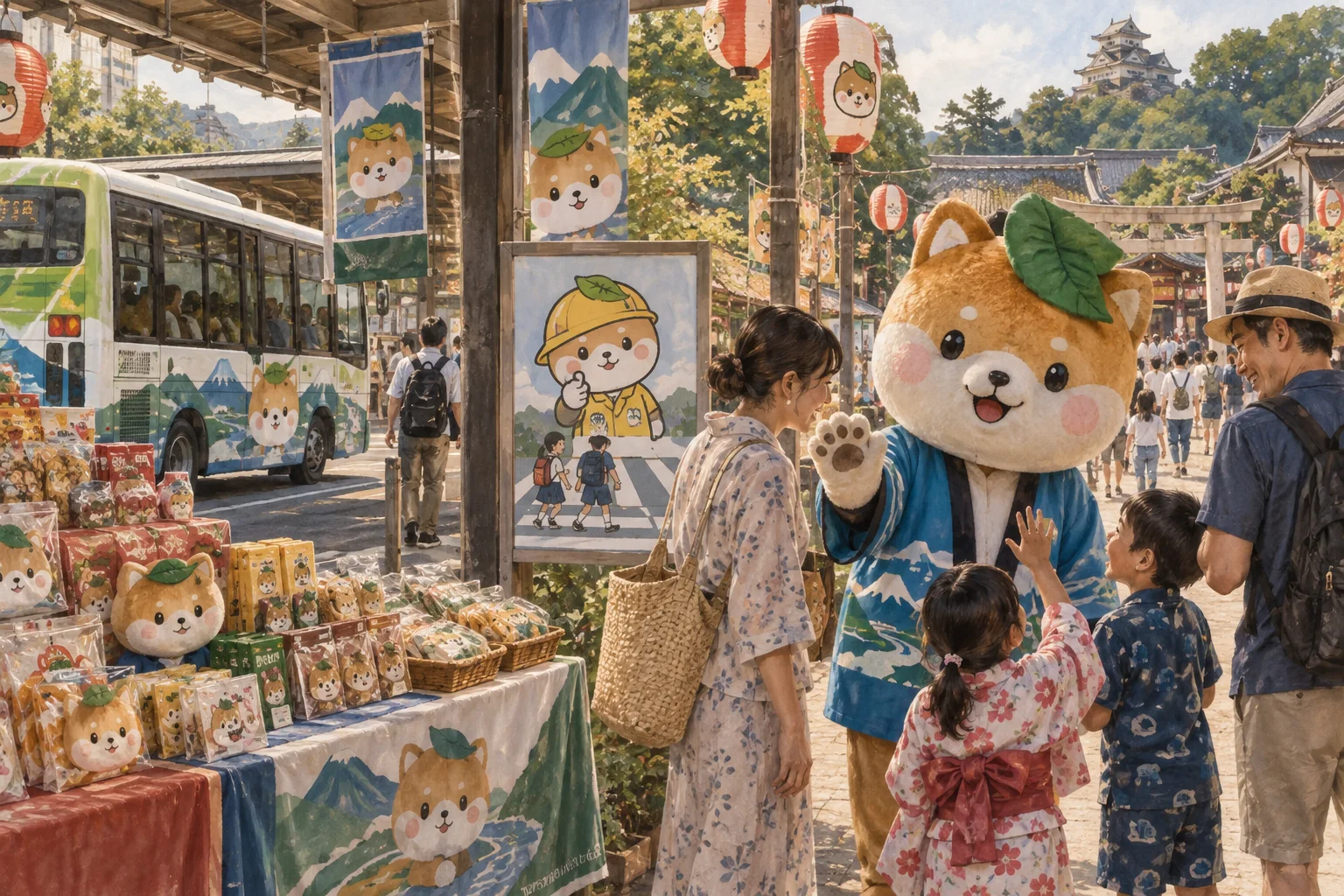
壱In one line一言で言うと
In Japan a huge number of organizations, products and places have their own character.
弐In 30 seconds30秒で説明する
Japanese organizations attach characters to themselves as a matter of course: banks, prefectures, railway lines, police forces, sewage departments, individual products and even individual train stations. The character carries the brand, appears on signage and goods, and gives an institution a friendly face that a logo cannot.
参As a short speechスピーチ・英作文
Character culture in Japan means that almost any organization, product or place is likely to have its own character, and this is treated as normal rather than as a novelty. A bank has one. A prefecture has one.
A railway line has one, and sometimes each station on it has a different one. Police forces have them, tax offices have them, and so do sewage departments, which put them on manhole covers. Products carry them on the packaging for decades.
The commercial machinery behind this is enormous, and a single successful character, such as the cat designed in the mid-1970s that now appears on thousands of licensed products, can outlast any specific product line. What makes it work is that a character can be reused forever, changed in costume with the season, and can address the public in a tone no institution could use directly.
キャラクター文化きゃらくたーぶんかkyarakuta bunkacharacters attached to everything
銀行にも、県にも、下水道にもキャラクターがいる。
壱一言で言うとIn one line
日本では非常に多くの組織、商品、場所が、それぞれのキャラクターを持っています。
弐30秒で説明するIn 30 seconds
日本の組織は当たり前のように自らにキャラクターをつけます。銀行、県、鉄道路線、警察、下水道の部署、個々の商品、そして駅一つひとつにまで。キャラクターが看板を背負い、掲示や商品に現れ、社章では出せない親しみのある顔を組織に与えます。
参スピーチ・英作文As a short speech
日本のキャラクター文化とは、ほとんどどんな組織も商品も場所も、それぞれのキャラクターを持っている可能性が高いということで、それは物珍しいことではなく当たり前として扱われています。銀行にもいます。県にもいます。
鉄道路線にもいて、路線の駅ごとに別のキャラクターがいることもあります。警察にも、税務署にもいます。下水道の部署にもいて、そちらはマンホールの蓋に描かれています。商品は何十年も包装にキャラクターを載せ続けます。
その裏側にある商売の仕組みは巨大で、1970年代半ばにデザインされた猫のように、ひとつ当たったキャラクターは、どの個別の商品よりも長く生き残ります。これが成り立つのは、キャラクターが永久に使い回せ、季節ごとに衣装を変えられ、そして組織そのものには使えない口調で人々に語りかけられるからです。
こう聞かれたらQuestions people actually ask
QWhy do serious institutions use them?
ABecause a character can say things an institution cannot. A reminder to pay tax, a warning about a level crossing or an apology for a delay all soften when delivered by a drawn figure, and compliance is treated as easier to obtain that way.
どうしてお堅い組織まで使うのですか。組織そのものには言えないことを、キャラクターなら言えるからです。納税の呼びかけ、踏切の注意、遅延のお詫びは、絵のキャラクターが伝えるとやわらぎます。そのほうが受け入れられやすいと考えられています。
QIs this the same as mascots elsewhere?
AThe difference is density and permanence. Elsewhere mascots are mostly for sports teams and children's products. In Japan they are attached to infrastructure, government and finance, and they stay in place for decades rather than for one campaign.
ほかの国のマスコットと同じものですか。違いは密度と持続です。よその国ではマスコットは主にスポーツチームや子ども向け商品のものです。日本では社会基盤や行政や金融にも付いていて、ひとつの宣伝のためではなく何十年も使われ続けます。
そのまま使えるフレーズPhrases you can use
- Even the sewage department has one.下水道の部署にもキャラクターがいます。
- They're on the manhole covers.マンホールの蓋に描かれています。
- A character lasts longer than a product.キャラクターは商品より長生きします。
- It can say things the company can't.会社には言えないことをキャラクターなら言えます。
豆知識Background
絵柄入りのマンホールの蓋は「デザインマンホール」と呼ばれ、自治体ごとに図柄が異なり、収集して回る愛好家がいます。カードにして配る取り組みも各地で行われています。企業のキャラクターには数十年使われ続けているものがあり、包装の絵柄が世代を超えて記憶されます。鉄道会社が路線や駅ごとにキャラクターを設定する例もあります。キャラクターの使用許諾は大きな産業になっており、国内の商品だけでなく輸出にもつながっています。
出典日本文化ナビ(原田英語.com)「キャラクター文化を英語で説明する(kyarakuta bunka)」https://www.haradaeigo.com/japanese-culture/w/character-bunka
- 文
- 日本文化ナビ編集部(原田英語.com)— 英文・和訳・解説はすべて独自に作成
- イラスト
- 日本文化ナビ オリジナル
- 発行
- 原田英語.com https://www.haradaeigo.com/
- 印刷日
- 2026.10.17
© 2026 Harada Eigo (原田英語.com). Text and illustration: Japan Culture Navi.
ページはこちら