灯明と献花
壱In one line一言で言うと
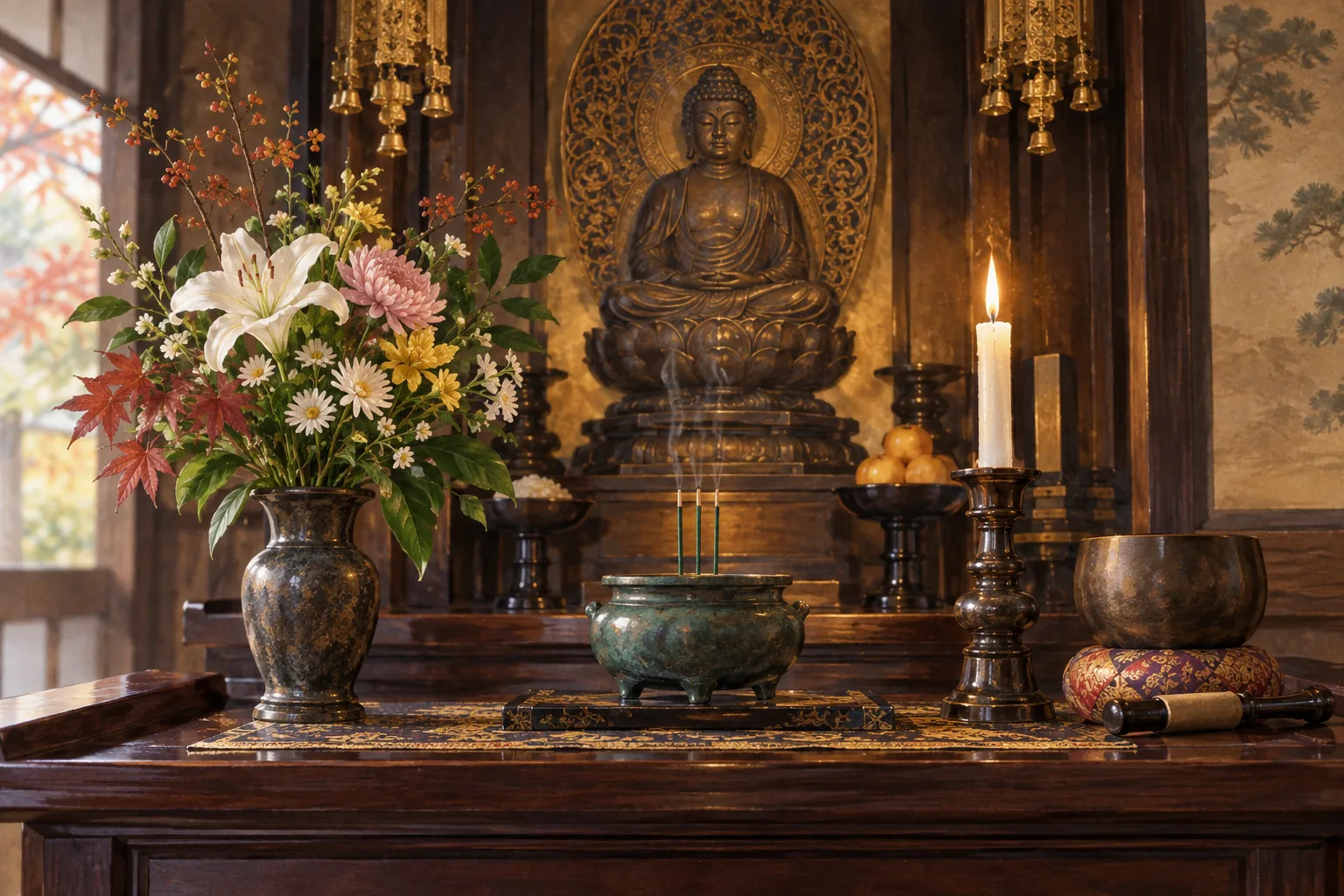
Lighting a candle and setting out flowers at a Buddhist altar or grave is a basic way of welcoming and honoring the deceased.
弐In 30 seconds30秒で説明する
At a Japanese Buddhist altar or grave, lighting a small candle and offering fresh flowers are two of the most basic gestures of respect, done alongside burning incense and offering food or water. The candle's flame is traditionally used to light incense sticks, and its light is also said to help guide the deceased, while flowers are meant to comfort them the way a host would welcome a guest. Chrysanthemums are the classic choice, white ones especially at funerals, while flowers with thorns or a strong scent, like roses, are usually avoided as unsuitable for the setting.
参As a short speechスピーチ・英作文
If you visit a Japanese family grave or sit in front of a household Buddhist altar, you'll usually see a small candle, a stick of incense and a simple vase of flowers arranged together, and each has its own quiet logic. The candle isn't purely decorative; its flame is traditionally the one used to light the incense, and separately, its light is said to help guide the spirit of the deceased. The flowers function almost like hospitality: you're welcoming someone, so you offer something pleasant, the way you might set out tea for a living guest.
Chrysanthemums dominate, white ones especially at funerals, because they read as calm and respectful and last a long time, while flowers with strong perfume or sharp thorns, roses being the classic example, are generally avoided as feeling out of place. None of this is treated as strict religious law; families and regions vary in how carefully they follow it, but the basic gesture, light, flowers and something to eat or drink, shows up almost everywhere.
灯明と献花とうみょうとけんかtomyo to kenkawhy people light a candle and set out flowers at a grave or altar
ろうそくの火と花を供えるのは、故人をもてなす作法とされる。
壱一言で言うとIn one line
仏壇やお墓でろうそくを灯し花を供えるのは、故人をもてなし敬う基本の作法とされます。
弐30秒で説明するIn 30 seconds
日本の仏壇やお墓では、小さなろうそくに火を灯し、生花を供えることが、線香をたき、食べ物や水を供えるのと並んで、もっとも基本的な敬意の表し方の一つです。ろうそくの火は伝統的に線香に火をつけるために使われ、その灯りは故人を導く助けにもなるとされます。花は、亭主が客をもてなすように故人を慰めるためのものとされます。定番は菊で、葬儀では特に白い菊が使われます。一方、バラのようにとげがあったり香りが強かったりする花は、その場にふさわしくないとして避けられるのが通例です。
参スピーチ・英作文As a short speech
日本の家の墓を訪れたり、仏壇の前に座ったりすると、たいてい小さなろうそくと線香、そして簡素な花瓶の花が一緒に並んでいるのを目にします。それぞれに静かな理由があります。ろうそくは単なる飾りではなく、その火は伝統的に線香に火をつけるために使われ、また別に、その灯りは故人の霊を導く助けになるともいわれます。
花はほとんどおもてなしのように機能します。誰かを迎えるのだから、心地よいものを供える、生きているお客様にお茶を出すのと同じ考え方です。菊が圧倒的に多く、葬儀では特に白い菊が使われるのは、落ち着いて礼儀正しく見え、長持ちするからです。
一方、強い香りやとげを持つ花、典型例がバラですが、そうしたものはたいてい場にそぐわないとして避けられます。これは厳格な宗教上の決まりとして扱われているわけではなく、どれくらい丁寧に守るかは家庭や地域によって差がありますが、灯り、花、そして食べ物や飲み物を供えるという基本の身振りは、ほとんどどこでも見られます。
こう聞かれたらQuestions people actually ask
QWhy are white chrysanthemums so associated with funerals in Japan?
AThey're seen as calm, dignified and long-lasting, without a strong scent or showy color that might feel out of place, which is why florists build most funeral and grave arrangements around them, though other pale flowers are used too.
白い菊が日本の葬儀と結びつけられているのはなぜですか。落ち着いていて品があり、長持ちし、場にそぐわないような強い香りや派手な色がないためとされます。そのため花屋は葬儀やお墓の花のほとんどを菊中心に作りますが、ほかの淡い色の花も使われます。
QAre roses really considered inappropriate for a grave?
AMany people avoid them because of the thorns and the strong scent, both seen as unsuitable, though this is more of a general custom than a strict rule, and some families do use roses if the deceased particularly liked them.
バラは本当にお墓にはふさわしくないとされているのですか。とげと強い香りがふさわしくないとして避ける人が多いですが、これは厳格な決まりというより一般的な慣習に近く、故人がバラを特に好んでいた場合には使う家庭もあります。
QWhat is the candle actually for, besides lighting the incense?
AIts light is traditionally said to guide the deceased's spirit, especially symbolic during Obon when ancestors are believed to return, and some households also see it simply as a way of showing the altar is being cared for that day.
ろうそくは線香に火をつける以外に、どんな意味があるのですか。その灯りは伝統的に故人の霊を導くとされ、先祖が戻るとされるお盆の時期には特に象徴的な意味を持ちます。また、その日仏壇の手入れがされていることを示す意味合いで灯す家庭もあります。
そのまま使えるフレーズPhrases you can use
- We should bring fresh flowers for the grave.お墓には新しい花を持っていきましょう。
- Light the candle first, then use it for the incense.まずろうそくを灯して、それで線香に火をつけてください。
- White chrysanthemums are the safest choice here.ここでは白い菊が無難な選び方です。
- Avoid anything with thorns, like roses.バラのようにとげのあるものは避けてください。
- We light a candle every time we visit the altar.仏壇に手を合わせるたびにろうそくを灯します。
豆知識Background
仏壇や墓前の供え物は「五供(ごくう)」と呼ばれる香・花・灯明・浄水・飲食を基本とする考え方があり、線香・花・ろうそく・水・食べ物を供えるのが一般的な形とされる。花は菊を中心に(葬儀では白が多い)、とげのある花や香りの強い花は避けるのが通例とされるが、故人の好みを優先して供える家庭もある。ろうそくの灯りは線香に火を移す実用の役割に加え、故人の霊を導くという意味も込められてきたとされる。作法の細かさは宗派や地域、家庭によって差があり、絶対の決まりではない。
出典日本文化ナビ(原田英語.com)「灯明と献花を英語で説明する(tomyo to kenka)」https://www.haradaeigo.com/japanese-culture/w/candles-and-flowers-at-a-buddhist-altar
- 文
- 日本文化ナビ編集部(原田英語.com)— 英文・和訳・解説はすべて独自に作成
- イラスト
- 日本文化ナビ オリジナル
- 発行
- 原田英語.com https://www.haradaeigo.com/
- 印刷日
- 2026.10.17
© 2026 Harada Eigo (原田英語.com). Text and illustration: Japan Culture Navi.
ページはこちら