梵鐘
壱In one line一言で言うと
Bonsho, the Japanese temple bell, is clapperless and struck from outside with a hanging wooden beam.
弐In 30 seconds30秒で説明する
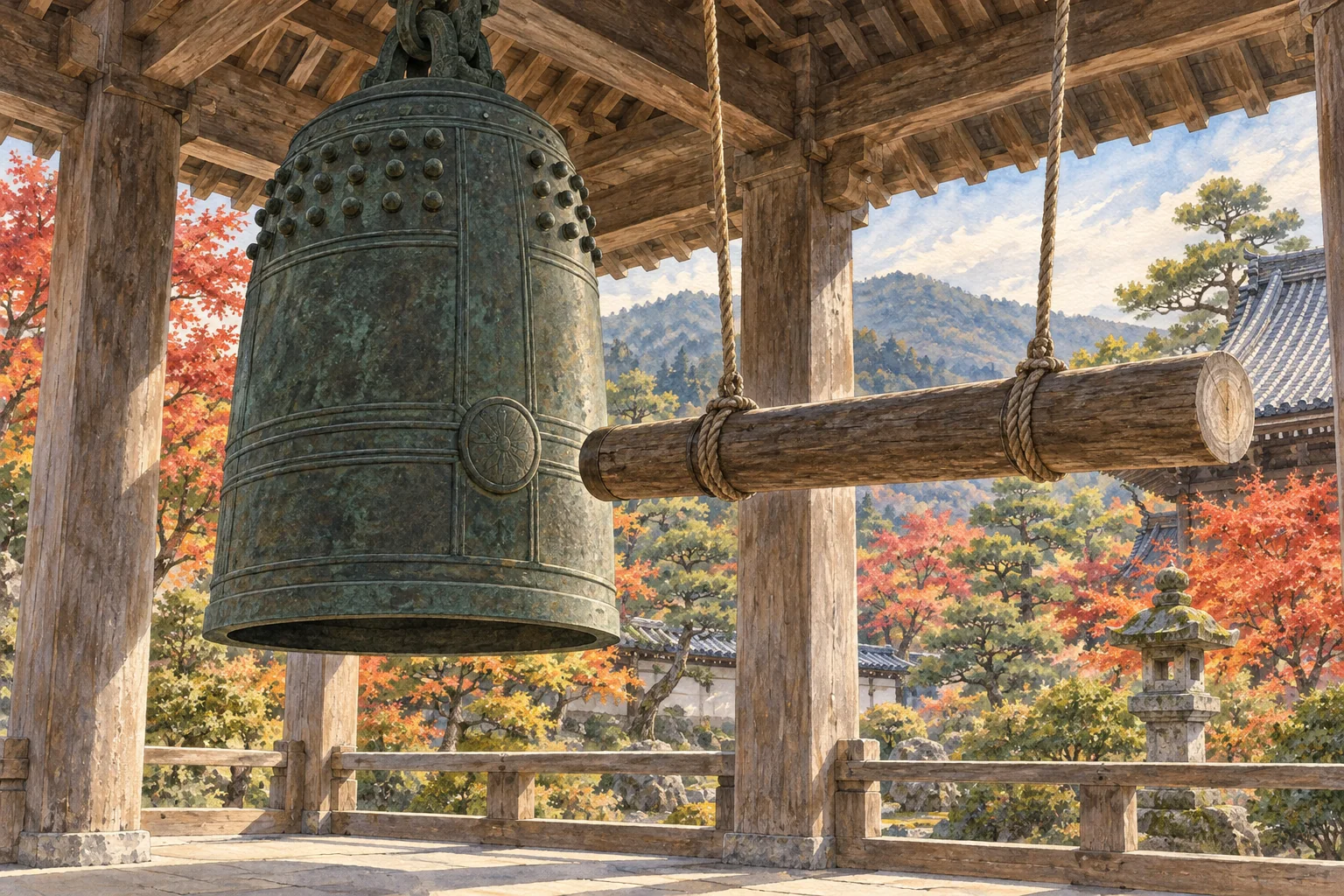
A Japanese temple bell is a thick bronze cylinder with no clapper. A wooden beam hangs on ropes beside it and is swung against the outside, producing a low tone that takes a long time to fade. The surface is covered with rows of small bosses, and the bell usually hangs in its own small open building rather than in a tower.
参As a short speechスピーチ・英作文
A European bell swings, and a piece of metal inside hits the wall. A Japanese temple bell does neither. It hangs still, and a heavy wooden beam suspended on ropes is drawn back and let swing against the outside.
Because wood strikes bronze rather than metal striking metal, the tone has no clang in it; it is low, soft at the front and extremely long, and the sound of one bell in a valley can still be heard a minute later. The bells are thick, often several tons, cast with rows of small round bosses over the upper body, and hung in an open shelter you can usually walk right up to.
They are rung to mark the hours, to call the community, and at the end of the year, when temples strike a hundred and eight times through midnight. Many old bells did not survive the Second World War, when bronze was requisitioned and bells were melted down; replacements cast in the 1950s are common.
梵鐘ぼんしょうbonshothe temple bell struck from the outside
中に舌がない。外から丸太をぶつけて鳴らす。
壱一言で言うとIn one line
梵鐘とは、日本の寺の鐘で、中に舌がなく、外から吊した丸太を当てて鳴らすものです。
弐30秒で説明するIn 30 seconds
日本の梵鐘は厚い青銅の筒で、中に舌はありません。脇に丸太を縄で吊し、外側に当てて鳴らします。音は低く、消えるまでに長くかかります。表面には小さな突起が列をなして並び、鐘は塔ではなく、それ専用の吹き放ちの小さな建物に吊るされているのがふつうです。
参スピーチ・英作文As a short speech
ヨーロッパの鐘は揺れ、中の金属が壁を打ちます。日本の梵鐘はそのどちらでもありません。鐘は動かず、縄で吊した重い丸太を引いて放し、外側に当てます。金属どうしではなく木が青銅を打つので、音に金物の甲高さがありません。低く、出だしはやわらかく、そして非常に長い。
谷あいでは、一分たってもまだ鳴っているのが聞こえます。鐘は厚く、数トンになるものもあり、上半分には小さな丸い突起が並んで鋳込まれています。吊られているのは、たいてい壁のない小さな建物で、すぐそばまで歩いていけます。
鐘は時を告げ、人を呼び、年の終わりには真夜中をはさんで百八回撞かれます。古い鐘の多くは第二次大戦を越えられませんでした。青銅が供出の対象となり、鐘は溶かされたからです。1950年代に鋳直された鐘は珍しくありません。
こう聞かれたらQuestions people actually ask
QCan visitors ring it?
AAt some temples yes, often for a small offering and at set hours. Where it is not allowed there will be a sign or a rope tied off. Never strike one on your own initiative; the bell announces things to the neighborhood.
参拝者が撞いてもよいのですか。撞ける寺もあり、志納をして時間を決めて撞かせるところが多いです。撞けない場合は掲示があるか、縄が結んで止めてあります。勝手に撞かないでください。鐘は近所に何かを知らせるものです。
QWhy does it sound so different from a church bell?
ABecause it is struck with wood on a thick, heavy wall of bronze, and because it does not swing. That combination removes the bright attack and leaves a deep tone with a very long decay.
教会の鐘とどうしてこんなに音が違うのですか。厚く重い青銅を木で打つからであり、鐘が揺れないからです。この組み合わせが立ち上がりの明るさを消し、深く長く残る音を作ります。
QWhy a hundred and eight times at New Year?
AThe number is the traditional count of the delusions that trouble people. Whether anyone believes that literally is another matter; the ringing is now mostly an occasion, and many temples let visitors queue up to take a turn.
大晦日に百八回なのはなぜですか。人を悩ませる煩悩の数とされてきた数字です。それを字義どおりに信じているかは別の話で、今は行事としての色が濃く、参拝者が並んで一打ずつ撞ける寺も多くあります。
そのまま使えるフレーズPhrases you can use
- There is no clapper inside.中に舌はありません。
- You strike it with the wooden beam.丸太を当てて鳴らします。
- Pull the rope back and let it go.縄を引いて、放してください。
- The sound carries for a long time.音は長く残ります。
- The bell is rung at New Year.大晦日に鐘を撞きます。
豆知識Background
梵鐘は中に舌を持たず、撞木と呼ぶ丸太を外から当てて鳴らします。鐘を揺らさないため音の立ち上がりがやわらかく、余韻が長く続きます。表面の上部に並ぶ小さな突起は乳と呼ばれ、音の響きにも関わるとされます。大晦日の除夜の鐘は、煩悩の数とされる百八回を撞くもので、年をまたいで鳴らす寺が多くあります。戦時中の金属回収によって多くの梵鐘が供出され、今ある鐘には戦後に鋳造し直されたものが少なくありません。
出典日本文化ナビ(原田英語.com)「梵鐘を英語で説明する(bonsho)」https://www.haradaeigo.com/japanese-culture/w/bonsho
- 文
- 日本文化ナビ編集部(原田英語.com)— 英文・和訳・解説はすべて独自に作成
- イラスト
- 日本文化ナビ オリジナル
- 発行
- 原田英語.com https://www.haradaeigo.com/
- 印刷日
- 2026.10.17
© 2026 Harada Eigo (原田英語.com). Text and illustration: Japan Culture Navi.
ページはこちら