忘年会と新年会
壱In one line一言で言うと
Bonenkai and shinnenkai, year-end and New Year parties, are the drinking gatherings that close and open the year.
弐In 30 seconds30秒で説明する
A bonenkai is a year-end party, its name meaning to forget the year, held in December by workplaces, clubs and groups of friends. A shinnenkai does the same job in January to start the year. Both are usually seated courses with drinks at an izakaya or a hotel, often ending with a closing clap in unison.
参As a short speechスピーチ・英作文
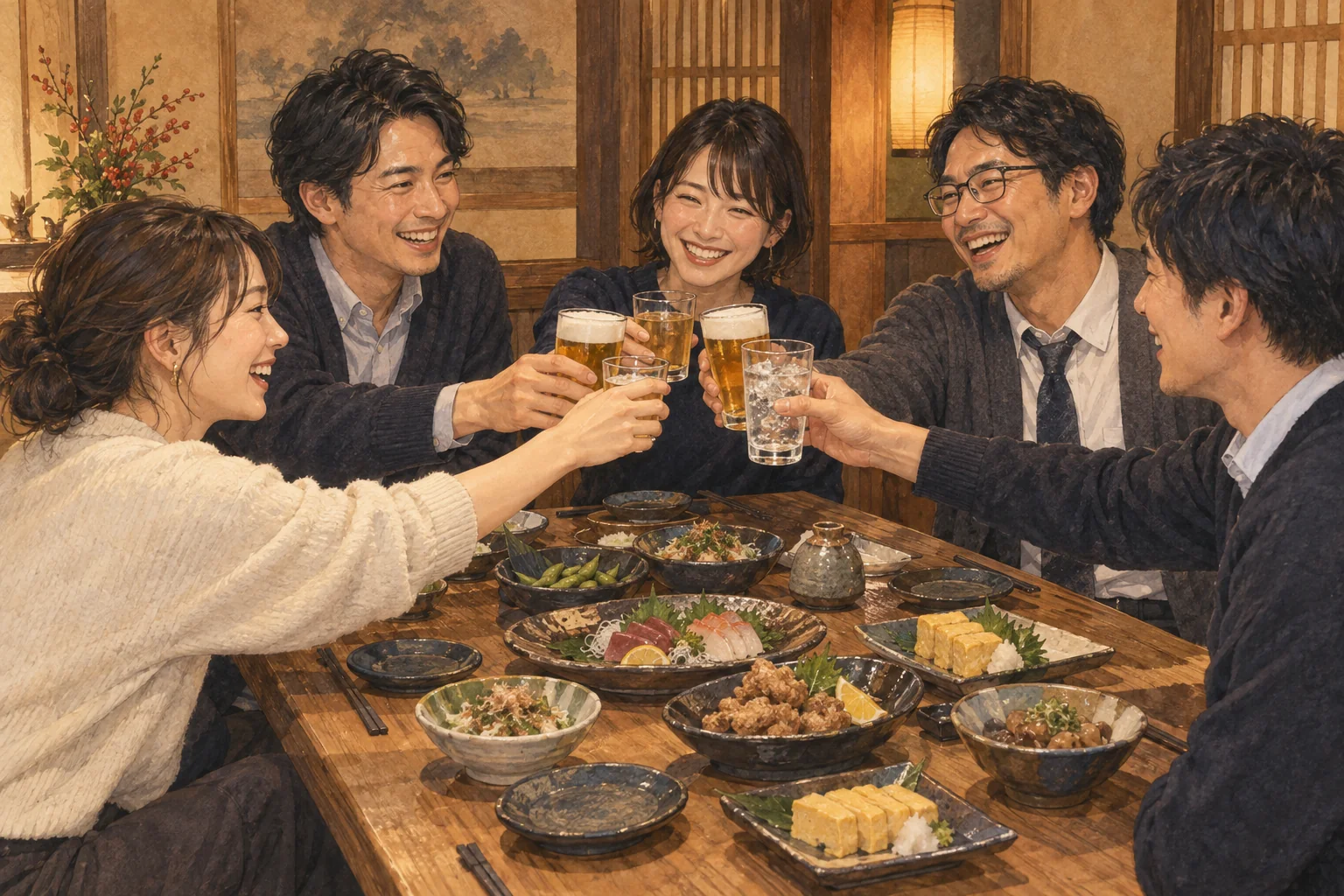
December in Japan is the season of the bonenkai, literally the party to forget the year. Workplaces hold one, often by department, and so do sports clubs, university seminars and groups of old friends, which means a sociable person can attend four or five. The format is usually a set course with two hours of drinks at a fixed price.
Speeches are short: a senior person opens, everyone raises a glass, and at the end a closing clap performed in unison marks the finish. In January the same groups do it again as a shinnenkai, a new-year party, with the emphasis on the year ahead rather than the one just gone.
Two practical points. Restaurants are booked up in mid-December, so dates are set months ahead. And attendance is no longer taken for granted; younger employees increasingly decline, and companies have moved toward shorter, optional and lunchtime versions.
忘年会と新年会ぼうねんかいとしんねんかいbonenkai and shinnenkaiyear-end and new-year parties
十二月は「年を忘れる会」、一月は「年を始める会」。
壱一言で言うとIn one line
忘年会と新年会とは、年を締めくくり、また年を開く飲み会です。
弐30秒で説明するIn 30 seconds
忘年会は年末の宴で、その名は年を忘れるという意味です。十二月に職場や団体、友人どうしで開かれます。新年会は一月に同じ役目を果たし、年を始めます。どちらも居酒屋やホテルでの、飲みものつきの着席の献立が多く、最後は手締めで終わることがよくあります。
参スピーチ・英作文As a short speech
日本の十二月は忘年会の季節です。文字どおり、年を忘れるための会です。職場は部署ごとに開き、スポーツの団体も、大学のゼミも、古い友人の集まりも開きます。つきあいの広い人なら四つも五つも出ることになります。
形式はたいてい、決まった献立と二時間の飲み放題です。挨拶は短く、上の立場の人が口火を切り、全員で杯を上げ、最後に手締めをそろえて打って終わります。一月には同じ顔ぶれが新年会を開きます。過ぎた年ではなく、これからの年に重きが置かれます。
実用的な点を二つ。十二月なかばの店は予約で埋まるので、日取りは何か月も前に決まります。そして出席はもう当たり前ではありません。若い社員は断ることが増え、会社のほうも、短くし、任意にし、昼にするといった形へ動いています。
こう聞かれたらQuestions people actually ask
QDo I have to drink alcohol?
ANo. Soft drinks are always available and ordering one draws no comment now. Pressing drinks on someone who has declined is treated as a problem rather than as hospitality.
お酒を飲まないといけませんか。その必要はありません。ソフトドリンクは必ずあり、それを頼んでも今は何も言われません。断った人に酒を勧め続けることは、もてなしではなく問題として扱われます。
QWhat is the clap at the end?
AA tejime, a set pattern of claps performed together to close the gathering. Follow the person leading it; the common version is three groups of three claps followed by one.
最後にする手拍子は何ですか。手締めです。決まった型の拍手をそろって打ち、会を閉じます。音頭を取る人に合わせてください。よく使われるのは、三つ三つ三つ、最後に一つと打つ形です。
QIs it rude to skip it?
ALess than it used to be. Declining once with a clear reason is normal, especially for family commitments. Never attending any group event over a long period is what colleagues notice.
参加しないのは失礼ですか。以前ほどではありません。理由をはっきり述べて一度断るのは、家庭の事情があればとくにふつうのことです。長い間どの集まりにも出ないことのほうが、同僚には目につきます。
そのまま使えるフレーズPhrases you can use
- Let's book the year-end party.忘年会の予約をしましょう。
- Shall we start with a toast?まず乾杯しましょうか。
- A soft drink for me, please.私はソフトドリンクでお願いします。
- Thank you all for this year.一年間ありがとうございました。
- I'll have to leave after the first round.一次会で失礼します。
豆知識Background
忘年会は年の苦労を忘れるための集まりとされ、その形は古くからありましたが、職場ごとに開く現在の形が広まったのは近代以降です。新年会は年頭の顔合わせの意味合いが強く、部署をまたいで行うこともあります。十二月なかばの飲食店は予約で埋まり、幹事は何か月も前から日取りと店を押さえます。近年は参加の強制や酒の勧め方が問題として語られるようになり、昼に行う、時間を短くする、参加費を会社が持つといった見直しが進んでいます。
出典日本文化ナビ(原田英語.com)「忘年会と新年会を英語で説明する(bonenkai and shinnenkai)」https://www.haradaeigo.com/japanese-culture/w/bonenkai-and-shinnenkai
- 文
- 日本文化ナビ編集部(原田英語.com)— 英文・和訳・解説はすべて独自に作成
- イラスト
- 日本文化ナビ オリジナル
- 発行
- 原田英語.com https://www.haradaeigo.com/
- 印刷日
- 2026.10.17
© 2026 Harada Eigo (原田英語.com). Text and illustration: Japan Culture Navi.
ページはこちら