鼻をかむ
壱In one line一言で言うと
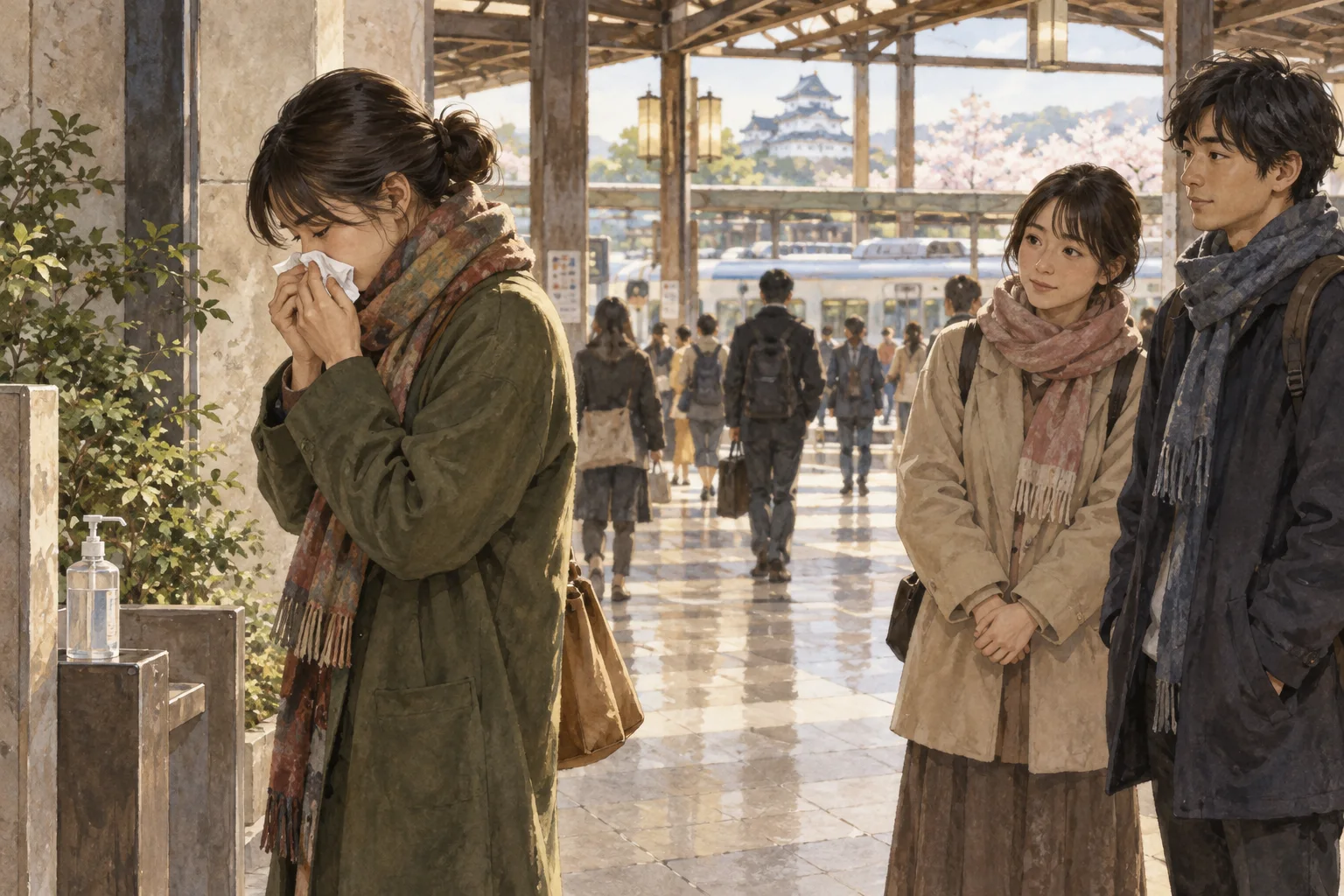
In Japan, sniffing in public is normal while blowing your nose is done out of sight.
弐In 30 seconds30秒で説明する
Blowing your nose loudly at a table or in a meeting is considered unpleasant in Japan, so people step out to the restroom or turn away. Sniffing, which many Westerners find worse, is tolerated. The logic is about what other people have to see and hear, not about hygiene.
参As a short speechスピーチ・英作文
This is a small piece of etiquette that runs in the opposite direction from many Western habits, so it is worth knowing. In Japan, blowing your nose in front of other people, especially at a table or in a meeting, is considered unpleasant, and the usual response is to leave the room or at least turn away and do it quietly.
Sniffing is tolerated, even continuously, which visitors from countries where sniffing is the rude option find hard to accept. Neither habit is about hygiene; both are about what other people are made to witness.
It is also why masks are worn so readily when someone has a cold, and why packets of tissues are handed out free on the street in winter. Practical guidance: if you need to blow your nose, step outside or to the restroom; if you must do it at the table, turn away, keep it brief and quiet, and do not inspect the tissue afterward.
鼻をかむはなをかむhana o kamuwhy blowing your nose in public is avoided
すするのはよくて、かむのは人前を外す。逆に見える作法。
壱一言で言うとIn one line
日本では、人前で鼻をすするのはふつうで、鼻をかむのは席を外してするものです。
弐30秒で説明するIn 30 seconds
食卓や会議の場で大きな音を立てて鼻をかむのは、日本では不快と受け取られるため、人はトイレに立つか、体の向きを変えます。欧米の人がより不快に感じがちな、鼻をすする音のほうは許されています。基準は衛生ではなく、ほかの人が見聞きしなければならないかどうかにあります。
参スピーチ・英作文As a short speech
これは、欧米の習慣と逆向きに働く小さな作法なので、知っておく価値があります。日本では、人前で鼻をかむこと、とくに食卓や会議の席でそうすることは不快と受け取られ、ふつうは席を外すか、少なくとも体の向きを変えて静かに済ませます。
鼻をすするほうは、続いていても許されています。すするほうが無作法だという国から来た人には、これがなかなか受け入れがたいところです。どちらも衛生の話ではありません。ほかの人が何を目にし、耳にさせられるかという話です。
風邪をひいた人がためらいなくマスクをつけるのも、冬の街角でポケットティッシュが無料で配られるのも、同じ理由です。実用的な助言としては、鼻をかみたくなったら外かトイレへ。その場でやむを得ないときは、向きを変えて、短く静かに済ませ、あとでティッシュを見ないことです。
こう聞かれたらQuestions people actually ask
QIsn't sniffing worse for other people?
AMany visitors think so, and there is no objective answer. The Japanese ranking treats a sudden loud noise and a used tissue as the bigger imposition, and a steady sniff as background.
すすっているほうが、周りには不快ではありませんか。そう感じる訪日客は多く、客観的な正解はありません。日本での順位づけでは、突然の大きな音と使ったティッシュのほうが重い負担で、断続的なすすり音は背景音として扱われます。
QWhat do I do if I have hay fever in spring?
AWear a mask, carry tissues, and step out when you need to clear your nose. Nobody will think twice, since a large share of the people around you are dealing with the same thing.
春に花粉症になったらどうすればよいですか。マスクをして、ティッシュを持ち歩き、鼻を通したくなったら席を外してください。誰も気に留めません。周りの人のかなりの割合が、同じことに対処しているからです。
QWhy do people hand out tissues on the street?
AThey carry advertising, and the packets are a long-running form of promotion outside stations. Taking one is normal, and in winter they are genuinely useful.
どうして街頭でティッシュを配っているのですか。広告が入っているからです。駅の外で配られる宣伝の形として長く続いてきました。受け取るのはふつうのことで、冬には本当に役に立ちます。
そのまま使えるフレーズPhrases you can use
- Excuse me for a moment.少し失礼します。
- I'll be right back.すぐ戻ります。
- Do you have a tissue?ティッシュを持っていますか。
- I've got a cold, so I'm wearing a mask.風邪をひいたのでマスクをしています。
- It's the pollen, not a cold.風邪ではなく花粉です。
豆知識Background
人前で鼻をかむことを避ける感覚は、食事の場で音や動作が人目に触れることを嫌う考え方とつながっています。同じ理由で、げっぷや大きなくしゃみも避けられます。一方、麺をすする音は許されており、音の善し悪しが一律に決まっているわけではないことが分かります。駅前で配られるポケットティッシュは広告の媒体として定着し、冬にはよく使われます。風邪をひいたときにマスクをつける習慣は、大正期のインフルエンザ流行のころから広まったとされ、うつさないための配慮として説明されます。
出典日本文化ナビ(原田英語.com)「鼻をかむを英語で説明する(hana o kamu)」https://www.haradaeigo.com/japanese-culture/w/blowing-your-nose
- 文
- 日本文化ナビ編集部(原田英語.com)— 英文・和訳・解説はすべて独自に作成
- イラスト
- 日本文化ナビ オリジナル
- 発行
- 原田英語.com https://www.haradaeigo.com/
- 印刷日
- 2026.10.17
© 2026 Harada Eigo (原田英語.com). Text and illustration: Japan Culture Navi.
ページはこちら